Spring is a season of new beginnings, and what better way to celebrate than by capturing the beauty of cherry blossoms through photography? With their delicate pink and white petals, these trees provide a stunning backdrop for photoshoots of all kinds. Their ephemeral nature adds a unique, whimsical quality to the photos that’s hard to replicate at any other time of year. If you’re planning a cherry blossom photoshoot, here are some tips to help you capture the best shots possible.
Cherry Blossom Photography: At a Glance
This guide covers everything you need to plan and execute a stunning cherry blossom photoshoot, from timing and location scouting to composition, lighting, editing, and creative techniques.
- Best Time for Cherry Blossom Photos – Peak bloom windows and golden hour tips
- Photoshoot Locations – Top US spots with real photo examples
- Compositions – Five creative angles and framing techniques
- Lighting – Natural light vs. flash approaches
- Photo Editing Styles – Light and airy, dark and moody, bold and vibrant
- Advanced Techniques – Double exposure, lens flares, and more
- Frequently Asked Questions – Common cherry blossom photography questions
When is the Best Time for Cherry Blossom Photos?

The best time to take cherry blossom photos depends on several factors, including location, weather conditions, and the specific variety of cherry blossom tree. In general, cherry blossoms bloom for a short period of time, usually just a few weeks, typically between late March and mid-April in many regions.
It’s important to monitor weather forecasts and bloom reports to determine the best time to plan your photoshoot. Generally, aim for peak bloom, when the flowers are at their fullest and most vibrant. This can vary depending on location, with some areas experiencing peak bloom earlier or later in the season. The National Cherry Blossom Foundation and local botanical gardens often publish bloom forecasts that are worth bookmarking.
The time of day also plays a big role in the quality of your images. Many photographers prefer shooting during the “golden hours” of sunrise or sunset, when the light is softer, warmer, and more flattering. Overcast days are another underrated option — the diffused light they produce is exceptionally kind to the delicate pinks and whites of cherry blossoms, reducing harsh shadows and keeping colors accurate.
Cherry Blossom Photoshoot Locations

Once you’ve determined the best time to photograph cherry blossoms, the next step is finding the right location. Ideal spots include parks, botanical gardens, and other outdoor areas where cherry blossom trees are planted in quantity. Scout locations ahead of time to identify the best angles, understand foot traffic patterns, and plan your arrival. Be sure to obtain any necessary permits or permissions before setting up your equipment, as popular public spaces often require advance approval for commercial photography.
Here are some beautiful cherry blossom locations across the United States.
- The National Mall, Washington, DC
- Missouri Botanical Garden, St. Louis, Missouri
- Balboa Park’s Japanese Friendship Garden, San Diego, California
- Dallas Arboretum and Botanical Garden, Dallas, Texas
- Brooklyn Botanic Garden, Brooklyn, New York
- Japanese Garden at Delaware Park, Buffalo, New York
- Tom McCall Waterfront Park and the Portland Japanese Garden, Portland, Oregon
- Golden Gate Park Japanese Tea Garden, San Francisco, California
- University of Washington Quad, Seattle, Washington
- Fairmount Park, Philadelphia, Pennsylvania
- Charles River Esplanade, Boston, Massachusetts
- Descanso Gardens, Los Angeles, California
- Utah State Capitol, Salt Lake City, Utah
For inspiration, here are examples from some of the most popular cherry blossom photoshoot locations in the US.
The National Mall, Washington, DC

Portland Waterfront Park

Golden Gate Park in San Francisco

Cherry Blossom Photoshoot Compositions
To create stunning cherry blossom photos, pay close attention to composition and how you’re using the trees in relation to your subjects. The blossoms are versatile visual elements — they can serve as background, foreground, frame, or subject depending on the effect you’re after. Here are five creative compositions to try on your next cherry blossom photoshoot.
Shoot from Below
To capture the color and density of the blossoms overhead, you may need to shoot from a slight upward angle. When doing this, ask your couple or subject to lean slightly toward the camera — this counters the distortion that a low angle can introduce and keeps the pose flattering. The image below is a good example of this approach done right.

Shoot from Above
If you have access to a drone, aerial photography opens up a completely different perspective on cherry blossom scenes. A canopy of blossoms viewed from above creates a sea of color that’s impossible to achieve from ground level. With the right composition and framing, you can create images like the one below that feel both grand and intimate.

Include the Cherry Blossoms in the Background
Placing cherry blossoms in soft bokeh behind your subjects is a classic approach that never gets old. When using this composition, consider backlighting your subjects — placing the light source behind them causes the out-of-focus blossoms to glow and adds a dreamy, luminous quality to the scene that complements the season perfectly.

Include the Cherry Blossoms in the Foreground
Incorporating cherry blossoms in the foreground adds color, depth, and a sense of place to your photography. Foreground elements also lend an organic, candid quality to the image — as if you’re catching a private moment through the branches, in a more photojournalistic style.

Use the Cherry Blossoms for Framing
Cherry blossom trees have a naturally arching, sculptural quality that creates wonderful opportunities for environmental framing. Look for curved branches that form a natural arch or canopy over your subjects, and use those shapes to draw the viewer’s eye toward the focal point of the image.

Lighting For Cherry Blossom Photoshoots
Each photographer will have their own unique approach when it comes to lighting a cherry blossom session. In general, the choice comes down to two main options: natural light or flash.
Natural Light Cherry Blossom Photos
Soft, natural light creates a gentle and serene mood that feels organic and authentic. This approach tends to produce images where the cherry blossoms and the subjects both appear true to life, with a relaxed quality that’s hard to replicate with artificial sources. Overcast skies, open shade, and the soft light of the golden hour are all excellent natural lighting conditions for cherry blossom sessions.

Flash Cherry Blossom Photos
Flash photography can help bring out vibrant colors and gives you direct control over the quantity and direction of light in your cherry blossom images. This is particularly useful on bright, flat days or in situations where natural light isn’t cooperating. By using flash effectively alongside available light, photographers can create portraits with colors that pop while still preserving the natural beauty of the blossoms behind.
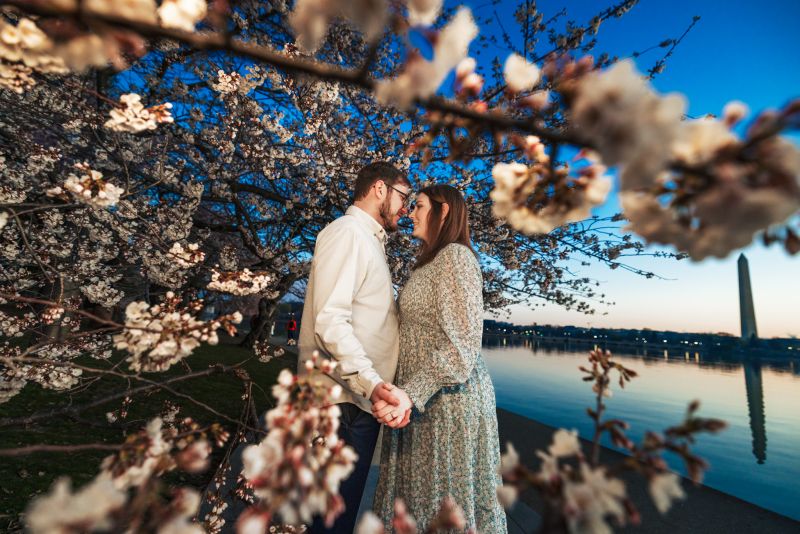
Photo Editing Styles

After your cherry blossom photoshoot is over, the editing phase is where your personal style really comes through. Basic adjustments to exposure, contrast, and color balance can go a long way, but be careful not to push things too far — the goal is to enhance the natural beauty of the blossoms, not overpower it. Here are a few popular editing styles worth considering.
Light and Airy
The light and airy style uses elevated highlights, lifted shadows, and soft pastel tones to create a dreamy, romantic atmosphere. It’s a natural fit for cherry blossom sessions because it complements the inherent softness of the flowers and tends to feel effortless and whimsical rather than heavily processed.

Dark and Moody
The dark and moody style leans into deep shadows, rich textures, and muted or desaturated tones to create a dramatic, cinematic feel. It might seem counterintuitive for cherry blossom images, but the contrast between the richly shadowed environment and the luminous pink petals can be striking. This approach works especially well for conveying themes of nostalgia or deep emotion.
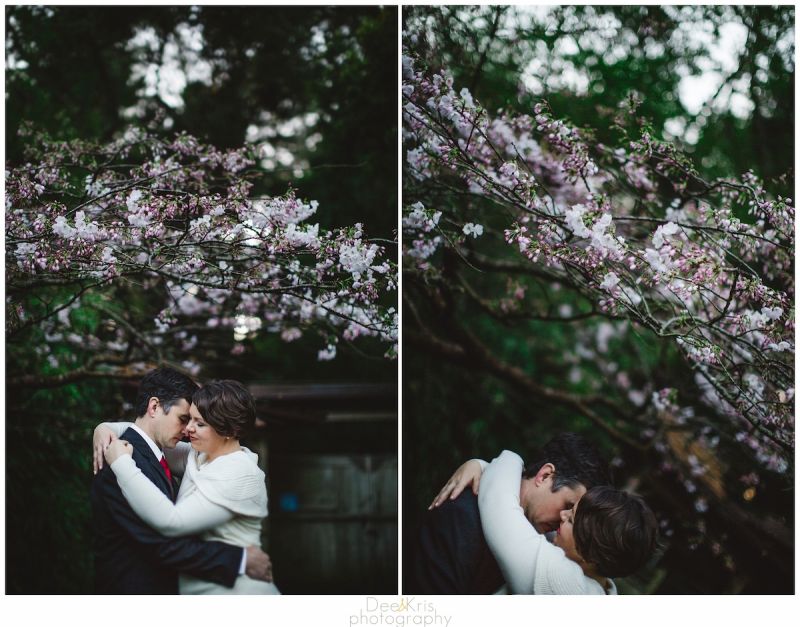
Bold and Vibrant
The bold and vibrant style pushes colors, contrast, and saturation to create an energetic, eye-catching look. For cherry blossom photography, this can make the pinks and whites jump off the frame in a way that feels modern and impactful — particularly when combined with flash or strong directional light in the original capture.

Advanced Techniques in Cherry Blossom Photography
Once you’ve mastered the fundamentals, creative techniques can take your cherry blossom work to another level. From in-camera effects to post-processing artistry, these approaches add personality and visual interest that sets your images apart.
Double Exposure
A double exposure combines two different images into a single photograph, either in-camera or during post-processing. With cherry blossoms, this technique can produce striking results — layering the blossom patterns over a portrait or silhouette creates a painterly, artistic quality that’s unlike anything achievable through a standard shooting approach.

Flares in Cherry Blossom Photoshoots
Lens flares add warmth, depth, and an ethereal quality to cherry blossom images. By positioning the sun at the edge of the frame or partially obscured by a branch, you can introduce organic flare that feels intentional rather than accidental. This effect pairs especially well with backlit cherry blossom scenes, where the glowing petals and soft flare work together to create a sense of warmth and brightness that’s hard to achieve any other way.

Frequently Asked Questions About Cherry Blossom Photography
When do cherry blossoms typically bloom in the United States?
In most regions of the United States, cherry blossoms peak between late March and mid-April, though this varies by location. Washington, DC tends to peak in late March to early April, while higher-elevation or northern locations like Seattle may bloom a week or two later. Tracking local bloom reports from botanical gardens or the National Park Service is the most reliable way to time your session.
How long do cherry blossoms last?
Cherry blossoms typically remain at peak bloom for one to two weeks, though this can be shortened significantly by rain, wind, or unseasonably warm temperatures. Once petals begin to fall, you can sometimes capture a few extra days of usable shots as the ground and branches remain covered, but the window for photographing full, intact blooms is genuinely brief. Planning your session for the earliest days of peak bloom gives you the most flexibility.
What is the best time of day to photograph cherry blossoms?
Golden hour — the hour after sunrise and the hour before sunset — is widely regarded as the best time for cherry blossom photography. The warm, low-angle light complements the delicate pink and white tones of the blossoms and adds a natural glow to portraits. Overcast days are also excellent, as the diffused light reduces harsh shadows and keeps colors soft and accurate throughout the entire day.
Do I need a permit to photograph at popular cherry blossom locations?
Many popular cherry blossom locations, including the National Mall in Washington, DC, require commercial photography permits. Requirements vary by location, so it’s always worth contacting the managing organization directly before your shoot. For personal or non-commercial photography, most public parks and gardens don’t require permits, but restrictions on tripods, lighting equipment, or group sizes may still apply.
What camera settings work best for cherry blossom portraits?
For outdoor cherry blossom portraits in natural light, a wide aperture between f/1.8 and f/2.8 gives you the soft background blur that makes blossoms glow in bokeh. Keep your ISO as low as conditions allow to maintain clean, detailed images, and adjust shutter speed to suit the light. In bright midday sun, you may need to use a neutral density filter to maintain a wide aperture without overexposing. If you’re adding flash, set your shutter speed at or below your camera’s sync speed and use a diffused modifier to keep the light flattering.
Conclusion
A cherry blossom photoshoot is one of the most rewarding sessions of the spring calendar — and one of the most time-sensitive. By planning around peak bloom, scouting your locations in advance, and thinking carefully about composition, lighting, and your editing style, you can capture images that feel both timeless and distinctly of the moment. The window is short, so when the blossoms arrive, get out there and make the most of it.