Senior portraits have evolved well beyond the cap-and-gown standard. Today’s seniors want images that reflect who they actually are — and today’s photographers have the tools to deliver that. These four approaches come from photographers in our community who’ve shot senior sessions across a range of styles, locations, and lighting conditions. Each one gives you a concrete direction to bring into your next session.
A field-tested guide to portrait photography covering posing, lighting, composition, and real-world session techniques.
1. Build creative compositions into every frame
Most seniors will share these images on their own platforms — which means they’ve already seen tens of thousands of portraits and can spot a generic one instantly. The way to stand out is to shoot with intention at the compositional level, not just the lighting level.
A practical rule we’ve used: aim for at least two composition techniques working together in each frame. Leading lines paired with rule of thirds. Symmetry reinforced by depth. Negative space combined with a strong subject placement. When two techniques are active at once, the image reads as considered rather than grabbed.


2. Use flash to add drama and definition
Portable strobes have changed what’s possible on location. You’re no longer limited to whatever the ambient light gives you — you can bring a directional, controllable source to any spot the senior wants to shoot, whether that’s a parking garage, a rooftop, or an open field at midday.
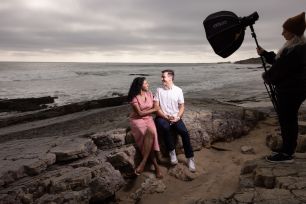
Flash works particularly well for seniors because it lets you separate the subject from the background at almost any time of day. A hard light source slightly off-axis chisels out the jawline and adds presence to the frame. That’s a different result than you’ll get from a reflector or by waiting for golden hour — and it photographs as intentional rather than opportunistic.
If you’re newer to this approach, our flash photography guide covers the core technique before you bring it into a session context.


3. Build the session around their personality
The seniors who end up with the most compelling portraits are almost always the ones whose sessions were built around something real about them. A dancer who brought her pointe shoes. An athlete who wore his jersey. A musician who carried her instrument to the location.
This approach does a few things at once. It gives you natural props with actual meaning. It gives the senior something to do with their hands and body, which solves half the posing problem automatically. And it produces images that still make sense twenty years from now, when the subject wants to remember who they were at this age — not just what they looked like.
Before the session, ask the senior directly: what were you involved in during high school? What do you want people to remember about this time? The answers usually hand you the shoot concept outright.


4. Go cinematic with light and lens choice
A cinematic senior portrait isn’t one editing style — it’s a set of decisions that work together. Compression from a longer focal length. Hard directional light that creates distinct shadow. A color grade that desaturates the midtones while holding the skin tones. Any one of these moves the image toward a film-still aesthetic. All three together produce something that looks nothing like a standard senior session.
Sun flare is an easy entry point here. A backlit subject with intentional flare at the lens edge reads as cinematic with almost no additional gear. The more controlled version is using a hard artificial source to light the subject while the background falls off — that’s the look in the Timothy Eyrich frame below, and it holds up across a much wider range of locations than natural light alone.


The four approaches above aren’t mutually exclusive. The strongest senior sessions usually pull from at least two of them — a personality-driven concept executed with cinematic light, or creative compositions built around a flash-lit subject. Start with the senior’s personality and work outward from there. That’s where the best images come from.
For more on building a complete portrait session, see our Portrait & Posing Guide.
Frequently asked questions about senior portrait photography
What makes a senior portrait session stand out?
The sessions that produce the most memorable images are built around the senior’s actual personality — their hobbies, interests, and the things they want to be remembered for at this age. Generic locations and poses produce generic results. Specificity in concept almost always translates to specificity in the final image.
Do I need flash for senior portraits?
No, but it expands what you can do significantly. Natural light sessions are completely viable, especially in good conditions. Flash gives you directional control at any time of day, lets you shoot in harsher light without compromise, and produces a different quality of image — more chiseled, more dramatic — that many seniors and their parents respond well to.
What focal length works best for senior portraits?
An 85mm or 135mm prime covers most senior portrait work well. The compression flatters facial features and separates the subject from the background cleanly. A 70-200mm gives you more flexibility on location if you want to vary compression within a single setup. Wide angles can work for environmental shots but rarely flatter at close range.
How do I get seniors to look natural and relaxed in portraits?
Give them something to do. Incorporate their interests, have them interact with a prop that means something, or build movement into the shot. Most posing stiffness comes from a subject standing still with nothing to focus on but the camera. Props and activity redirect that attention and produce more natural expressions automatically.
How long should a senior portrait session run?
Most seniors do well in a 60-to-90-minute session. That’s enough time for two or three location setups and a wardrobe change, without fatigue setting in. If you’re planning multiple concepts or locations, 2 hours gives more breathing room — but sessions longer than that tend to produce diminishing returns as energy drops.
“`