The new year presents opportunities for self-improvement and self-reflection. Like any other aspect of your life, your photography should be reevaluated and concrete goals should be set to help you continue to progress. For beginners, maybe it’s time to step away from auto modes and master manual mode. For amateurs, maybe it’s time to perfect your off-camera lighting. For seasoned professionals, maybe it’s time to expand your business. Here are 15 ideas to help get your goal-setting, self-improvement juices flowing.
New Year Photography Goals: At a Glance
This guide covers 15 actionable goals to elevate your photography in the coming year, from technical skills to business growth.
- Master or Improve a New Technique – Add creative methods to your repertoire
- Incorporate AI Into Your Workflow – Leverage modern tools for efficiency
- Publish an E-Book or Start Coaching – Share your knowledge and create income
- Start a Side Project – Reignite your creative passion
- Expand Your Business – Add revenue streams strategically
- Contribute to a Website – Build authority and backlinks
- Get Incorporated and/or Insured – Protect yourself legally and financially
- Get Featured on Relevant Websites – Gain exposure and SEO benefits
- Get Organized – Streamline your gear and workspace
- Error-Proof Your Workflow and Backup System – Prevent data disasters
- Sell Unused Gear – Declutter and fund new equipment
- Upgrade Your Portfolio or Website – Refresh your online presence
- Get a Physical Studio – Take your business to the next level
- Identify Your Weaknesses and Strengths – Honest self-assessment for growth
- Change Your Product Offering – Optimize what you sell
- Explore a New Photo Location – Break out of familiar territory
Master or Improve a New Technique

Has your photography peaked? Is it becoming a bit redundant or stale? As we continue in our journey with photography, it’s easy to get stuck in the same habits, to go with what’s familiar, and produce a consistent, standard but sometimes repetitive result. In the new year, consider expanding your skill set and adding a new technique to your photography.
The key is choosing a technique that genuinely excites you and aligns with the type of photography you want to pursue. Learning something new takes time and practice, so pick one technique and commit to mastering it over several months rather than dabbling in multiple skills superficially. Below are a few ideas of skills you should consider adding.
Incorporate AI Into Your Workflow

We never want to become dinosaurs, stuck using the same gear, techniques, strategies and technologies. Artificial Intelligence is permeating every aspect of our lives, and photography is no exception. The photographers who learn to use these tools effectively will have a significant advantage in terms of efficiency and the ability to take on more clients without sacrificing quality.
That said, approach AI as a tool to enhance your workflow rather than replace your creative vision. The goal is to spend less time on repetitive tasks so you can focus more energy on the creative and client-facing aspects of your business. Here are some ideas on incorporating AI into your workflow.
- AI writing for website content – Research Claude, ChatGPT and other AI tools to assist in your brainstorming, writing, and content enhancement.
- AI Background Removal – This is especially useful for product photographers.
- AI Photo Editing – A lot of companies are competing in this space, so it’ll only get more advanced over time. See our list of AI Photo Editors to consider.
Publish an E-Book or Start a Coaching Business
Even if you’ve been shooting for just a couple of years, you’d be surprised how much knowledge you’ve acquired. Consider putting it into a book to teach others, even if you’re just creating a manual for your own employees or photographers. If you’re a seasoned pro with a wealth of knowledge, this can become an additional revenue stream. If you’re just starting out, it can simply be a fun project and a way to document all of your progress.

You might also consider creating an online course or coaching plan. See our review of Kajabi to find the best platform for online course creation. Here are a few ideas on things you could teach:
- A Technique – Composites, Photoshop, Lightroom, etc.
- A Marketing Strategy – SEO, Facebook Ads, Instagram Marketing, etc.
- A Niche/Genre – Weddings, Newborn, High School Seniors, etc.
Start a Side Project

Photography projects are important for both amateurs and professionals. For amateurs, it’s easy to let your gear sit in the closet and collect dust, using it for random family vacations and pictures of your dog. Starting a project is not only fun and rewarding, but it’s also a great way to create an organized, cohesive, and complete set of photos that showcases your talent.
For professionals, a side project will help you rejuvenate your passion for photography and make sure you don’t get too bogged down in the business. When you’re constantly shooting for clients, it’s easy to lose touch with why you fell in love with photography in the first place. A personal project with no client expectations gives you the freedom to experiment and take creative risks. See our “Features” section for inspiration.
Expand Your Business

This next tip is mainly for professionals. Consider adding small things that contribute to the overall revenue of your business. Of course, never neglect your core competencies and never spread yourself too thin by doing too many things. Instead, add things that are closely aligned with what you’re already doing in terms of your skill set and your marketing efforts. For more guidance, see our $10K$2K Program.
Here are some examples:
- Start an Associates Photographers Program – Start adding associate packages to your products and officially launch an associates program for your studio.
- Revamp Your Print Products – Revisit your print product offering and overall workflow to increase your overall revenue from albums and wall art. Consider adding elements of an “In Person Sales” model.
- Add a Photobooth Service – If you’re already booking wedding clients, consider adding a photobooth to your business.
- Add Maternity or Newborn Photography – If you’re shooting a lot of portraits and maternity sessions, doesn’t it make sense to add newborn photography to your business?
Contribute to a Website
A great way to grow your business is to contribute to a website consistently. This can: 1) grow your fan base, 2) build valuable links to your site for SEO, and 3) even get you paid in some situations. It’s also rewarding to teach and share knowledge with others and become an integral part of a community.

Start by identifying websites in your niche that accept guest contributors. Many photography blogs, gear review sites, and industry publications are actively looking for fresh perspectives and quality content. Reach out to editors with a pitch that highlights your expertise and a few topic ideas that would benefit their audience. Even if you don’t get paid initially, the exposure and backlinks to your website can be worth far more than the monetary compensation in the long run.
Consistency is crucial here. Writing one article and disappearing won’t build the kind of authority and recognition you’re looking for. Commit to a regular schedule, whether that’s monthly or quarterly, and deliver quality content that genuinely helps readers. Over time, you’ll become a recognized voice in your area of expertise.
Get Incorporated and/or Get Insured
If you’re making significant money from photography, it might be time to get incorporated. Besides protecting your personal assets, doing so has additional benefits, from potential tax savings to additional credibility in the eyes of your clients. Consult with an accountant or business attorney to determine whether an LLC, S-Corp, or other business structure makes the most sense for your situation. The right choice depends on your income level, state laws, and long-term business goals.
Also, all photographers, both hobbyists and professionals, should be insured. Is this the year your photography gear takes a dive into the ocean? Or is this the year that someone sneaks out with your camera bag while you’re busy shooting? We sincerely hope not, but it happens and we all need to prepare. Beyond gear coverage, consider liability insurance that protects you if a client or guest is injured during a shoot. Contact your insurance agent for details on policies specifically designed for photographers.
Get Featured on Relevant Websites
You can get valuable exposure by submitting your work to websites in your industry. For example, if you’re a wedding photographer, a feature in websites like Wedding Maps, Green Wedding Shoes, The Knot, or other high-traffic, targeted websites can drive a lot of traffic to your site and give you valuable links for your web marketing and SEO.

Each publication has specific submission guidelines, so take time to research what they’re looking for before submitting. Many prefer complete wedding galleries with vendor lists and a brief story about the couple. High-quality, well-edited images that match the publication’s aesthetic will significantly increase your chances of being featured. Don’t get discouraged if your first few submissions aren’t accepted; keep refining your work and trying different publications until you find the right fit.
Get Organized
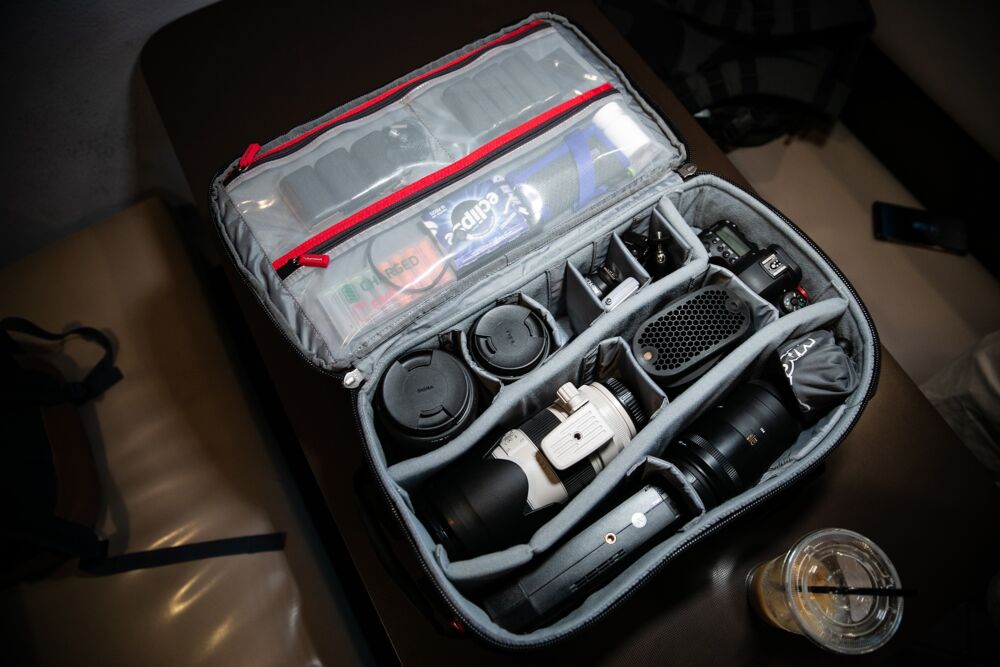
In the new year, you can save hundreds of dollars by keeping track of small, seemingly unimportant items. Label everything, from your lenses to your lens caps to your cables. Consider buying an inexpensive label maker with simple functionality such as the Brother Label Maker.
Gear Organization – Beyond labeling, think about your overall organizational system. Create a dedicated space for your gear where everything has a specific home. Use dividers in your camera bags so you’re not digging around looking for batteries or memory cards during a shoot. Develop a checklist for packing your gear before sessions so nothing gets left behind.
File Organization – Digital organization matters just as much as physical organization. Establish a consistent file naming convention and folder structure for your images. Create templates for contracts, invoices, and client communications so you’re not reinventing the wheel every time. The time you invest in getting organized now will pay dividends throughout the year in reduced stress and increased efficiency.
Error-Proof Your Workflow and Backup System

Is the new year the year that a catastrophe occurs and you lose client images? Make sure it isn’t by foolproofing your backup. Consider getting a camera that allows you to use dual-card slots to double back up your images during the shoot itself. This simple step provides immediate redundancy and has saved countless photographers from devastating losses.
For your post-shoot workflow, implement a 3-2-1 backup strategy: three copies of your data, on two different types of media, with one copy stored off-site. Consider using systems like Drobo, Synology, or other RAID-based storage solutions so that one hard drive crash doesn’t take down your business. Cloud backup services add another layer of protection, ensuring your images are safe even if your physical location experiences a fire, flood, or theft.
Don’t forget to test your backups periodically. A backup system is only as good as your ability to actually restore from it. Set a calendar reminder to verify your backups are working correctly at least once per quarter.
Sell Unused Gear
If you’re just sitting on old gear or if your style has evolved to no longer incorporate certain equipment, consider taking some time to sell it. Most lenses retain their value well, and even a few hundred bucks for an old, outdated camera body is better than having it collect dust in your closet.

Platforms like KEH, MPB, and Facebook Marketplace make it easier than ever to find buyers for used photography equipment. Take the time to photograph your gear properly and write honest descriptions of any wear or issues. The money you recoup can go toward upgrading to equipment that better suits your current shooting style, or it can simply provide a nice financial cushion for your business.
Upgrade Your Portfolio or Website

If you’re still using old Flash websites or if your web design is outdated, consider taking this new year as a new opportunity to give your website an update. Your website is often the first impression potential clients have of your business, and an outdated design can make even great photography look less impressive.
Modern websites need to be mobile-responsive, fast-loading, and easy to navigate. Clients browsing on their phones should have just as good an experience as those on desktop computers. See our list of the best website builders for photographers to see where to get started.
Get a Physical Studio
If you’ve been meeting with your clients at coffee shops and getting by with on-location shooting, maybe it’s time to upgrade to an actual studio. The time for this is different for every individual and may not be for everyone, but this can be the next step in growing your business.

A dedicated studio space gives you complete control over lighting conditions, eliminates weather-related rescheduling, and provides a professional environment for client meetings and in-person sales sessions. Before committing to a lease, consider starting with a shared studio space or renting by the hour to test whether a studio environment truly benefits your workflow and clientele. Factor in not just rent, but also utilities, insurance, and the cost of outfitting the space with backdrops, lighting, and furniture.
Identify Your Weaknesses (and Strengths)
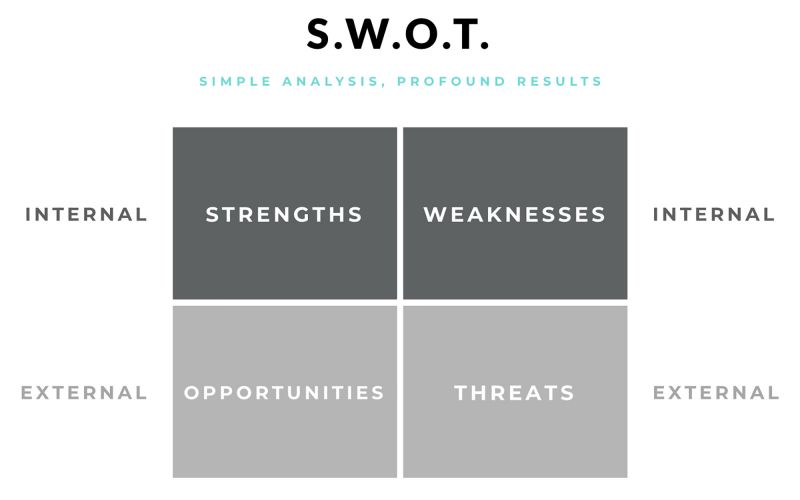
Honest critique is very hard to find these days. Sometimes, it takes a close examination of our work over the past year to realize what we need improvement on. For example, if you know you’re capturing beautiful and creative imagery, but you know that they are not being post-produced at their best, identify post-production as your weakness and take steps to improve in that area.
Consider doing a formal SWOT analysis (Strengths, Weaknesses, Opportunities, Threats) for your photography business. This framework, commonly used in business planning, can help you see your situation more objectively. Ask trusted colleagues or mentors for honest feedback, review client testimonials for patterns in what people praise or don’t mention, and compare your work to photographers you admire to identify specific areas for growth.
Change Your Product Offering
Consider switching up your product offering. Are you completely happy with your canvas printer? What about your album maker? Are you offering too many products? Consider cutting down on your products and eliminating items that either don’t sell well or don’t represent your business well.
Sometimes less is more when it comes to product offerings. A streamlined menu of high-quality options is often more effective than an overwhelming array of choices that leaves clients confused and indecisive. Focus on products you genuinely believe in and can confidently recommend. Test new vendors with personal projects before offering their products to clients, and don’t be afraid to raise your prices if you’re upgrading to higher-quality materials and craftsmanship.
Explore a New Photo Location

I think I’ve shot at the same beach 20-30 times this year. This particular location isn’t necessarily my favorite, but my clients love it. In fact, in my area, there are roughly 5-10 spots that are used over and over, not by choice, but by necessity, as it’s what the clients prefer. Sound familiar?
In the new year, we should challenge ourselves to explore new locations, capture amazing photos of those locations, and convince our clients to take a chance with a new spot. This will not only force us to think differently and creatively, but it will also present new challenges to help us grow. Scout locations during different times of day and various seasons to understand how the light changes. Build a portfolio of images from new locations so you can show clients what’s possible and inspire them to try something different.
Frequently Asked Questions About Photography Goals
How many photography goals should I set for the new year?
Focus on two to three meaningful goals rather than trying to tackle everything at once. Spreading yourself too thin often leads to abandoning goals by February. Choose goals that align with where you want your photography to be in one to three years, and break each goal into smaller monthly milestones to maintain momentum.
Should I invest in new gear or education first?
In most cases, investing in education and skill development will improve your photography more dramatically than new equipment. Master what you currently own before upgrading. That said, if specific gear limitations are genuinely holding back your work (such as a camera that can’t handle low light for your wedding business), targeted equipment investments make sense.
How do I stay motivated to achieve my photography goals throughout the year?
Build accountability into your goal-setting process. Share your goals with a photography buddy or mentor who can check in on your progress. Join photography communities where you can share your work and get feedback. Schedule regular review sessions, perhaps monthly or quarterly, to assess your progress and adjust your approach as needed.
What’s the best way to learn a new photography technique?
Start with structured learning through online courses, workshops, or tutorials from photographers you respect. Then commit to deliberate practice by scheduling regular shooting sessions focused specifically on that technique. Review your results critically, identify what’s working and what isn’t, and don’t be afraid to fail repeatedly as you develop the skill.
Conclusion
For most of us, the start of a new year is full of promise, new beginnings, new goals and mindsets. As you are thinking of what the new year might look like for you, we at SLR Lounge want to thank you for helping us make this a great year, for your support and readership. We have big, exciting plans for next year! Can’t wait to share them. We hope you have a safe and Happy New Year!