

As a partner in a Wedding Photography Studio, I was writing an email to an assistant we’re bringing out this Saturday for the very first time, when I started to realize that I was writing the same email that I had written a couple times before. Basically, it’s an email that discusses some of the common mistakes we’ve seen our assistants make throughout the years. I thought it would be useful information to the photography community, so instead of sending the email again and again to each new assistant, I decided to post these tips here. [Note: in our studio, “assistants” and “second shooters” mean two different things. Our assistants come and help with gear and lighting, while shooting on the side. Our second shooters, are trained shooters and have advanced past this point. This article is geared toward assistants].
These tips are meant to be super simple and really conservative to make them easy-to-remember and effective. Some of them are actually really obvious, but in my experience, even really good photographers slip up once in a while and need reminders. Also, each one of them can and should be broken when the situation and the artistry calls for it. But for the most part, we’ve had photographers with very little wedding photography experience deliver spectacular results when following these simple guidelines.

The 5 Most Common Mistakes Assistant Photographers Make
1) Shutter Speeds – Keep them Up! On your zoom (70-200mm): Daytime above 1/160. Night time Reception above 1/100 with Flash. On your medium zoom (24-70mm): Daytime above 1/100. Night time Reception above 1/80 with Flash. We could go in depth about the reciprocal rule, motion blur, etc, but it’s hard to go wrong with these general shutter speed guidelines. This is probably the most common, and most costly, mistake we see our assistants make. Blurry shots, whether caused by camera shake or movement in the scene, are almost always automatically undeliverable.
2) ISOs – Keep them below 1000 ISO, ideally at 200 or below during the day and between 400-640 during the night time reception. Again, we could go into more depth about grain, exposing for the background, sensor quality, etc, but it’s best to keep it simple.
We realize that this is highly dependent on your camera system. The 1000 ISO rule applies to older Prosumer Cameras like the Canon 50D and below. With Canon 5D’s, Canon 7D’s and up (and their Nikon Equivalents), you can go up to 3200 ISO in certain situations.
3) Shooting Over The Shoulder – Find a different angle. Besides missing opportunities for some interesting perspectives, shooting over the shoulder creates duplicate images and therefore more work in the filtering and post production processes. We realize that some of you may be coming out to work for us with the primary objective of building your portfolio, but your main objective should always be to help the team deliver the best possible product. Your portfolio will come in time and with enough shoots; and in fact, some of the best shots from our weddings have been from the secondary angle, with an interesting foreground or a unique perspective.
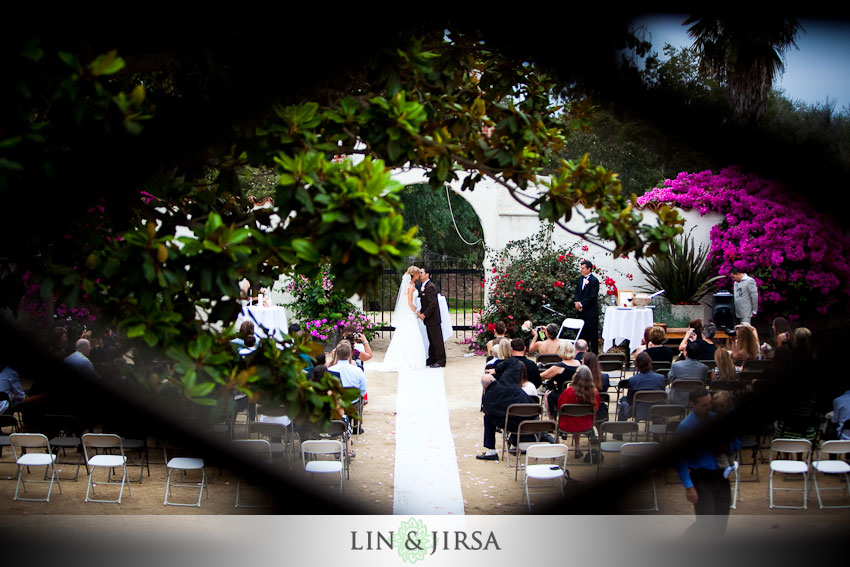
For example, the picture below was shot by Max Young of Film Foto Fusion. As the second shooter at the wedding, he didn’t shoot down the aisle, because the lead photographer had that angle covered. Instead, Max climbed up the balcony of a building and shot through the railing. Needless to say, his picture turned out much more interesting than the lead shot, showing the standard straight-down-the-aisle perspective.
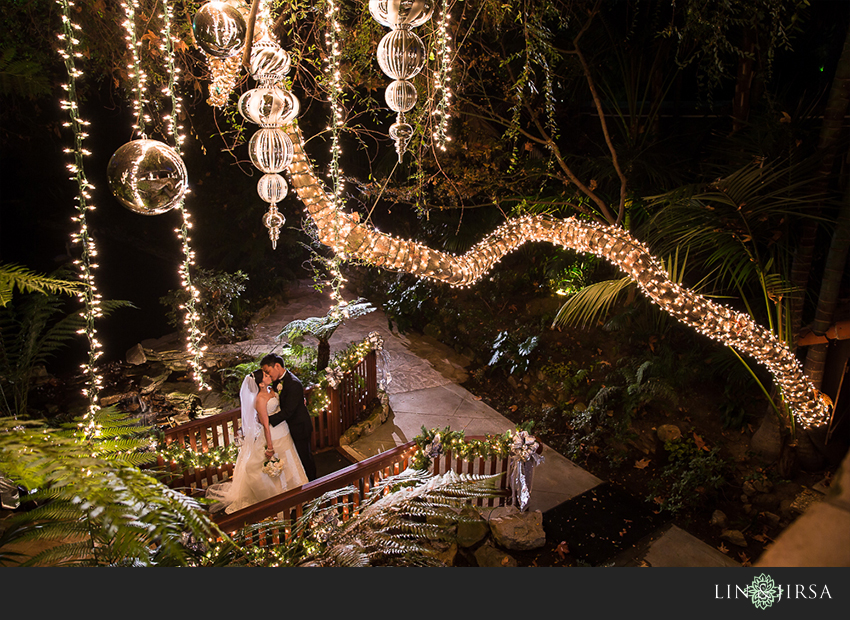
4) Crops – Make sure you’re not getting too much ceiling or too many bullseye shots. I think it’s natural for amateurs to point their center focus on the face of the subject and fire away. This creates crop issues, as you’ll likely be getting too much ceiling (or empty space above the subjects); and you’re going to end up with too many bullseye shots. Make sure you’re not leaving too much room above the subject’s heads. That means, in most cases, you’re bending your knees a little so that you’re shooting straight (instead of slightly pointed up); and the subject’s face is somewhere around the top focal point on your camera.
What are bullseye shots? They’re exactly what the phrase implies. They’re shots of the subject directly placed in the center of the image. Now this may be necessary for many moments, but in general, too many bulls eye shots equals too many boring shots. Switch it up and recompose your shots a little! Put your subjects off center in the left or right third of the image, even the corners of the frame.
5) Confidence – Even though it’s your first wedding, you should carry yourself like it’s your 100th. You should be confident, sociable, and personable. Compliment the bride, share your own wedding experiences, and do your best to become friends with as many people at the wedding as possible. As a representative of the lead photographer’s studio, everything you do reflects on the studio name and service.
Other noteworth blunders we’ve seen on the job include the following:
- Improper Attire – Dress appropriately. For our studio, dress in all black and in conservative attire
- Eating/Drinking – Ask the lead photographer before eating and do not drink alcohol on the job
- Not Being Careful – Do your best to mind your surroundings and avoid knocking things over (especially the cake!)
- Not Sync Cameras – Make sure you sync the times of the cameras before you begin shooting
- Not Shooting in RAW – Make sure you double check what format your lead wants you to shoot in. For our studio, please shoot in RAW/NEF
We hope this article has been helpful; and we invite you to share your thoughts and experiences in the comments!



Get Connected!