There is nothing more chaotic than wrangling a group of people together for a photo and then having to set up perfect lighting, poses, and expressions. These are some of the most valuable images you will capture during a wedding day, and we know just how stressful they can be. In this article, we’ll give you some essential tips for incredible wedding party photos.
Wedding Party Photos: At a Glance
This guide covers the key techniques wedding photographers use to capture polished, dynamic, and memorable wedding party portraits from start to finish.
- Start with the Standard Basic Photos – Lock in the must-have traditional shots first
- Add in Editorial Posing – Elevate your group portraits with creative layers and expressions
- Find the Ideal Background – Scout locations that match your clients’ vision
- Show Your Subjects How to Pose – Direct with confidence to speed up the session
- Add in Action Poses – Keep energy high with movement and dynamic shots
- Spread Light Evenly Across the Group – Choose the right modifier for flattering group light
- Double Check Facial Expressions – Avoid the one unhappy face that ruins the shot
- Incorporate Your Bride and Groom’s Ideas – Collaborate on creative concepts for standout images
All images in this article are provided by Lin and Jirsa Photography, a studio based in Los Angeles and Orange County, CA.
Start with the Standard Basic Photos

Starting with a standard photo is critical for wedding party portraits. This is typically the traditional shot: symmetrical posing, even lighting, and clean expressions. These are not necessarily creative or editorial images, but they are essential must-haves that every client expects. Getting these locked in first removes pressure from the rest of the session and gives you a solid foundation to build on.
A few things to nail down before you move on: make sure everyone is on the same level or intentionally staggered, that no one is hidden behind another person, and that the group is reasonably tight without looking crowded. Once you have a clean standard shot in the bag, you can loosen up and get more creative.
Add in Editorial Posing to Your Wedding Party Photos

After you have the standard poses done, add in a more editorial flair. These are typically more interesting and creative, though they may take more time and effort. Consider adding layers, with some wedding party members standing and some sitting. Also consider different facial expressions for these photos, with a smiling version and a “vogue” or serious version. Lastly, look for an area with more dramatic lighting. Read more on editorial posing here.
The key difference between a standard shot and an editorial one is intention. Editorial posing tells a story. Think about how fashion campaigns are photographed: subjects are angled toward or away from each other, hands are placed deliberately, and the overall composition feels designed rather than arranged. Give your wedding party a simple concept to work with, like “look like you own the room,” and you’ll be surprised how naturally the energy shifts.
Find an Ideal Background

It’s important to scout for a location that aligns with the vision your clients requested for their photos. In the image above, clients wanted a more editorial group portrait, which required a classy background with minimal distracting elements. The symmetrical architecture frames the group naturally and gives the image a polished, intentional feel.
When scouting, think about the background in relation to the group size. A wide venue corridor or staircase works well for larger parties, while a clean wall or garden hedge can frame a smaller group beautifully. Watch for cluttered backgrounds, harsh shadows, or distracting signage that will pull the viewer’s eye away from your subjects. If possible, walk the venue before the wedding day and mentally map out two or three strong group portrait locations so you’re not scrambling on the day.
Add in Action Poses

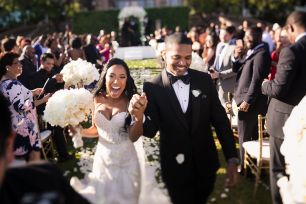
Movement and action are essential for a complete set of wedding party photos. Consider a walking shot like the image above. Or if your group is up for it, you can try jumping, dancing, or anything else that fits the vibe of the day.
If you start seeing uninterested or tired-looking expressions, that’s your cue to shift toward poses with more movement and energy. Action shots break up the monotony of static posing and often produce some of the most natural, candid-feeling images of the day. A simple walking shot where the group strides confidently toward the camera is easy to execute and almost always delivers great results. For higher-energy groups, a jump shot or a spontaneous dance moment can add real personality to the gallery.
Show Your Subjects How to Pose

A great way to get your subjects into their poses as quickly as possible is to physically demonstrate how the pose is supposed to look. Put down your camera and step into the role of a director. This is also a great opportunity to engage with each subject until he or she is in place, and maintain a happy vibe to create a positive experience.
Don’t underestimate how much time this saves. Most people have no idea what to do with their hands or feet in a photo, and vague instructions like “look natural” only add to the anxiety. When you physically demonstrate a pose, even briefly, it removes the guesswork and gets people moving in the right direction much faster. It also lightens the mood; when the photographer is willing to look a little silly, the group relaxes and the energy on set improves immediately.
Spread Light Evenly Across the Group

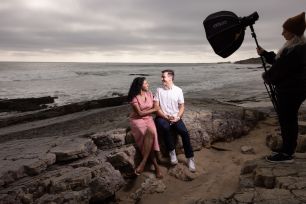
Deciding on the right lighting modifier before you shoot is one of the most important preparation steps for group portraits. When working with larger groups, it can be difficult to light each person equally, especially if you don’t have enough light power or if the group spans a wide area.
For outdoor portraits in open shade or on overcast days, a large octobox or shoot-through umbrella works well to wrap light across the group softly. In direct sun, you may need to overpower the ambient light with a more powerful strobe. For indoor receptions or venues with low ceilings, bouncing flash off a white ceiling can be an efficient way to spread light evenly without needing a modifier at all. Whatever your setup, take a test shot and check your histogram and the edges of the frame before finalizing the group arrangement.
- 3 Ways To Photograph Family Group Photos With Flash
- How to Create Formal Family and Wedding Party Portraits that Sell
Double Check Facial Expressions

The last thing you want is to zoom into a wedding party photo and see one person looking absolutely depressed while everyone else is smiling. This is a small detail that many photographers overlook, but it can be caught by taking a second to review the image on the back of your camera. Get a greater payout for the time and effort put into setting up group portraits by capturing multiple expressions for each setup.
A practical trick is to announce before each shot that you will be taking three frames: one serious, one natural smile, and one big laugh. This gives everyone a clear cue and gets their faces moving, which almost always produces more authentic expressions than asking them to “just smile.” It also gives you variety in the gallery and increases the chance of getting a frame where everyone looks genuinely happy at the same moment.
Incorporate Your Bride and Groom’s Ideas

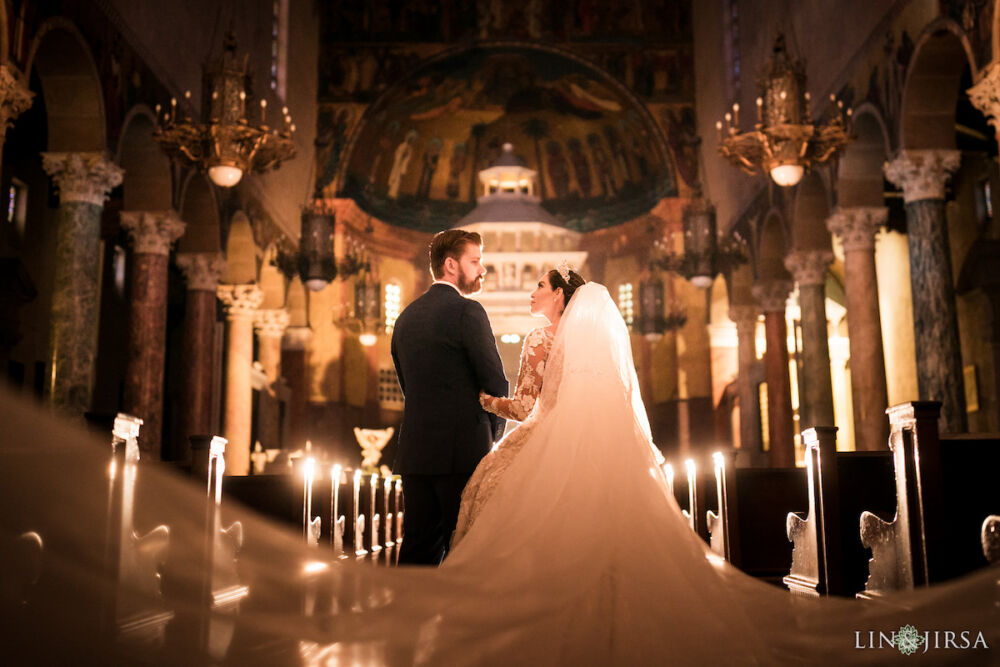
Some of the best photos come from a collaborative vision between the wedding couple and the photographer. The photo above is an example of Pye Jirsa executing an idea that the bride and groom had on their mood board. Be prepared with the right lighting gear, the knowledge and confidence to create any type of image, and an open mind. The results will be ecstatic clients and some truly standout wedding party photos.
Reviewing the couple’s mood board before the wedding day is one of the most valuable things you can do. Not only does it tell you what they are drawn to visually, but it opens a conversation where you can add your own expertise and refine their ideas into something achievable given the venue, timeline, and conditions. When clients feel heard and see their vision reflected in the final gallery, it builds trust and generates referrals.
Frequently Asked Questions About Wedding Party Photos
How much time should I budget for wedding party photos?
For a standard wedding party of 6 to 10 people, plan for 20 to 30 minutes if you want both traditional and editorial shots. Larger parties of 12 or more can easily take 45 minutes to an hour when you factor in travel between locations, posing adjustments, and the inevitable stragglers. Build buffer time into your timeline so the portrait session never feels rushed.
What lens is best for photographing large wedding party groups?
A 35mm or 50mm prime lens is a popular choice for group portraits because it minimizes distortion while giving you enough width to include the full party without being too far away. Many photographers also reach for a 24-70mm zoom for the flexibility to reframe quickly. Avoid ultra-wide lenses below 24mm unless you are shooting in a tight space, as they can distort faces at the edges of the frame.
How do I keep the wedding party engaged and energized during photos?
Keep things moving. Long pauses while you adjust gear or settings are the fastest way to lose the group’s energy and attention. Work with an assistant when possible so someone is always engaging with the party while you handle technical adjustments. Call out names, crack a joke, or give specific direction rather than vague instructions. When people feel like the photographer knows what they are doing, they relax and the photos improve naturally.
Should I shoot wedding party photos before or after the ceremony?
Both approaches have merit. Shooting before the ceremony (a “first look” format) gives you the most flexibility with light and timing, and everyone looks freshest. Shooting after the ceremony gives the images a more emotional quality since the couple has already exchanged vows. Many photographers offer both options and let the couple decide based on their preferences and schedule.
How do I handle uncooperative or nervous wedding party members?
The best approach is to give them something to do rather than just telling them where to stand. Action poses, walking shots, and interaction-based directions (like “lean in and tell her something funny”) work especially well for people who freeze up in front of a camera. Avoid singling anyone out for corrections in front of the group; instead, give group-wide direction so no one feels put on the spot.
Conclusion and More Information
For more tips on shooting the wedding party, check out Photographing Group Portraits, available in SLR Lounge Premium. Many of the wedding party photography tips above are straight from our workshop Photographing Group Portraits. Watch the trailer below: