Flash Photography
What Is Flash Photography?
Like the name implies, flash photography is photography using a flash. The primary purpose of flash photography is to illuminate a dark scene. It’s thus used when indoors or when ambient light outside is not enough. Although most people use flash photography for this reason, it has other uses as well.
A photographer can, for instance, use it when capturing moving subjects or changing the quality of the light. This can enhance photographs or give dramatic effect where it’s needed.
Flash photography is versatile and can be used in several forms of photography, from portraiture, fashion, real estat, and wildlife photography.
Types of Flashes
There are a large variety of flashes available on the market today. They are commonly built into the camera, but more advanced flashes are external units which fit to the hot shoe of the camera.
Most of these advanced flashes offer adjustable intensity and duration of the flash. This enables the photographer to adjust the flash according to their needs and the subject they’re working with. Many also have the choice of remote triggering where the flash can be triggered away from the camera.
Besides the flashes mentioned above, there are also many specialized flashes available. These include:
• Ring flashes which fit to the lens of the camera and reduces shadows in macro photography.
• High speed flashes that flashes many times in a short duration. These flashes are used in science or by engineers.
• Multi-flash systems that flash light from different directions and is used in technical or medical imagery.
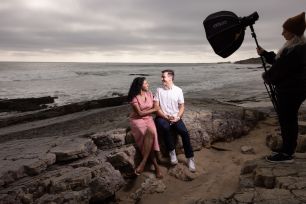
• Standalone units such as strobe flashes that is used in studio photography.
There are also some techniques, with some accessories, that flash photographers use. Some ways are:
• Soft boxes, which diffuse the light, taking away the harshness and making it softer.
• Fill flash, which is used to supplement light in darker areas of the frame.
• Bounce flash where the photographer directs the flash at a reflective surface like an umbrella. In this way it can serve as a fill flash or to supply ambient lighting.
Besides these there are several other techniques and tools available like manually-triggered flash, colored gels, and strobing. With all the tools available, the possibilities with flash photography are endless.
In the articles below, read about Flash Photography tips, tutorials and news.

Bounce Flash Tutorials For Beautiful Light Anywhere
We're going to cover the difference between direct flash vs. bounce flash and give you an easy secret to creating soft, flattering light anywhere you go.

How to Create a Home Portrait Studio
Follow along as we set up a home portrait "studio" (with a budget cap of $20 for a reflector), capture our shot using whatever gear we already have (including a phone camera), and edit the image in Lightroom and Photoshop.

Christmas Lights Photography Tips and Inspiration
In honor of the festive season, Jay P. Morgan from The Slanted Lens has released the following video tutorial on how to photograph Christmas lights.

Body Photography Tips for Capturing the Beauty Within
In the world of photography, the human body holds a remarkable power to convey emotions, tell stories, and celebrate the ...

Fitness Photography Tips: How to Images with Interest and Impact
Here a few simple tips to help you chisel out the human body using dramatic highlights and shadows, perfect for athletic and fitness portraiture.

Ideal Lighting Setup for Large Group Portraits
An quick & easy lighting setup to help you produce flawless family formals or group portraits in minutes.

Fake Golden Hour | How To Re-Create Natural Sunlight
Lost that golden light and looking to recreate it? Here is how do it convincingly with some high powered strobes!

When and How to Use Direct Flash The Right Way!
Leave no doubt, direct flash is the easiest way to get some unflattering shots, but if you do it right, you can create really great edgy looks to your images.

Light Feathering | What is it and How to Use It
In the following tutorial, Jay P. Morgan from The Slanted Lens shows us a technique called, "feathering" with a softbox.

10 Tips For Wedding Reception Lighting
Here are 10 lighting tips to get you through some tricky wedding reception lighting issues.

Ring Light VS Softbox | Which One Is Right For You?
For everything from makeup tutorials on Youtube to high-fashion portraiture, you should understand the differences, the advantages, and disadvantages of a ring light vs a softbox!

Profoto Announces B20 and B30 | Portable Power, Maximized
The Profoto name is legendary for many reasons. For me after 20+ years as a professional wedding & portrait photographer, ...