Flash Photography
What Is Flash Photography?
Like the name implies, flash photography is photography using a flash. The primary purpose of flash photography is to illuminate a dark scene. It’s thus used when indoors or when ambient light outside is not enough. Although most people use flash photography for this reason, it has other uses as well.
A photographer can, for instance, use it when capturing moving subjects or changing the quality of the light. This can enhance photographs or give dramatic effect where it’s needed.
Flash photography is versatile and can be used in several forms of photography, from portraiture, fashion, real estat, and wildlife photography.
Types of Flashes
There are a large variety of flashes available on the market today. They are commonly built into the camera, but more advanced flashes are external units which fit to the hot shoe of the camera.
Most of these advanced flashes offer adjustable intensity and duration of the flash. This enables the photographer to adjust the flash according to their needs and the subject they’re working with. Many also have the choice of remote triggering where the flash can be triggered away from the camera.
Besides the flashes mentioned above, there are also many specialized flashes available. These include:
• Ring flashes which fit to the lens of the camera and reduces shadows in macro photography.
• High speed flashes that flashes many times in a short duration. These flashes are used in science or by engineers.
• Multi-flash systems that flash light from different directions and is used in technical or medical imagery.
• Standalone units such as strobe flashes that is used in studio photography.
There are also some techniques, with some accessories, that flash photographers use. Some ways are:
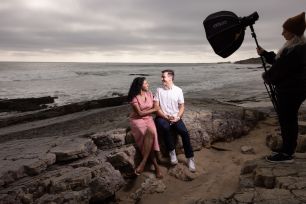
• Soft boxes, which diffuse the light, taking away the harshness and making it softer.
• Fill flash, which is used to supplement light in darker areas of the frame.
• Bounce flash where the photographer directs the flash at a reflective surface like an umbrella. In this way it can serve as a fill flash or to supply ambient lighting.
Besides these there are several other techniques and tools available like manually-triggered flash, colored gels, and strobing. With all the tools available, the possibilities with flash photography are endless.
In the articles below, read about Flash Photography tips, tutorials and news.

Shed New Light on the Same Old Places
It’s exciting when you discover the perfect scene to craft an inspiring image. Then, after shooting a location a few times, ...

5 Simple Steps To Create A Unique Reflection Shot | How We Shot It
Visualize your art before you create it.

How To Light People With Glasses And Avoid Shoot-Crippling Glare
Among the many considerations that surround lighting your subject, the fact that they wear glasses can easily be overlooked. It ...

3 In 1 Headshot Method | Great Headshots Anywhere With Minimal Gear
We as photographers are prone to thinking that more gear equals more versatility, and getting that new gadget will open ...

The True Cost of Gear and Gear Failure
Everyone has a budget when it comes to gear, but at what cost do you compromise value? The only cost ...

4 Pieces Of Lighting Gear You Need For Every Engagement Shoot
Here our 4 must have items for your engagement photography lighting kit!

Natural Light Boudoir Photography with Lindsay Adler
New York based fashion and beauty photographer and Canon Explorer of Light Lindsay Adler has teamed up with ExpoImaging to ...

Improve Your Night Photography With Foreground Lighting
One of the biggest challenges when it comes to night photography is incorporating good foreground elements, but learning a few ...

The Laws of Light Pt.1 | The Slanted Lens
Learn how to easily light spherical objects (like a head) with these quick tips from The Slanted Lens.

3 Primary Subject Positions Relative To Your Key Light Source
Learn which of 3 primary subject positions will yield more flattering portraits.

Beauty & Portrait Photography Tutorial Using Sony Cameras
A few months ago I partnered up with Sony to give everyone an exclusive look at my entire creative process ...

Creating Soft Portrait Lighting with On Camera Flash | Minute Photography
In just 60 seconds, see how we use an on-camera flash and a reflector to create soft, flattering light for portraits.