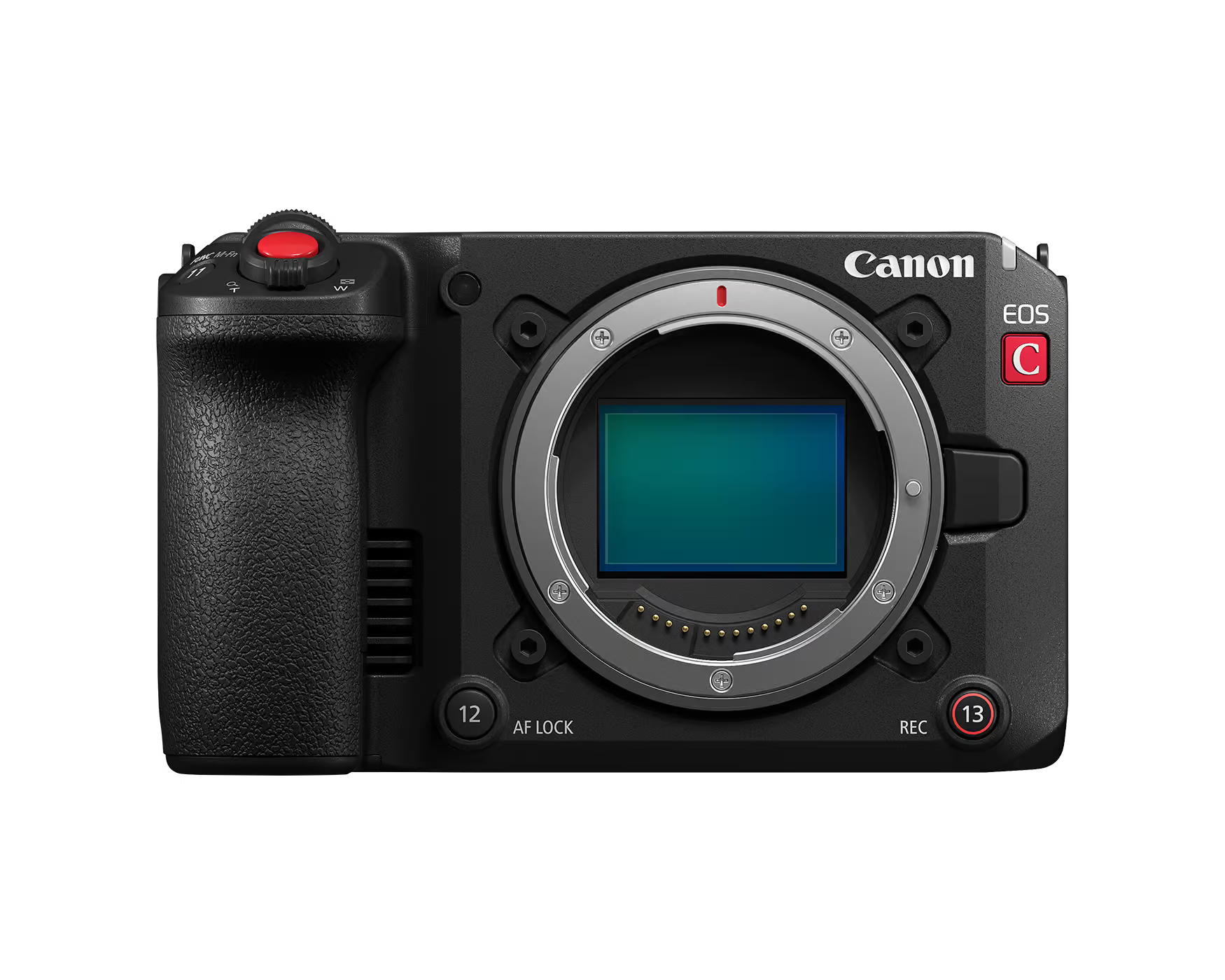
Canon has officially announced the EOS C50, a full-frame 7K cinema camera that’s also its smallest and lightest in the Cinema EOS lineup. Weighing just 1.5 pounds, the C50 is a compact hybrid that captures 12-bit Cinema RAW Light at up to 7K/60p, offers full-frame open gate recording, and even pulls 32MP stills — all in a package no larger than some mirrorless cameras.
At its core is a newly developed 7K full-frame CMOS sensor paired with the DIGIC DV7 processor. Canon says the C50 is its first Cinema EOS camera to support 3:2 full-frame open gate capture, giving users more flexibility in post, especially for vertical, square, or anamorphic outputs. Dual base ISO is rated at 800 and 6400 in Canon Log 2, with support for Canon Log 3, PQ, HLG, Wide DR, and Canon 709 profiles — each with their own native base ISOs.
Watch the C50 Video Below
For a visual breakdown of the EOS C50’s key features and design philosophy, B&H has put together a concise overview video. It walks through the camera’s recording capabilities, user interface, and standout specs in under five minutes — a solid primer if you’re considering the C50 for your next project.
Pro-Grade Specs in a Portable Body
Despite its hybrid lean, the C50 isn’t stripped down. It supports 12-bit Cinema RAW Light in HQ, ST, and LT compression modes, along with XF-AVC, XF-AVC S, and XF-HEVC S codecs — all in a simplified MP4-friendly folder structure for faster handoff. Frame rates include:
- 7K Cinema RAW Light at up to 60 fps
- 4K up to 120 fps (oversampled from full 7K)
- 2K up to 180 fps (with crop)
- 3:2 Open Gate up to 30p (RAW and HEVC)
Simultaneous Crop Recording enables 4K DCI or UHD capture alongside a cropped 2K frame in vertical or square formats (9:16, 9:17, or 1:1), targeting social and advertising creators. The crop area can be adjusted in-camera for optimal framing.
Streamlined for Solo Creators and On-Set Teams
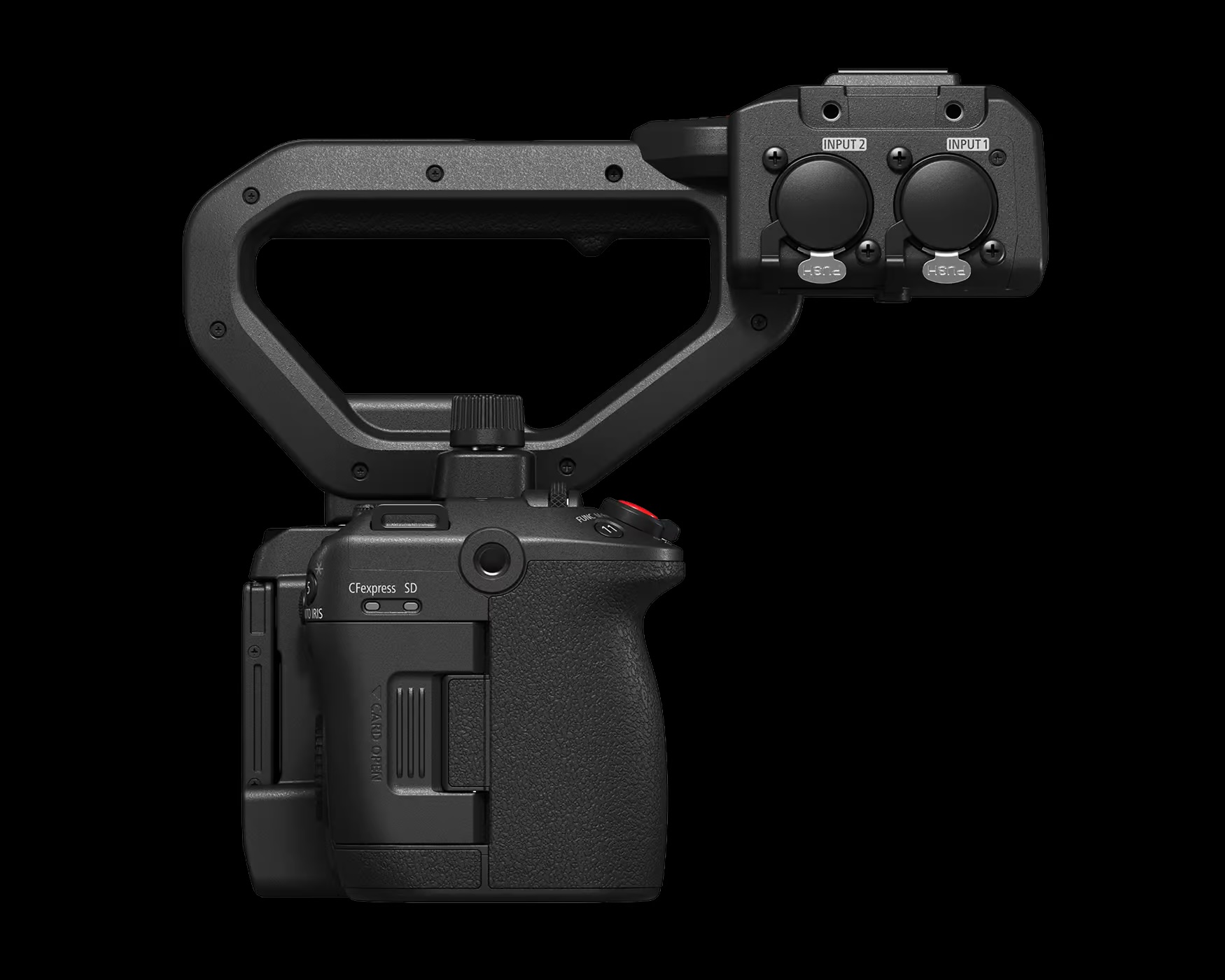
The EOS C50 features dual card slots — CFexpress Type B and SD — supporting simultaneous proxy, backup, or split-format recording. A detachable top handle adds two full-size XLR inputs, gain controls, a start/stop trigger, and a zoom rocker — ideal for ENG setups using RF power zoom lenses.
Connectivity includes a full-size HDMI output, USB-C, timecode in/out, mic/headphone jacks, a multifunction shoe, and Wi-Fi. The C50 supports:
- UVC/UAC livestreaming up to 60p over USB
- Remote IP control via XC protocol or third-party USB-C Ethernet adapters
- Canon’s Multi-Camera Control App
- Canon Content Transfer Professional (CTP) App
- Native Frame.io Camera-to-Cloud integration
Power comes from Canon LP-E6P batteries, though the LP-E6NH is also supported with some limitations. Mounting points include 1/4″-20 threads on the top, bottom, and side of the body for cage-less rigging. The user interface adapts to photo or video mode depending on the position of the dedicated switch — a carryover from the EOS R5 C.
RF85mm f/1.4 L VCM Hybrid Lens: Built for Video and Stills
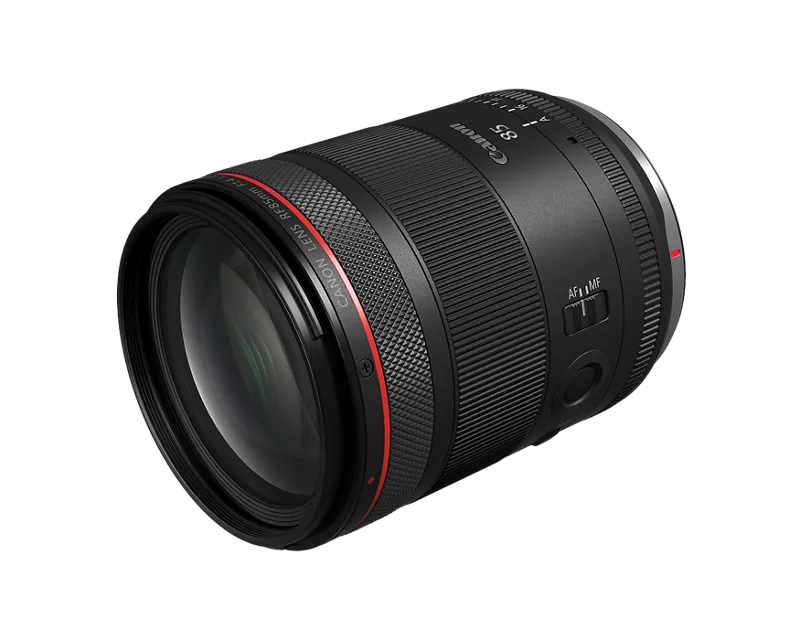
Announced alongside the C50 is the new RF85mm f/1.4 L VCM Hybrid lens. Featuring fast, quiet autofocus with Canon’s VCM (Voice Coil Motor) tech and minimal focus breathing, it’s designed to serve both still shooters and filmmakers — especially those working in portrait, commercial, or hybrid workflows. Paired with the C50, it delivers a shallow depth of field and L-series optics in a form factor tuned for hybrid creators.
Firmware Updates Coming to Cinema EOS Line
Canon also confirmed that several features from the C50 will make their way to other Cinema EOS cameras via firmware later this year. The EOS C400 will gain 3:2 full-frame open gate recording, while the C80 and C400 receive improved joystick operation, assignable button customization, focus peaking enhancements, and view assist during playback.
Price and Availability
The Canon EOS C50 is expected to ship in Q4 2025 for $3,899 at retailers like B&H. The RF85mm f/1.4 L VCM Hybrid Lens is also expected later this year, with pricing to be announced. Firmware updates for the EOS C400, C80, C70, and R5C are also scheduled for release in Q4.
Whether it’s rigged out for studio work or stripped down for field shoots, the C50 signals Canon’s continued commitment to versatile, pro-grade tools — not just for filmmakers, but for the growing class of hybrid creators who work across formats and platforms.