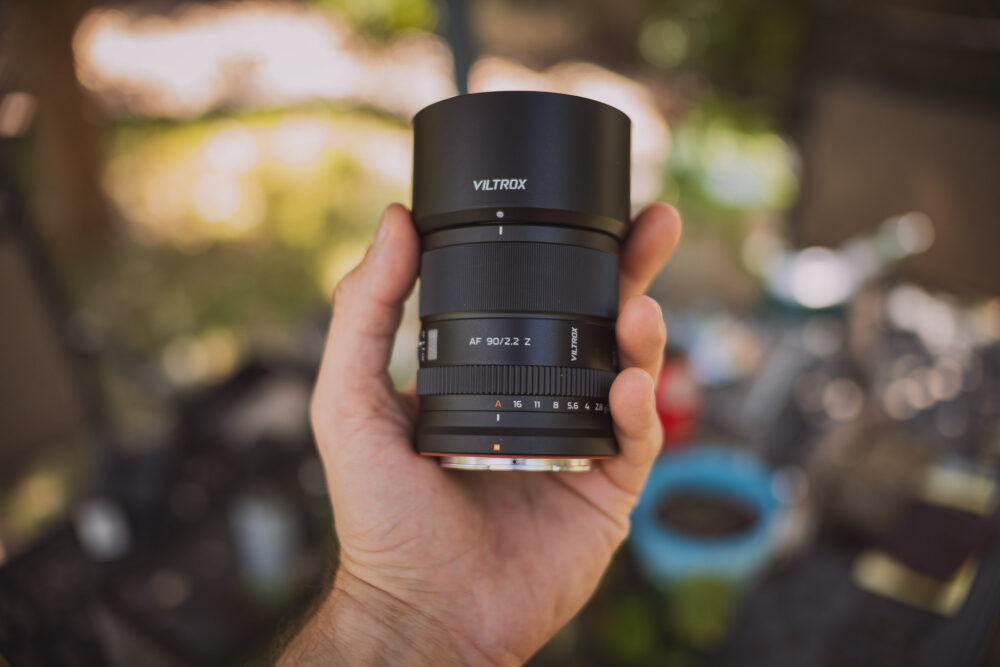
Portrait and wedding photographers, have you tried a 35mm prime yet? If not, you might just be living under a rock. Honestly? After 20+ years as a professional, out of all the veteran photographers I’ve met, at least half of them are totally obsessed with their 35mm prime. (The other prime lovers are obsessed with a 50mm, and I think they’re wrong! I’m one of the 35mm lovers; spoiler alert!)
Today, I’m writing this Viltrox 35mm f/1.8 EVO review with the hope that I will convince both beginners and experienced professionals alike to try it out. Whether you’ve already used a dozen different 35mm primes, or this is your very first prime lens, pay attention…
Here’s what you really need to know: the Viltrox EVO lineup caught my attention recently because it’s a substantial departure from many third-party, beginner-oriented, “affordable alternative” lenses from years past: On this 35mm prime, the optics and the mechanics are both superb, offering impressive image quality and rugged build quality. And yet, the price tag is still budget friendly, at $395. Considering the APO and ED optics and the extensive feature set, (de-clickable aperture ring, AF/MF switch, Fn button, weather sealing, and more) …that is an incredible value that is worth checking out. Without any further ado, let’s dive into this lens review!
Viltrox AF 35mm f/1.8 EVO | Specifications
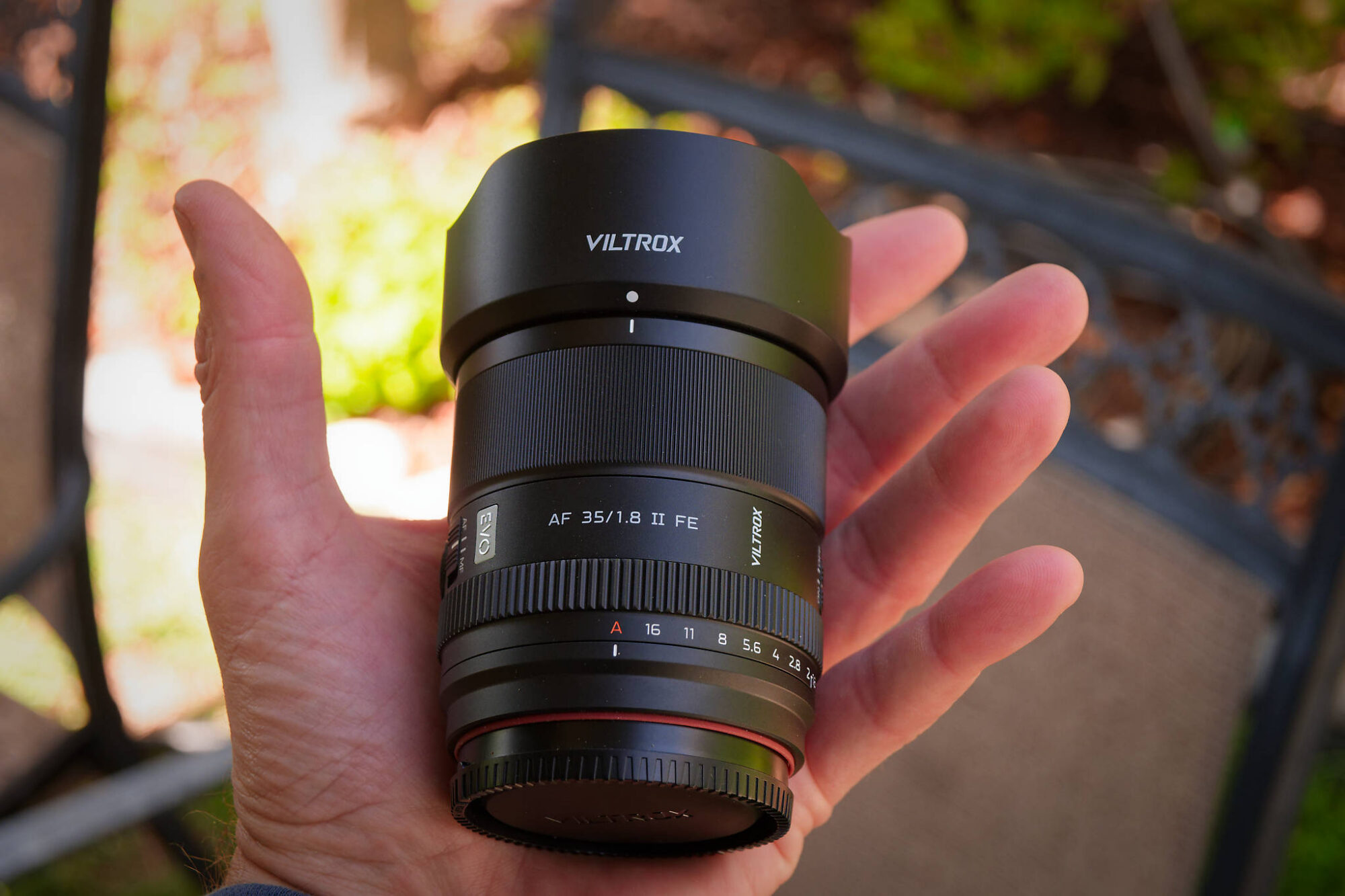
- FOCAL LENGTH & ANGLE OF VIEW: 35mm, 63° (full-frame)
- LENS MOUNT(S): Sony E (FE full-frame), Nikon Z (Full-Frame)
- APERTURE & RANGE: f/1.8-f/16, 9 rounded blades
- STABILIZATION: No
- AUTOFOCUS: fully internal focusing, silent STM motor
- MANUAL FOCUS: Digitally controlled, dedicated physical ring, dedicated AF/MF switch
- OPTICAL CONSTRUCTION: 13 elements in 10 groups, 2 ED, 3 HR, 1 UA (aspherical)
- MECHANICAL BUILD: Metal barrel & mount, weather sealed
- MAGNIFICATION & FOCUS DISTANCE: 0.15X magnification, ~13.4” (0.34m) close focus
- FILTER THREADS & HOOD: 58mm, plastic hood included
- SIZE: Φ2.71×2.99 in. (69x76mm)
- WEIGHT: 12.52 oz (355g) (bare lens)
- PRICE: $395
Viltrox AF 35mm f/1.8 EVO Review | Who Should Buy It?

A 35mm prime is a very universal lens. It’s useful for everything from casual candid photos of everyday life, to serious professional portrait work, and of course both photo and video applications. If you take away anything from this review, it is that you should probably own a 35mm prime, if not this one!
I do strongly believe that this particular prime is a great choice; it’s everything that you’d want in such a lens. It’s small and lightweight enough to just leave it on your camera all the time for most of your photography, but it’s also professional enough to trust for high-paying work. The 35mm focal length is excellent for pictures of all different types of subjects, not just people; it balances the ability to blur a background while also still including more of a scene compared to a “normal” 50mm lens.
So, who should consider this Viltrox 35mm f/1.8 EVO? Almost everyone, indeed, but with a few caveats that we’ll go over now…
Portrait Photography

First and foremost, I love a good 35mm for portraits. Compared against any other focal length, 35mm lets me give my subjects a little room to breathe, while not worrying too much about distortion or other issues related to scale and subject distance. While many photographers prefer a ~50mm prime for these same reasons, I’m a passionate landscape photographer as my hobby, so, I actually prefer 35mm over 50mm when it comes to portraits.
Honestly? The results from this modestly priced (and weighted) f/1.8 prime are good enough that I would recommend it to everyone who is interested in portraits, from the beginner to the high-end luxury portrait photographers. (We’ll talk about f/1.8 versus f/1.4 and f/1.2 later!)
Wedding Photography & Video
Of course, portrait photography in a candid, environmental situation also happens at weddings. So, as much as I recommend a 35mm prime to portrait photographers, it automatically applies to weddings even more! I love a good 35mm prime for candid snapshots as a bride or groom is getting ready, or wedding guests as they gather at cocktail hour, or even on the dance floor at the wedding reception!
Whether you do photo and/or video, any sort of event work should at least consider 35mm. Especially one like this EVO 35mm f/1.8, with its de-clickable aperture ring for precise, smooth iris control.
(If you’re a videographer, however, do pay special attention to the various crops of your camera sensor; sometimes recording 4K 60p video for example might cause your camera to crop in quite a bit, and “ruin” the 35mm angle of view. This also applies to digital image stabilization, in which case a 24mm prime might be a better option since it might actually yield a ~35mm final result. Do your homework!)
Vloggers & Content Creators

The more casual, “real life” types of video creators should also consider this lens, with one particular note that I’d like to offer: If you’re doing a lot of vertically oriented video, a 35mm prime lens (or even a 24mm) is likely a much better choice than a 50mm, because of its horizontal angle of view when in vertical orientation.
Also, if you’re putting your camera on a gimbal stabilizer, you really care about weight! This EVO prime is one of the highest-quality lenses in such a lightweight, compact package.
Cinema & Movie Makers
Don’t get me wrong about casual use and “semi-professional” work, of course. Considering the excellent image quality and the rugged build quality, I think this EVO lineup is ready for very high-end productions. (NOTE: We’ll talk about the legal concerns a little bit later, for those of you on the Nikon Z mount…)
Fashion & Editorial Photography
Again, the same advice applies: If you’re a high-end portrait photographer who is extremely discerning when it comes to image quality, you’re in the right place. However, I do think that a serious professional ought to also have a 50mm or 85mm prime (or longer) to go with such a medium-wide prime.
Candid & Street Photography
Oppositely from the other types of photography with human subjects, candid & street photography is a genre where this lens might literally never leave your camera! In fact, 35mm is the most popular focal length (equivalent) on fixed-lens cameras, the last time I checked. If you’re mostly just doing casual candids of anything and everything, whether photo and/or video, a compact, reliable 35mm prime should be your primary lens.
Landscape & Nightscape Photography

Most landscape and nightscape photographers will start with a wider lens, I suspect, but don’t discount the fantastic results you can get with an excellent 35mm! I find it to be a perfect complement to a 20mm or 24mm prime, for when you need a little bit more simple of a composition.

Even wide-open at f/1.8, this lens truly shines with its optics delivering stunning detail in the night sky. I was truly impressed by the wide-open results. In fact, the first test image I saw at f/1.8, I thought it was taken at f/2.8, it was that good!
Viltrox 35mm f/1.8 EVO Review | Pros & Cons

Image Quality
For those who don’t know, APO stands for Apochromatic. It just means that the optics have elements which are made to virtually eliminate annoyances like color fringing, aberration, etc. What does this actually mean in the real world? The technical detail of this lens is truly impressive. It’s not just sharp, but even the finest details are crisp, contrasty, and vibrant with accurate colors.
I particularly appreciate this when using “lower” megapixel cameras like ~24MP, because you are more likely to enlarge or zoom in to 200% when cropping or making a huge print of your images. For a wedding photographer who is using a Sony A9 series or a Nikon Z6 series, this is an excellent lens!
Sharpness


I’ll let the results speak for themselves; even wide open at f/1.8, and even off-center, the level of detail is stunning.


Bokeh

Background blur is one thing that portrait and candid photographers are always concerned about. I tested the Viltrox EVO AF 35mm f/1.8 II both close-up and at greater distances, in some of the most challenging conditions with regard to bokeh. Even when the background is full of “nasty” things like sticks and twigs, the bokeh is still pleasant, it’s very smooth and creamy.

In the past, f/1.8 prime lenses were relegated to amateur status because their optics weren’t professionally designed; they were meant to be compact and cheap, and “back in the day”, that meant a compromise on subtle things like bokeh. Not anymore; this Viltrox EVO lens offers it all! I am now entirely confident in using an f/1.8 prime for professional portraiture or in other situations where shallow depth is critical.

I did notice that once in a while, on certain things like stars or distant tree branches, the “edge” of focus can seem to have a faint edge or double edge to it. This might be due to the APO optics being so good at correcting almost all color aberrations, and it’s not a concern for 99% of photographers.
Colors & Contrast
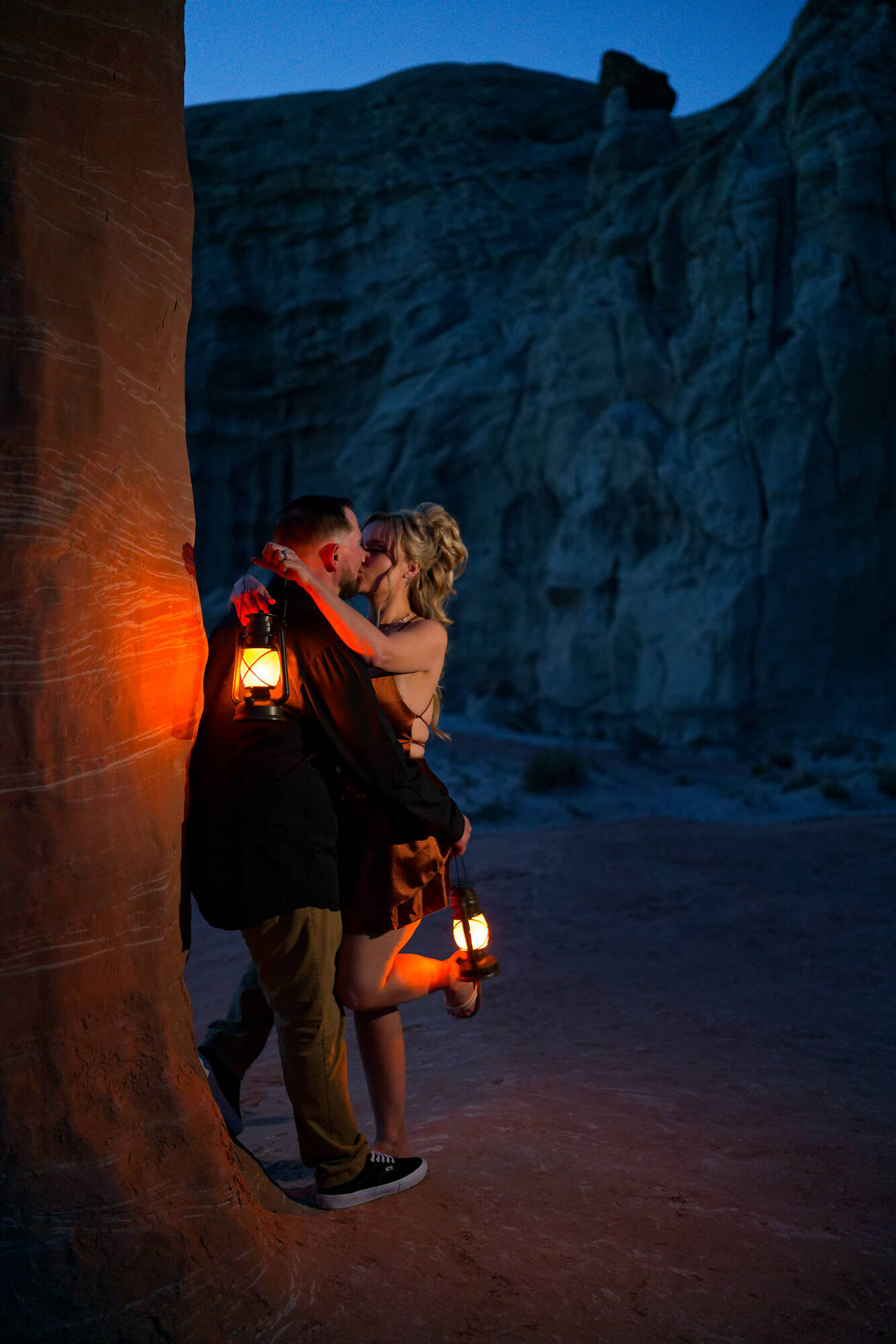
Another area where third-party lenses used to fall short in years past was with regard to color cast and the overall vibrance of the images. I’ll let the images in this review speak for themselves; just know that in every case I’ve applied very minimal editing and overall I’m very impressed by the colors & contrast.
Vignetting & Distortion
Mirrorless lenses almost all have one thing in common: they rely on a lens “profile” to correct any optical flaws of distortion or vignetting. This is standard in the industry now, which has good and bad results. On the one hand, using a lens profile to correct minor vignetting and distortion allows a lens to be more affordable and more portable. On the other hand, sometimes lens makers try to get away with too much “secret” correction, and the real image your lens is creating might have horrible distortion or pitch-black vignetted corners.
In the case of the Viltrox EVO 35mm f/1.8, I used DxO PhotoLab 9 to access the raw image data, and I found that vignetting and distortion are both shockingly low! This makes it an excellent choice for my hobby, which is, adventurous nightscape photography.
Sunstars & Flare
The flare characteristics are very unique; sometimes this is a beautiful thing, and once in a while it’s a slight annoyance. Personally, for portrait photography I really love having a lens with unique flare characteristics. Just be careful how you’re framing your compositions, and you’ll enjoy a lens that delivers imagery akin to a vintage lens but with modern optical sharpness etc.
Color Fringing, Aberration, Coma & Astigmatism

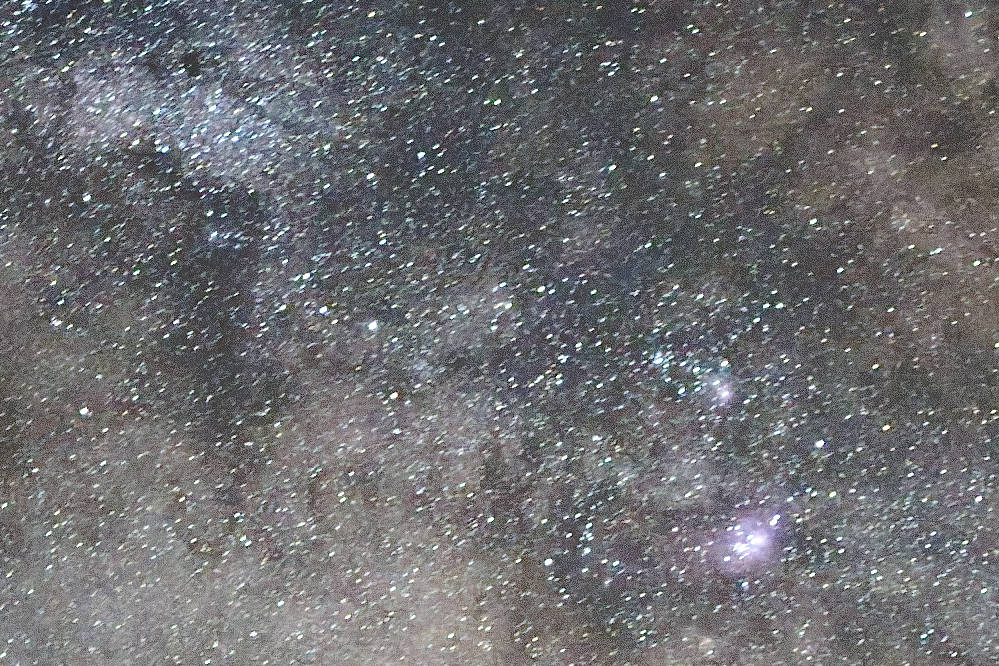
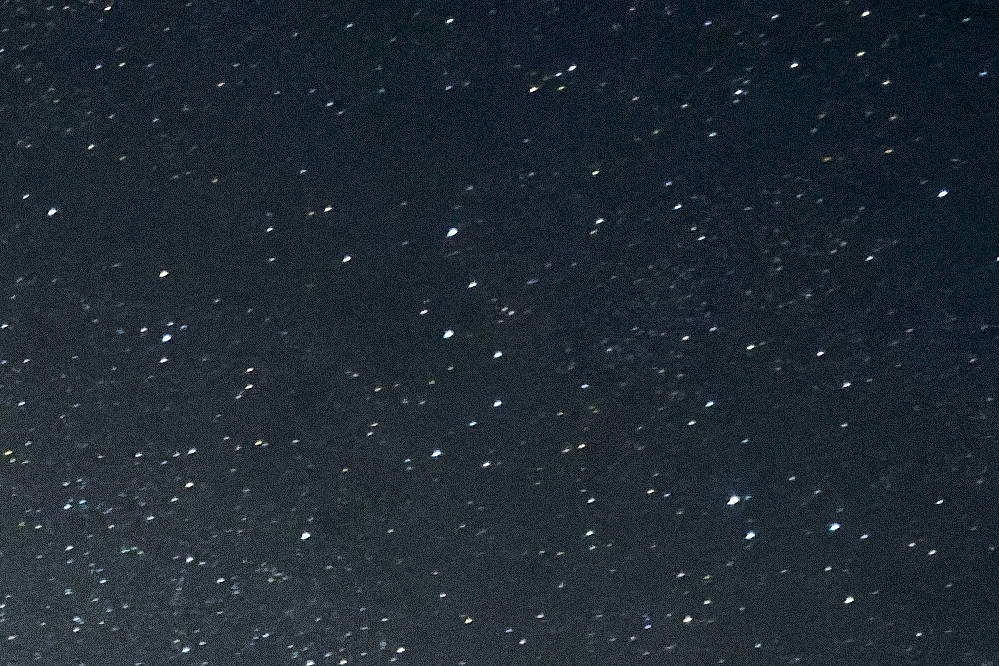
Here is where many lenses utterly fail my most rigorous testing metric, and here is where this Viltrox EVO prime lens absolutely shines. For such a small lens, it has no business delivering such flawless image quality! I remember when lenses costing (and weighing) 2-3X more than this had terrible coma, astigmatism, and color fringing when used wide-open.
Even in the extreme corners, for demanding subjects such as the night sky, image quality was fantastic, even at f/1.8. I should note that Viltrox’s highest-end lens series, the LAB series, has a type of glass element called a UA element, and that technology has been used in this lens, too!
Macro & Close-Up Photography

I did a few quick tests at the closest focusing distance, just to see if the image quality changed at all, and to get an idea of just what a ~13.4-inch minimum focusing distance (0.15x magnification) looked like. Obviously, this is not a “macro” lens, but for close-up detail images of most ordinary subjects, I was very pleased.
Design & Durability
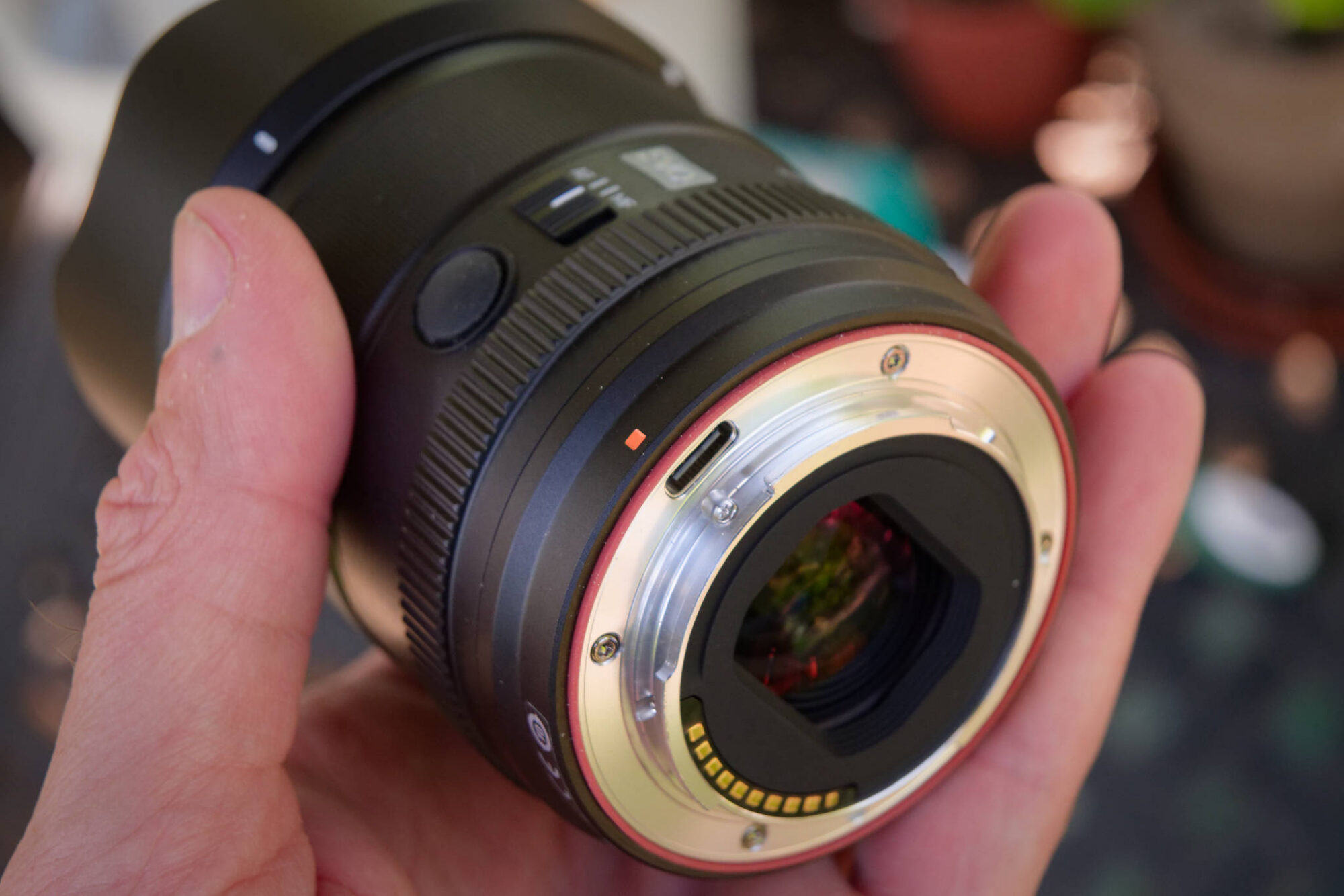
Now, let’s talk about the physical quality of this lens! Optically, it is indeed nearly perfect, but one of my other main concerns about this lens was the mechanics, the overall build quality. Simply put, an affordable third-party lens could be a risky investment, if it’s not built to the same standards as a name brand.
In this case, I was very happy to discover that the Viltrox EVO lens (and I suspect the others in the EVO lineup) are built very solidly, with a tight-fitting mount including a weather seal. In handling, on a mid-sized professional camera body such as a Sony A7 series, the EVO 35mm f/1.8 felt professional and well-balanced.
Ergonomics & Portability

One of the biggest reasons why I love f/1.8 primes is their portability and handling. In my wedding photography days, I loved nothing more than reaching for a lightweight f/1.8 lens later in the evening, to give my wrists a break from the long hours holding a 24-70mm f/2.8 and 70-200mm f/2.8.
That continues to be one of my favorite things about this lens, and one of the reasons why I would consider it to be a perfect all-around prime lens for everyday photo/video creation. It’s lightweight, but solid. It balances very well whether you’re shooting one-handed and looking at the rear LCD, or holding the camera up to your eye with both hands.
Autofocus Performance
Especially on the Sony E (FE) mount, I’ve come to completely trust lenses to just always nail focus every time. Even with faster prime lenses such as f/1.4 or f/1.2, I expect responsive, quiet focusing that is very consistent and reliable. Of course, this is partly due to the advancements in subject detection & tracking that each different camera offers, but a lens can absolutely make or break the autofocus because that’s where the focus motor resides.
In this case, the Viltrox AF 35mm f/1.8 EVO uses a virtually silent STM stepper motor, and it does indeed consistently nail focus for both photo and video applications. Even in extremely difficult lighting situations, I could trust the lens to nail focus.
Manual Focus Performance
For things like nightscape or astro-landscape photography, of course, I usually turn the lens to “MF” and magnify a bright star in the frame to achieve maximum precision. I found that the manual focusing precision of this lens was superb, allowing me to perfectly focus on stars or other challenging subjects with ease.
Features & Customizations
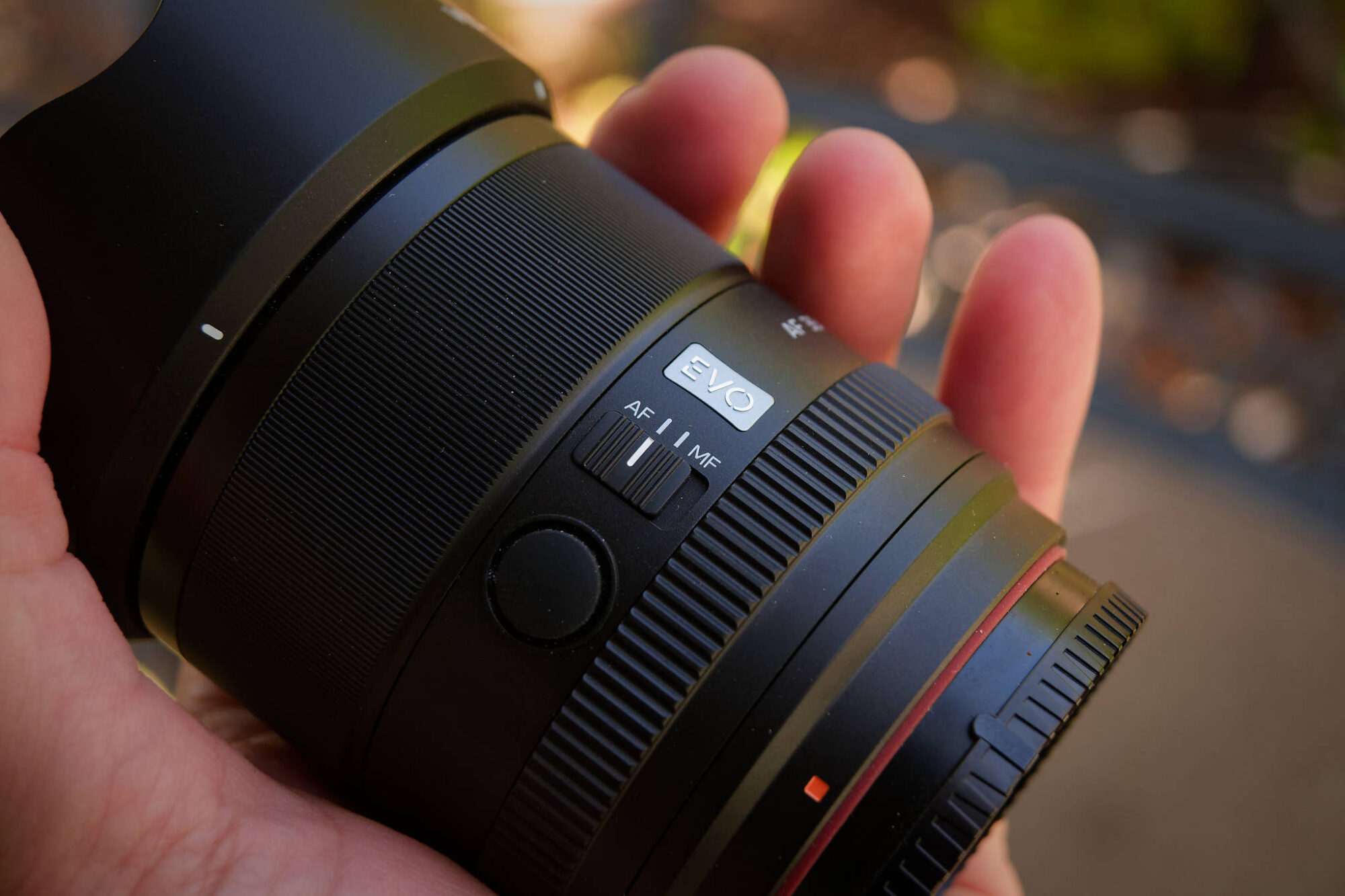
One of the final aspects where affordable lenses tend to let me down is, their “bells and whistles”. I’ve gotten used to budget friendly lenses falling into the “no frills” category, and in some cases, not even including a lens hood!
Thankfully, the Viltrox EVO 35mm is what I would call fully-featured. It has a dedicated AF/MF switch, as opposed to a customizable “FN1/FN2” switch that annoys me on some other lenses. It has a customizable Fn button, too, for those who need it. Also, of course, there’s the aperture ring, which offers a switch to de-click it for smooth video use. The only omissions of note are an iris locking switch, which is sometimes nice to have, and a “command dial” which is of course only a possibility on Nikon (or Canon) mirrorless cameras anyways; Sony doesn’t offer such a function.
Viltrox 35mm f/1.8 EVO Review | Value & Competitors

Honestly? The realm of 35mm primes is almost as crowded as the range of 50mm primes, and that’s a good thing! If you want a massively heavy f/1.2 prime lens, you can get one. If you want a moderately balanced f/1.4 prime, there are a lot of those, too! There are just too many of them to fully cover all your options in terms of the value proposition compared to your alternatives.
With that said, here’s why I consider the Viltrox EVO 35mm f/1.8 to be an excellent value compared to its competitors: It’s one of the only (if not the only) 35mm f/1.8 prime lenses to offer APO optics, and it does this at an affordable price. In other words, you won’t find a better value when it comes to image quality. For under $400, you’re getting image quality worth 2-3X more.
Another key aspect of value, to me, is how the professional results show up in such a small package. That’s the advantage of the compromise of f/1.8 versus f/1.4; I get
NOTE: Nikon Z-mount users, please keep in mind that we have heard some rumors about legal concerns and the Viltrox lenses on the Z mount. Considering that both of these newest EVO lenses are available on Z-mount, I want to say that it’s likely some sort of legal resolution has either already been reached, or is likely to be. Still, it’s one small reason why some photographers may choose to stick with name brand lenses, or “authorized” third parties such as Tamron or Sigma. Having said that, neither of those third parties makes a 35mm full-frame prime for the Z mount, despite both having some excellent optics in their family.
Viltrox AF 35mm f/1.8 EVO Review | Conclusion

All in all, I was not just pleasantly surprised, but truly blown away by the results from this modest looking 35mm prime. Its size and its price tag both had me fooled; I felt there was a risk that it would feel cheap and deliver sub-part results, and my concerns could not have been further from the truth.
Therefore, this EVO lens gets a very strong recommendation from me, for both beginners and professionals alike. Whether you create photos or videos, whether you’re a portrait & wedding photographer or you’re a wilderness adventure nightscape photographer, we have a new champion of portability and affordability! Make no mistake, the competition is fierce, and this is a high-end f/1.8 prime lens in a category that is packed with attractive options. However, for me personally, I’d choose this option for almost everything I do.
The Viltrox EVO AF 35mm f/1.8 II is currently available on the Sony E mount and the Nikon Z mount for $395. This is a bit more than its EVO siblings, the new 55mm f/1.8 EVO ($370) and the slightly older 85mm f/2 EVO ($275). We hope that this EVO line will grow, both in terms of other focal lengths and other mount options! In particular, I would love to see a Viltrox 24mm f/1.8 EVO someday in the future, and I would love to see the Canon RF mount finally accept more third party optics such as this. Either way, we’ll keep you updated, so be sure to stay in the loop with our newsletter list!