As professional photographers, we have been asked “how can I make my images better?” innumerable times. All different types of content creators, from high-end professionals to casual beginners, always get the same answer as part of our broader educational content: it’s all about good light.
Light itself is what makes or breaks your images, every time. Unfortunately, lighting as a subject can seem intimidating and technical to a creative person, so they avoid it.. You never wanted to be a professional studio portrait photographer, you just want to create content! This is a big mistake, and thankfully, there are simple, affordable solutions. If you’re ready to take your imagery to the next level, then you’re going to want to read this review of one of Godox’ latest lighting solutions, the LITEMONS LP800Bi.
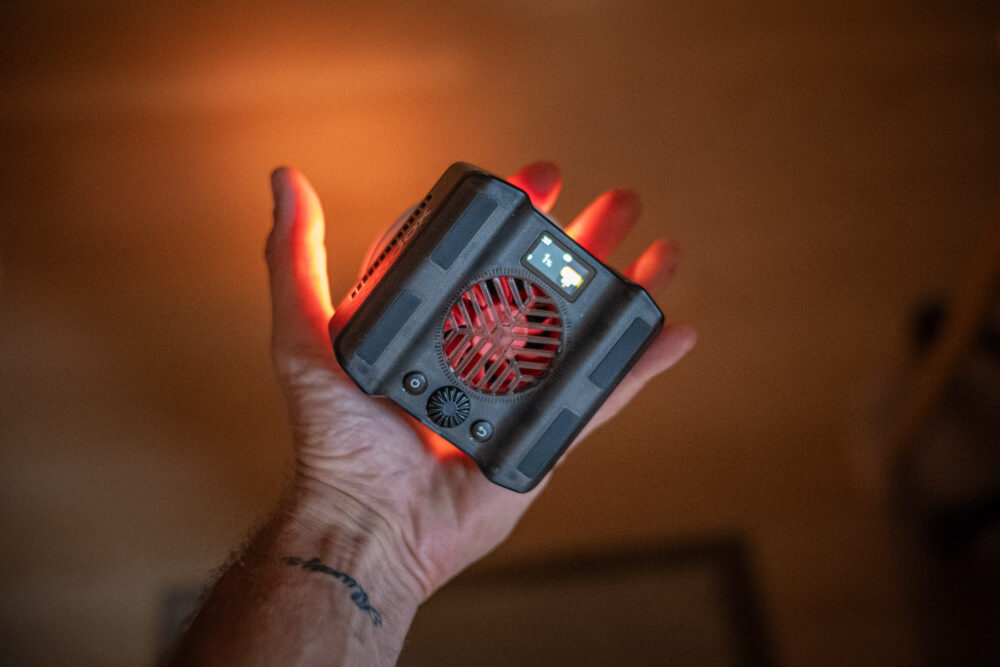
The first time I ever heard of the Litemons product line was when I saw the tiny little hand-held LED lights. Popular among both phone users and serious video camera users, the pocket-sized Litemons LED6 series or the C30 series are perfect for on-the-go lighting.
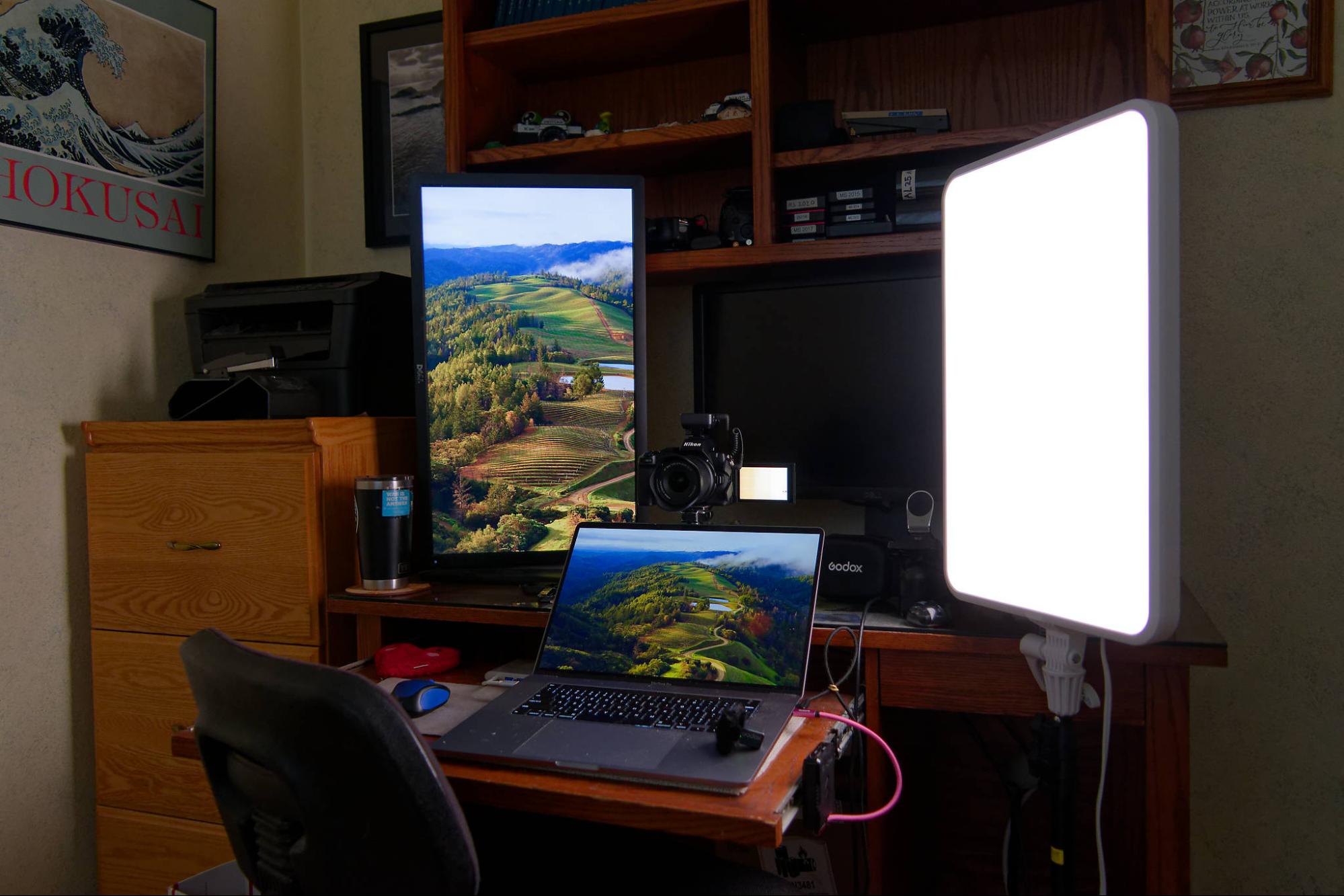
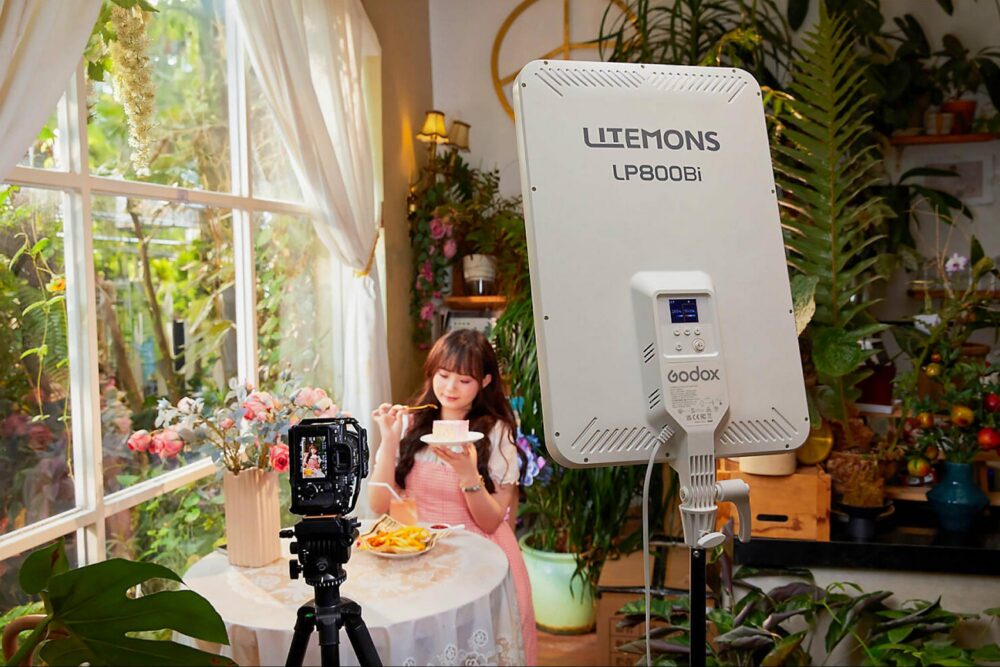
Today, we’re going big with something brand new! The Godox LITEMONS LP800Bi is a full-sized, vertically oriented light panel, made for creating beautiful light in a studio type environment. This newest addition to the Litemons family offers a unique value, not only because of the rare vertical orientation, but also because of its simplicity and the beginner-friendly price point of $119.
In this Godox Litemons LP800Bi review, we’re going to cover everything you need to know: is it any good, who should consider it, and how might it be used to improve your content imagery?
Spoiler alert: If you’re a content creator who makes a vlog, does streaming, or creates online courses, either way, you should check out this light if you put a face on-camera often!
Godox LITEMONS LP800Bi Bi-Color LED Light Panel | Specifications & Features
- Power:
- 2800K: 1450 Lux
- 3200K: 1720 Lux
- 4300K: 1860 Lux
- 5600K: 1930 Lux
- 6500K: 1700 Lux
- Color Range: 2800K to 6500K, +/- 100K (Tungsten To Daylight/Cloudy)
- Brightness Dimmer: 100% to 1% (and 0% = off)
- Physical Design: LED light panel w/ diffusion, LCD control display, physical on/off switch, 4 control buttons, vertically adjustable angle (180), standard 3/8″ light stand mount
- Power Input: ~15 ft extension cord (AC wall power, 85W consumption)
- Additional Control: Godox Mobile app
- Operating Temperature: 14°F to 104°F (-10 to 40°C)
- Weight: 5.07 lbs (2.3kg)
- Dimensions: 24.5×13.5×2.6-inch light panel (34.3×6.6×62.23 cm)
- Also Included: 6’2” (~188cm) light stand
- Price: $119 (Find it here)
Godox LITEMONS LP800Bi Bi-Color LED Light Panel Review | What You Need To Know
The Godox Litemons LP800Bi is an excellent way to bring a professional, studio-quality look to your content. Soft, bright light, with simple setup and smooth operation; you’ll get the production value that wows your audience or clients.
It’s relatively portable, despite being a studio-oriented light panel. Its size is a great balance for those who want beautiful lighting, but who don’t have a ton of space in their recording area.
The other main thing that stuck out to us was the vertical orientation of this particular light panel. While virtually all other light panels have a horizontal (rectangular) shape, this one is vertical. This makes it a slightly better choice for content creators who are making a lot of vertically oriented content, such as for Instagram, TikTok, or Youtube Shorts. Having said that, it is still a fantastic light for those who create horizontal format video, of course.
Litemons LP800Bi Review | Real World Use

One of our favorite things about light panels is that they don’t require advanced knowledge of lighting modification; you just plug it in, flip it on, and create content! There is no need to fuss with various modifiers, or synchronize the light with your camera. (If you ever used strobe flashes to do portraiture, you know the innumerable complications with this!)
This removes almost all of the barrier between beginners and excellent lighting. I remember how scary it was to think about having to learn all about softboxes, umbrellas, and a half-dozen other light modifiers, and I’m eternally grateful for LED light panels such as this.
Setup & Operation

Indeed, as I hinted, when we make a universal lighting recommendation to reach a broad range of content creators, one key factor is an absolute must: simple setup and simple operation. It needs to be intuitive to first learn, and it needs to be effortless to operate once you become familiar with the interface.
In this case, we like the Litemons LP800 because it is indeed very simple, and highly effective. Plug it in, flip the switch, and you’ve got a very straightforward workflow from there. It is immediately apparent how to toggle the brightness up/down, or the color temperature, using the simple interface. The color LCD display and the physical buttons bring a professional experience to even beginners.
Similarly, it is also very easy to dive a little deeper, and set up a special effect to make the lighting a little more moody, such as the waxing and waning glow of a candle or firelight. (More on that later!)
What if you’re in front of the camera, in front of the light? What if your working space is a little cramped, and you have to put the Litemons up against the wall or in a corner? It will be impossible to see the controls, or at best you’ll have to get up every time you want to adjust the brightness or color. Thankfully, Godox has you covered with their mobile app. Just connect the LP800Bi to your phone or tablet via bluetooth, (or NFC) …and you can remotely control everything from the brightness and color to the special effects.
All in all, considering its overall good build quality, the simple operation, combined with the excellent, high-production results, we’re really happy about the real-world use.
Color Range & Accuracy
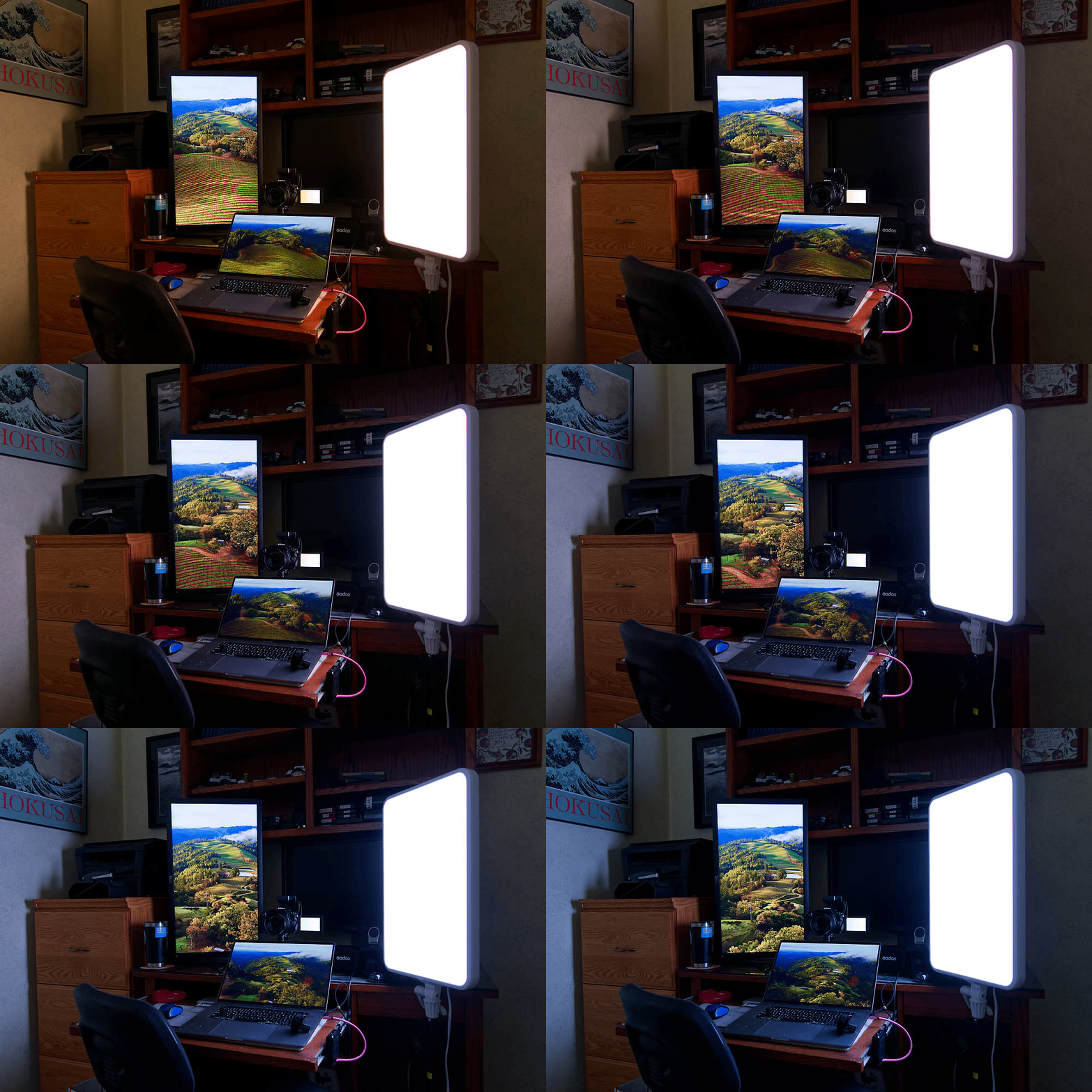
With the most common white balances covered, (2800-6500 Kelvin) the Litemons LP800Bi is ready for almost any type of photo or video lighting setup. If you’re trying to match the warm ambient light of most indoor lighting, then we recommend starting at 2800 and go up from there. Or, if you’ve got strong window light to contend with from a sunny or overcast day outside, then start around 6000K and go up or down to cool or warm the light as needed.
At every color setting, we saw beautiful results. Whether you are trying to perfectly capture your own skin tone, or someone else’s, or you want to accurately, consistently light products or other subjects, you will be very happy.
One thing that we noticed is worth mentioning: If you’re a camera nerd and you switch your White Balance from “Auto” to “Kelvin”, your particular camera may not match up perfectly to the Kelvin rating of the Litemons. On a Nikon, I found that setting the WB to about 5000K would deliver beautiful results when the Litemons was set to 5600K. Of course, color balance is a bit subjective, and some folks may prefer their light to appear warmer or cooler. Either way, we do recommend at least testing out your camera’s manual (Kelvin, or preset) WB settings, especially if your studio setting is going to have static lighting. This is one of the key benefits of a light panel such as the Litemons; if you dial in all your camera settings manually, your results will be highly consistent.
We also tested the exact color balance (Tint and Temp) across the entire range of brightness, since we’re professional portrait photographers. So, if you’re wondering, “is the color of the light exactly the same at 1% as it is at 100%?” What we found was that, across almost the entire brightness range, there was virtually zero need to adjust the WB temp or tint. Also, across the entire bi-color temperature range, there was virtually zero shift in the tint. This is very impressive!
Only at around the lowest brightness, from about 1% to 10%, did we need to apply a tiny bump to the tint in order to keep colors accurate. Such a small adjustment is likely to be invisible to anyone using AWB and auto exposure on their camera.
Brightness Range
According to the spec sheet, the Godox LITEMONS LP800Bi offers an output of 1930 Lux. This can vary a little bit depending on if you have the light set to the warmest or coolest color temperature, but it’s a good starting point if you’re comparing while shopping.
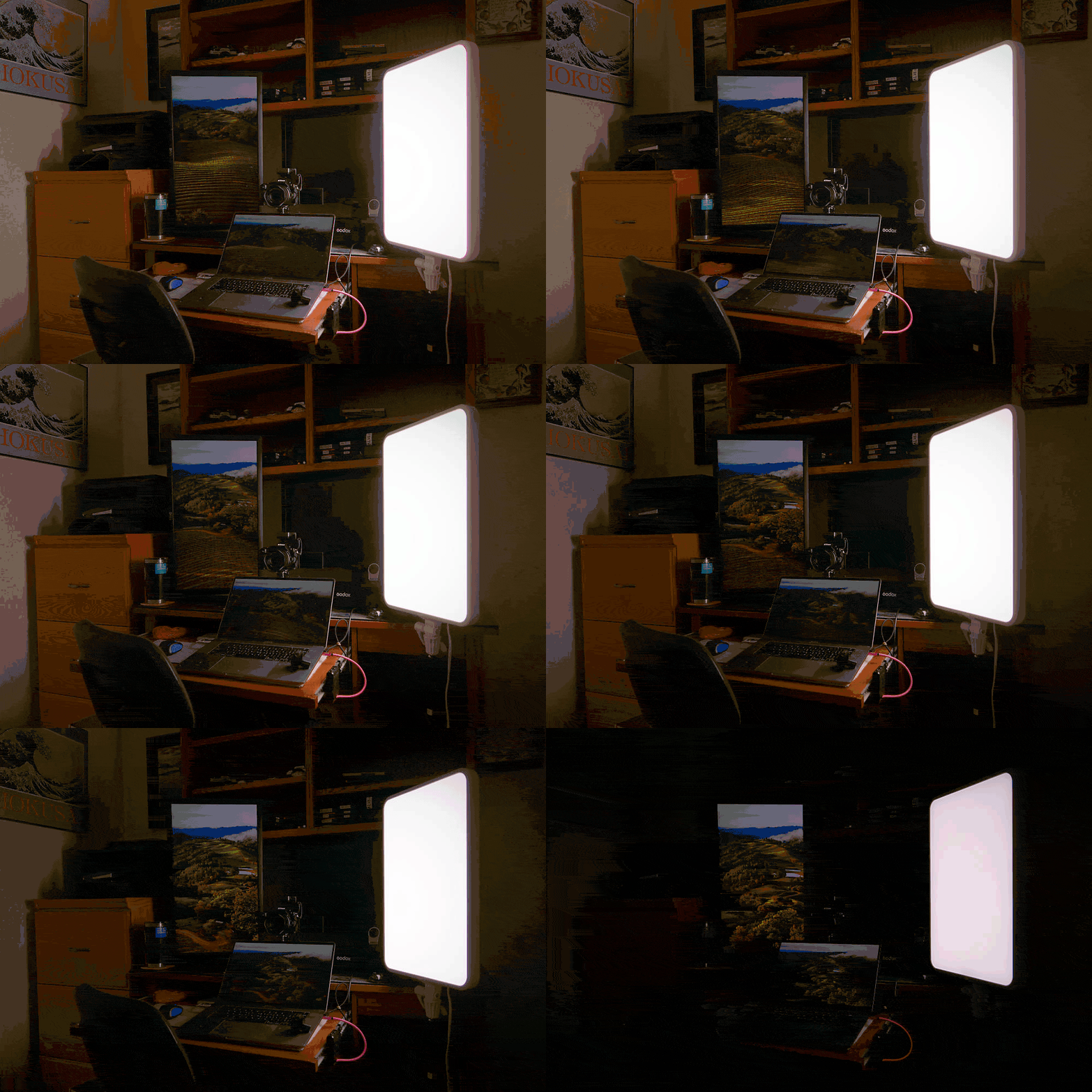
Honestly though? We realize that “1930 Lux” could be a meaningless number for a beginner… So, here’s a better way to describe how bright this light is: At full brightness, (100%, at 5600K color temperature) …a correct exposure is ISO 100, f/2.8, and 1/320 sec. That is more than bright enough to fully illuminate any content creator’s studio! It’s almost enough to balance out full sunlight, though not quite. Indoors, it’s more than enough for these camera settings which offer excellent image quality. (For those who are wondering, at the lowest brightness of 1%, you’re looking at an exposure of ISO 100, f/2.8, and 1/13 sec. That’s approximately 5 EVs of range!)
Having 1% brightness increments and an impressive overall range, is what really makes the LP800Bi a versatile and user-friendly light. Unlike a strobe flash, you don’t have to worry about memorizing things like “how bright is 1/8 power or 1/16 power?”.
Lastly, I wanted to mention something that I was absolutely delighted to notice when reviewing this Godox light! That is, it memorizes your power/brightness setting. In other words, if you’re using the light at just 1% or 10% in a dimly lit studio, you won’t accidentally get blasted by 100% brightness if you unplug things to re-arrange your recording setup!
Onboard App Control

For those users who want to just stick the LP800Bi in the corner of their room or on their desk against the wall, you’ll definitely want to download the “Godox Light” app to your mobile device. We found it incredibly simple to set up and operate; the bluetooth connection works perfectly.
If you’re recording your content from your phone itself then you might occasionally be frustrated by having to switch from your phone camera to the app, but we actually found it useful. If you’re recording your content using a professional camera, it’s just as easy to have your phone handy on a desk stand to control the lighting.
Creative Lighting Effects

This is another feature that we think is pretty useful among the Godox family of LED lights. To be able to simulate lighting effects such as patchy clouds, candlelight, firelight, etc, could be very useful. As a main / key light, some of the lighting effects might not be as useful, of course. The more dramatic lighting effects are likely better for a small background light, whereas with this big Litemons panel, the subtle lighting effects such as candlelight or cloudy, can be useful tools.
Either way, it’s a fantastic addition to the toolkit, and it’s great that you can synchronize your lighting effects across your other Godox LED lights.
Litemons LP800Bi VS Alternatives | What Kind Of Light Do You Need?
With its vertical orientation, overall size, and beginner-friendly experience, I think this particular Litemons stands alone compared to the alternatives. Even before we talk about price and value, just based on the size and shape alone, I think the LP800Bi is the best choice for general content creators, especially those who want a set-it-and-forget-it studio setup.
Having said that, what other options should most content creators consider? We have a couple of factors to keep in mind… One of them is battery power; if you want a fully cordless lighting kit, the LP800 isn’t for you.
Another factor to consider is overall brightness; if you need something brighter, you might want to consider the more professional-oriented panels such as the Godox Litemons LP400Bi ($79-89, 2470 Lux @ 5600K) or the even bigger Godox Litemons LP600 or LP1200…
Lastly, what if you’re a portrait photographer who wants a lot of options for “modifying” your light? Instead of a light panel such as this, consider the Godox LE200Bi Monolight, ($219-249, 57,700 lux @ 5600K) or the Godox ML60II which we review here.
Litemons LP800Bi Review | Pros & Cons
Simply put, this light is perfect for creating beautiful portraiture. In fact, can I be honest? As a professional portrait photographer of 20+ years, I prefer this shape of light by far, compared to the stereotypical “ring light”. This big, vertically oriented rectangle of perfectly even light just makes it very easy to illuminate a face softly yet with some direction.
Pros
- Excellent quality of light
- Brightness competitive with high-end pro light panels of similar size
- Simple setup & operation, versatile angle control
- Solid build quality
- Excellent value
Cons
- Singular power system (no battery option)
- Push-button operation
The key advantages of good value and beautiful results are all we need to highly recommend the LP800Bi. In our opinion, its only major drawback, the inability to use batteries, is understandable and acceptable, considering the main goals of a low learning curve and high value.
Godox ML60II Bi Review | Final Verdict (Who Should Buy It?)

For the new generation of content creators, the Godox Litemons LP800Bi is an excellent choice. The excellent diffusion panel delivers professional results, and the unique vertical orientation adds an element of versatility. Its overall size and form factor mean that it will fit in a small studio with ease.
You could certainly use it for actual portraiture, in fact, it’s quite perfect for vertical format headshot portraits if you’re just doing something quick and simple. That is to say, this one light is not a substitute for an entire lighting kit, but the quality of light this panel does produce gives professional results.
All in all, its the vloggers, streamers, course creators, and any type of content creator, AKA influencer, who should check out the Godox LP800. The price ($119) is very right, and the payoff, the results, certainly prove the worth of this Litemons LED light panel.