For photographers and videographers juggling flash units, wireless triggers, audio gear, and other battery-hungry tools, managing AA and AAA batteries can be a quiet nuisance. Linogy’s all-in-one rechargeable battery system aims to solve that, not just with faster charging, but smarter management, safer operation, and an environmental angle worth noting. As we head into the busy holiday season with family sessions, corporate parties, and end-of-year weddings, having a smarter way to keep everything powered starts to feel less like a luxury and more like a necessity. In this quick review, we’ll look at the Linogy Rechargeable Battery System and share some highlights that we think will truly benefit photographers, videographers, and content creators in general.
First Impressions

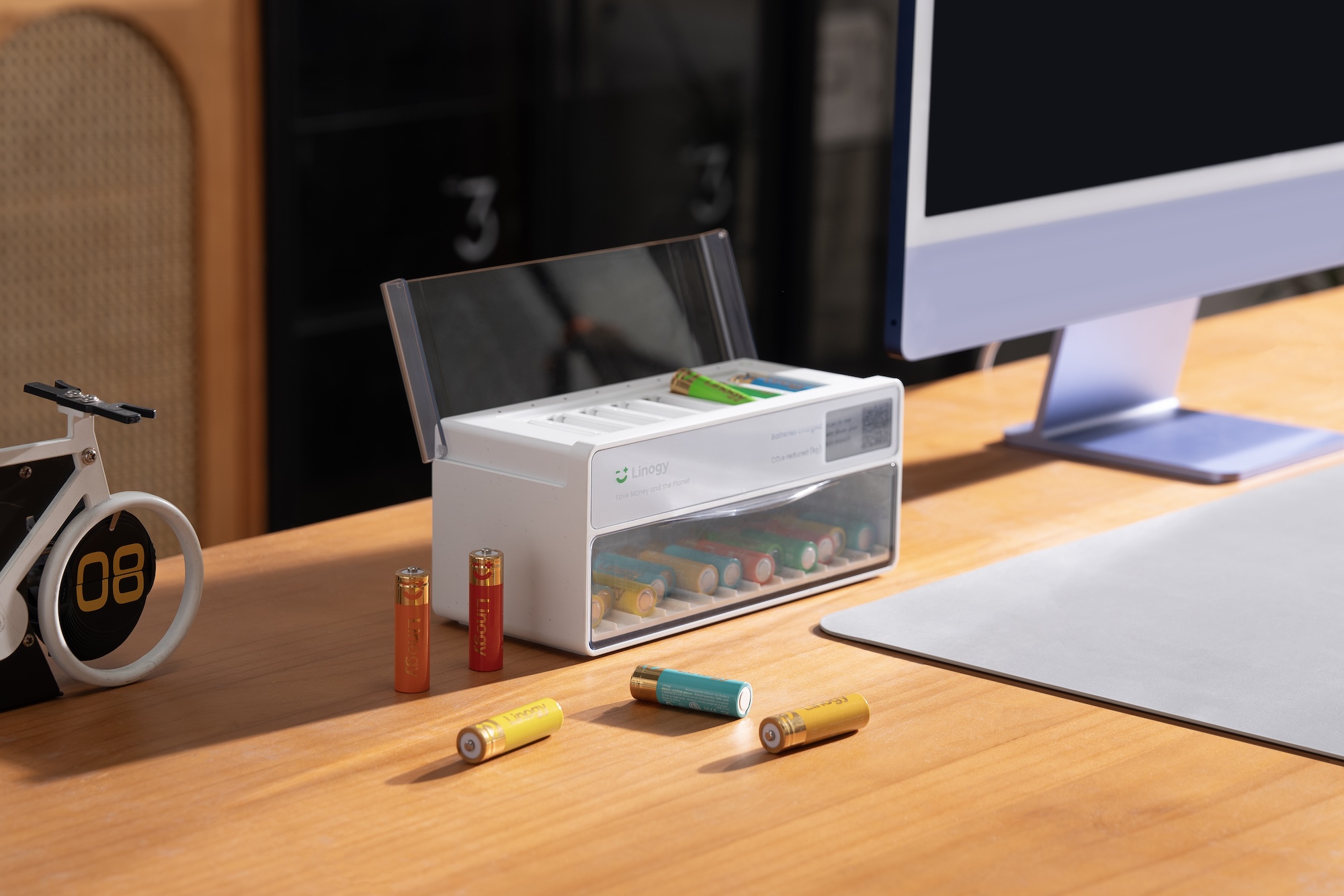
At a glance, Linogy’s charger and battery system looks like a mix between a compact charging dock and a small desktop organizer. But this unit goes beyond the basics. It combines three critical functions, including battery health detection, charging, and storage, into a single station that’s designed to simplify power management, whether you’re on set or in the studio.
Key Features for Creators
1. Intelligent 3-in-1 System

Linogy’s charger can handle up to 8 batteries at once and supports both AA and AAA formats (AAA via adapters). What makes it stand out is its automated workflow: it checks battery health before charging, monitors charge levels in real time, and auto-releases batteries into a built-in storage tray once they’re full. The storage bay holds up to 40 batteries, which should be more than enough for a day’s shoot or a full gear loadout.
2. Wide Compatibility

Whether you’re using lithium-ion, NiMH, or Ni-Cd cells from brands like Eneloop, Pale Blue, or Amazon Basics, Linogy’s charger supports them all. That’s especially helpful for shooters with a mixed kit of older and newer rechargeables.
3. E-Ink Eco Dashboard

Linogy’s low-power E-Ink screen does more than just look cool. It tracks how many batteries you’ve charged and estimates how many disposable cells you’ve avoided, giving you a running tally of your environmental and cost savings over time. The charger can even generate a QR code linking to a personal dashboard, which is a surprisingly motivating way to see the impact of switching your kit over to rechargeables.
4. Thoughtful Safety Design
For those concerned with overheating or overcharging (especially on long shoots), Linogy builds in six layers of protection: overcharge, overcurrent, overvoltage, undervoltage, reverse polarity, and short-circuit protection. It’s the kind of spec that’s easy to overlook, until you need it.
Performance
We tested the system with both Linogy’s own 3600mWh lithium-ion AAs and third-party NiMHs. Charging times were fast, about three hours for a full charge, roughly half the time of most standard NiMH chargers. The batteries performed consistently in wireless transmitters and camera flashes, delivering steady power with no abrupt drop-offs. Unlike older NiMH cells, Linogy’s lithium-ion models retain up to 88% charge after 12 months, a real advantage for emergency kits or infrequently used gear.
The alkaline-like discharge curve also proved accurate. Instead of sudden shutdowns, the batteries provided a steady fade, which is ideal for managing runtime in demanding everyday devices like external recorders.
Please note: Linogy recommends against using Linogy lithium-ion batteries in devices that are not suitable for high-current discharge. Additionally, we do not advise using more than four cells in series.
Environmental Impact and Everyday Use

For environmentally conscious creators, Linogy’s appeal goes beyond utility. By combining charging and storage, it encourages reuse over disposal, and the visual E-Ink feedback subtly reinforces the habit. The dashboard isn’t essential, but it adds an unexpected layer of engagement.
The unit is compact and sturdy enough for a gear case or studio desk, but it isn’t weather-sealed or drop-proof. Think of it as a base station you keep in the studio, at home, or in a protected case at your room or client’s venue, rather than something you’d leave exposed on a rainy sideline.
The Bottom Line
In addition to charging, Linogy’s rechargeable battery system organizes, protects, and streamlines your entire battery workflow. For photographers and filmmakers who rely heavily on AA/AAA-powered accessories, it’s a smarter, safer, and more sustainable solution.
Who It’s For:
The Linogy system is ideal for photographers, videographers, content creators, or anyone using a significant number of AA/AAA batteries, especially those looking for a more streamlined and eco-conscious workflow.
What We Liked:
- Turns a pile of loose AAs into a single, organized charging & storage station
- Charges up to 8 cells at once and auto-drops them into a ready-to-go tray
- Clear at-a-glance status for which batteries are full and healthy
- Supports both high-capacity lithium-ion cells and common AA/AAA NiMH rechargeables
- E-Ink eco dashboard adds a nice long-term view of money saved and waste avoided
- Built-in safety protections offer peace of mind during overnight or long charging sessions
Considerations:
- AAA batteries require adapters
- Eco-dashboard may feel niche for some users
Final Verdict:
Linogy delivers more than just a charger. It’s a compact power management station that suits the needs of modern shooters. For those tired of the AA shuffle, this could be the solution your workflow has been missing. Get more info on Linogy’s battery system here.