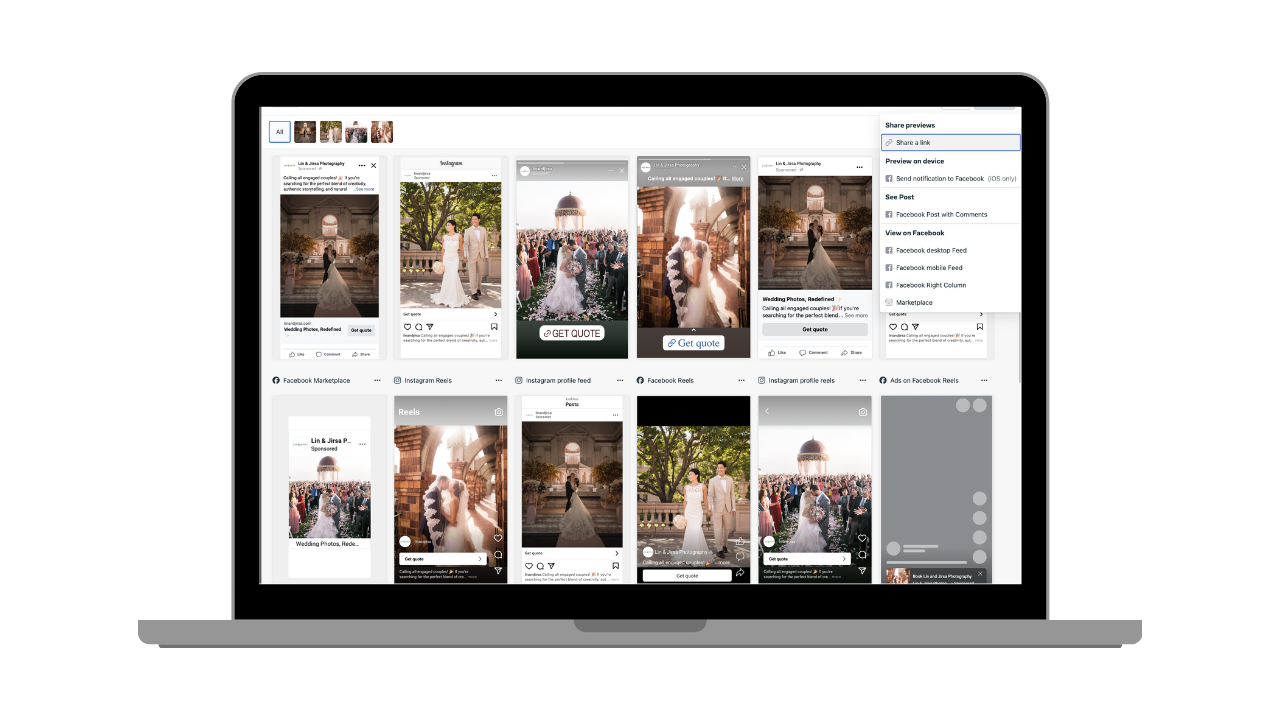
Marketing is always evolving, but one principle never changes: you need to show up where your clients spend their time. Today, that place is social media—especially Instagram. For years, we championed organic marketing strategies like SEO and social media posts, and we were firmly against most forms of paid advertising—whether it was Google Ads, paid directories, or even Facebook Ads. But times have changed. Organic reach on social media is unreliable and Meta’s advertising platform has proven itself as one of the most effective ways to reach your target audience and generate real results.
When done right, Facebook and Instagram ads can put your work directly in front of dream clients and keep your calendar full. The problem? Most photographers burn through their ad budget with little to show for it. Not because Facebook ads don’t work, but because they fall into a few common traps that cripple their campaigns before they even have a chance to succeed. If you’ve ever run ads and thought, “This just isn’t working for me,” chances are one of these mistakes is the reason. Let’s break down the 5 most common mistakes photographers make with Facebook ads—and how to avoid them.
The strategies in this article are pulled directly from our Facebook Ads for Photographers course—a step-by-step system that shows you how to create ads that actually book clients (without wasting money on trial and error).
1. Not Trusting the Meta Algorithm
A huge mistake photographers make is over-restricting audience targeting. They stack interest filters, narrow down demographics to an extreme, or micro-target so much that Meta’s algorithm doesn’t have enough room to optimize.
A few years ago, detailed targeted was necessary to avoid wasting ad spend, but not anymore. Meta’s algorithm is now smarter than you think. With the right creative, the right copy in your ads and your landing pages, and accurate conversion tracking, it knows who’s most likely to engage with your ad and convert. For most photographers, especially in local markets, open targeting (broad location with minimal restrictions) allows the algorithm to learn and deliver better results.
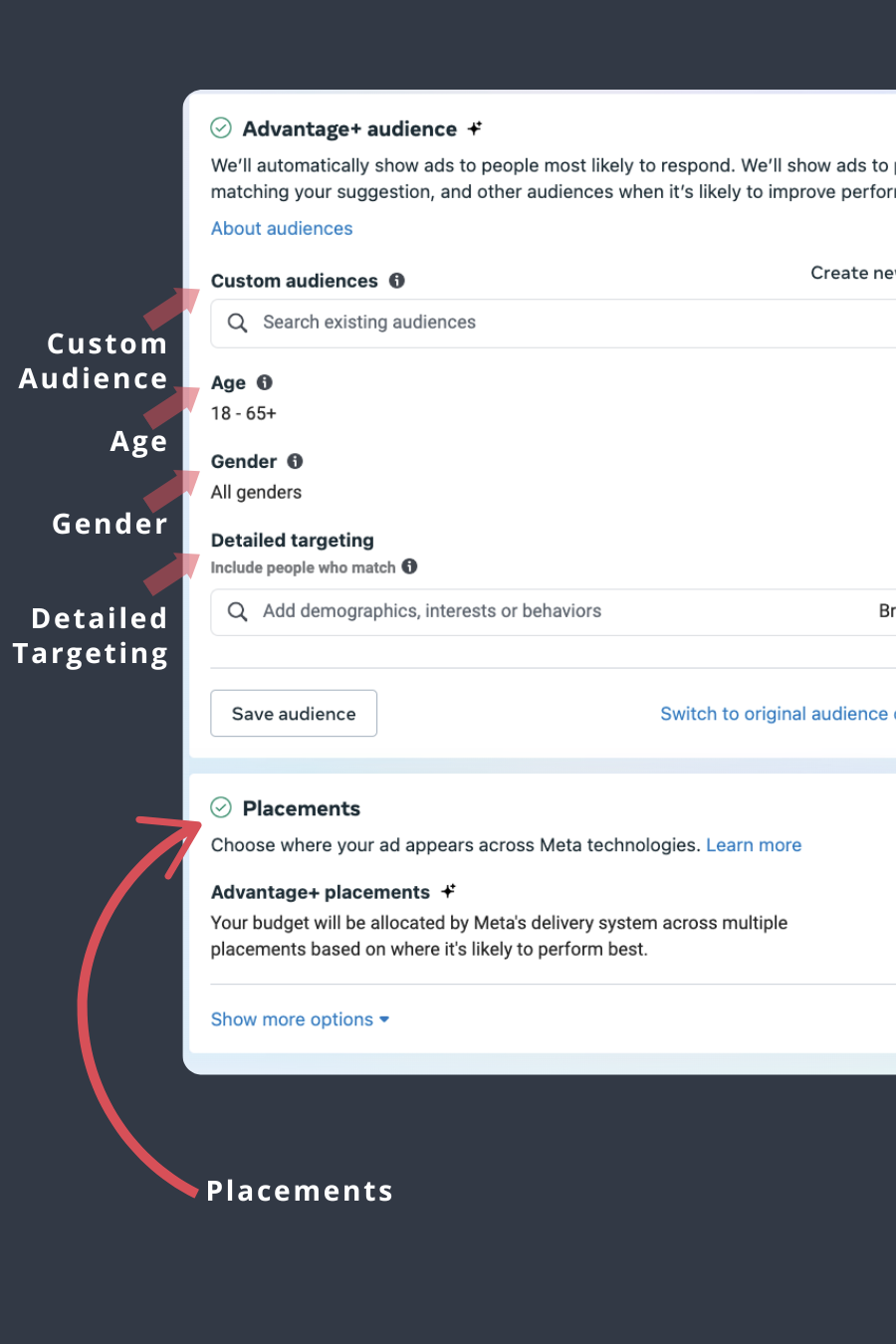
Quick Tip: Narrow down your audience with your ad copy and your landing page copy, not with the audience targeting. Set your location, choose a broad age range that fits your ideal clients, and let Meta’s machine learning do its job.
2. Not Working on the Landing Page
Your ads can have incredible photos or videos, great copy, and still fail. Why? Because you’re sending clicks to a weak landing page that isn’t built to convert. Too many photographers drive ad traffic to their home page, Instagram, or an unoptimized contact form. Your landing page is where the conversion happens—it’s the closer.
One key concept we teach in our course is the importance of sending your ads to a dedicated landing page—not your standard home page. In fact, you may even want to create multiple landing pages tailored to different audiences or offers.
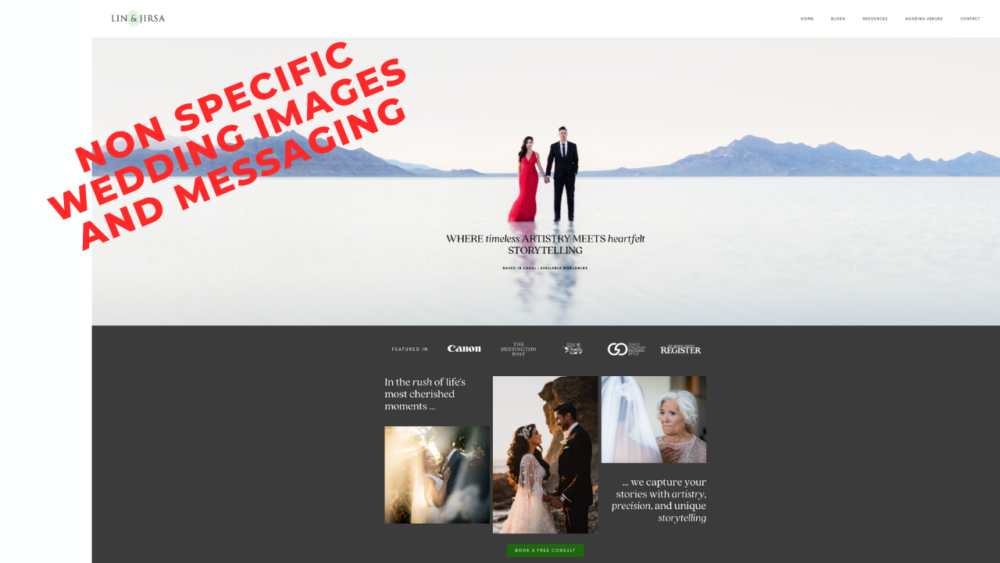
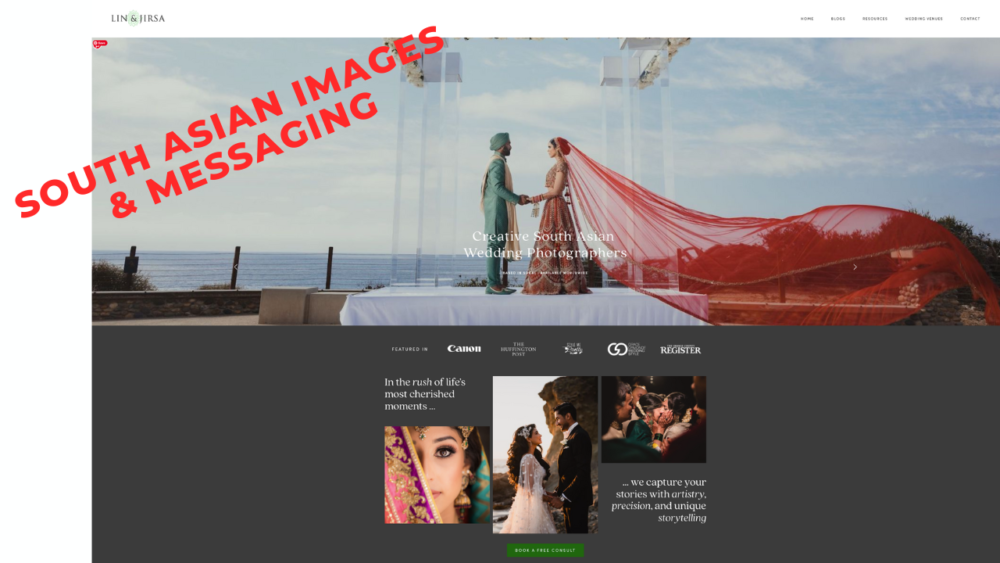
Why does this matter? Your home page serves many purposes: it’s built for SEO, includes navigation for various visitors, and covers a wide range of information. A landing page, on the other hand, has one job—convert the visitor into a lead or client. It features targeted messaging, a streamlined layout, and clear calls to action that guide prospects toward booking you.
Here are tips for designing your ideal landing page:
- Showcase your best images for a single target audience
- Include a tagline or clarified message that differentiates your brand
- Add an Emotional Hook Section That Relates to the Target Audience
- Place a contact form on the page and keep it visible (Don’t make the user click off the page to contact you)
- Include testimonials for social proof (Optional but recommended)
- Include a bio section (Optional but recomemnded)
Quick Tip: Think of your ad and landing page as one seamless sales flow. If they’re disconnected, you’ll lose the lead.
3. Not Identifying Your Target Audience
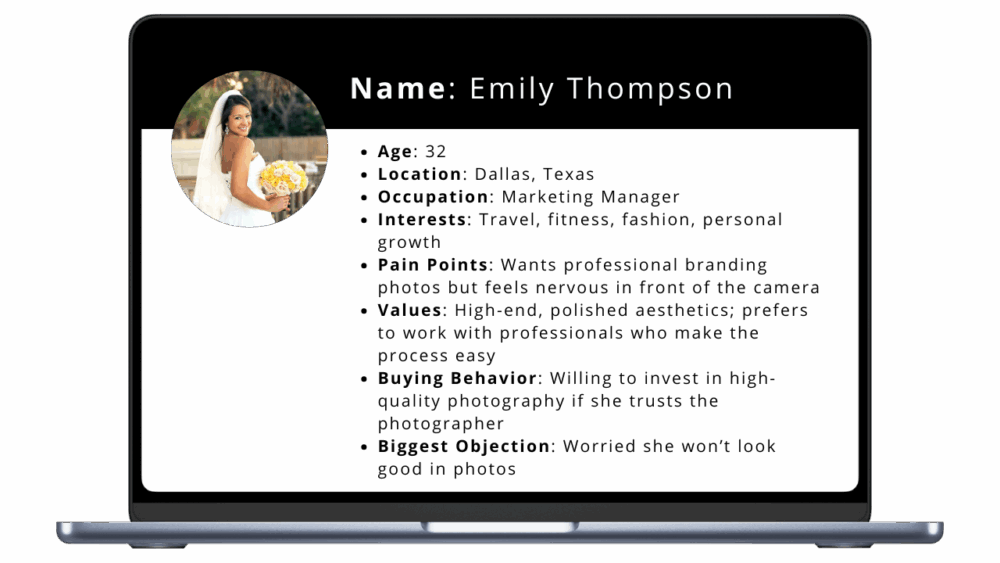
Another major mistake photographers make is trying to speak to everyone. When your ads are too broad or generic, they fail to resonate with anyone.
The solution? Niche down and tailor your messaging. If you’re a luxury wedding photographer, speak directly to couples who value elegance and timeless imagery. If you’re a documentary family photographer, craft messaging that appeals to parents who love candid, real moments over posed portraits. The more specific your message, the stronger your results.
The beauty of Facebook and Instagram ads is that you don’t have to pick just one audience forever—you can create separate campaigns for different niches. Build unique ads and landing pages for each audience segment, then adjust your ad spend toward the ones performing best.
Here are some ideas on ways you segment your audience:
- By Location – e.g., one ad for beach sessions and another for adventurous mountain shoots.
- By Culture or Religion – e.g., one for Vietnamese weddings and another for general weddings.
- By Gender – e.g., one ad that speaks to men and another that speaks to women.
- By Subject – e.g., for senior portraits, one ad focusing on athletes and another on lifestyle shoots.
- By Age – e.g., one ad for clients aged 25–35 and another for those 35–45.
- By Photo Style – e.g., one campaign for light and airy photography, another for dark and moody, and another for bold and vibrant looks.
- By Photo Genre – e.g., one ad for newborn sessions, another for family portraits, and another for maternity sessions.
Quick Tip: In every ad, talk directly to that specific client and pair it with an offer they can’t ignore. The tighter the fit between your message and their needs, the more likely they’ll click—and book.
4. Tweaking and Adjusting Too Soon (Ignoring the Learning Phase)
Facebook ads have a learning phase where the algorithm gathers data and optimizes delivery. If you panic and start tweaking the ad set, changing creatives, or turning campaigns off too soon, you reset the learning phase and waste your budget.
This mistake comes from impatience. Ads often take 5–7 days (or 50+ conversions) to stabilize and show true performance. Over time, you can monitor the performance of the ads, swap out underperforming creatives, turn off underperforming ads, and increase or decrease budgets by 10% at a time. But let your ads run without major changes during the learning phase. Monitor results, but hold back adjustments until the data is statistically significant.
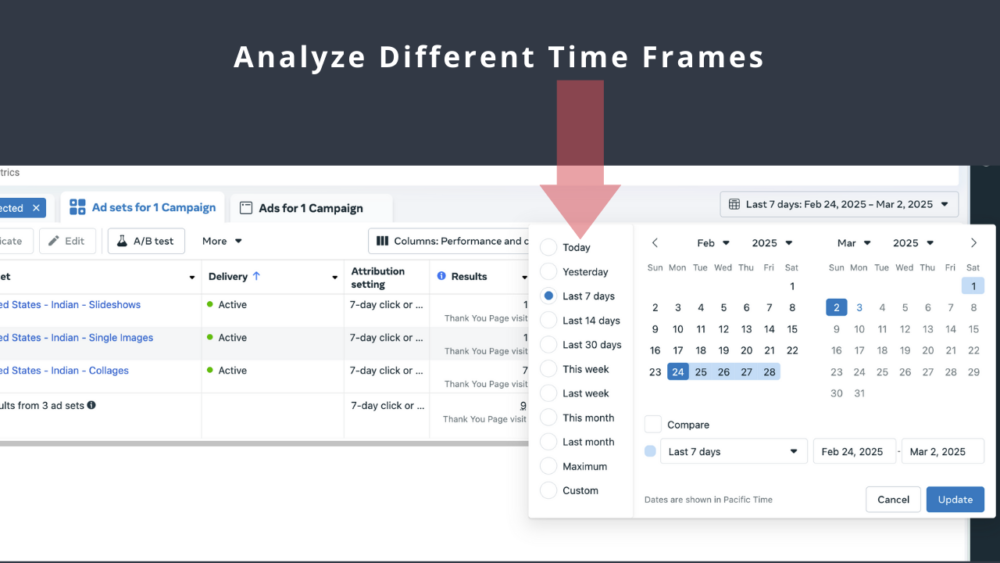
Quick Tip: Rather than making huge adjustments to an existing campaign, consider launching a separate campaign to test different strategies, target audiences, etc.
5. Not Trying the Direct Offer Route
The Website Leads Strategy (also known as the Direct Offer or Direct Conversions Strategy) is one of the most effective ways to book high-quality clients through Facebook and Instagram ads. This approach sends potential clients directly to a high-converting landing page on your website—where they can experience your brand, see your work, and submit a genuine inquiry.
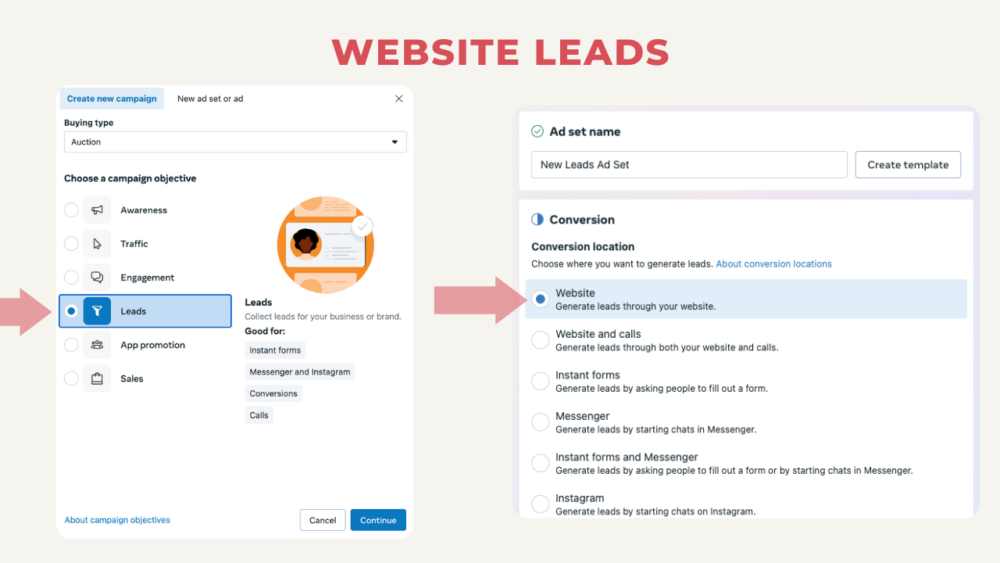
Why does it work so well? Because it filters out casual browsers. Clients who take the extra step to visit your site and fill out your form are already showing strong intent to book. These are the warmest, most qualified leads you can get.
Other methods—like lead forms, engagement campaigns, or free session (model call) strategies—can also generate inquiries, but they often attract lower-quality leads or people who aren’t ready to commit. That’s why I recommend starting with the Website Leads Strategy first. Follow the right steps, give it a real chance, and optimize your ads and landing page for conversions.
If it doesn’t deliver the results you’re looking for, then experiment with secondary tactics like model calls or engagement campaigns. But more often than not, the simplest approach is the most effective: run ads with a clear, direct offer to book your services. When you pair a strong, brand-driven offer with great creatives, you’ll consistently outperform gimmicks every single time.
Bonus Mistakes to Avoid
While a full Facebook ads tutorial is beyond the scope of this article, there are a couple of bonus mistakes worth noting—especially if you’re serious about making ads part of your long-term marketing strategy.
Failing to Leverage Retargeting
Your warm leads—people who have already visited your website, clicked on your ads, or engaged with your content—are the easiest to convert. Retargeting ads keep your brand in front of these prospects, reminding them why they were interested in the first place and nudging them toward booking.
Quick Tip: Set up a simple retargeting campaign aimed at recent website visitors. This small step can dramatically lower your cost per conversion and increase bookings.
Not Tracking Conversions or Using the Meta Pixel Properly
Running ads without proper tracking is like photographing a wedding blindfolded—you’re wasting effort and missing the moments that matter. To optimize your campaigns, you need data.
Start by installing the Meta Pixel on your site and setting up conversion events (like form submissions or bookings). This not only helps you measure results but also feeds valuable data back to Meta’s algorithm, making your ads smarter over time.
Pro Tip: If Facebook ads are part of your long-term strategy, take it a step further and set up the Meta Conversion API. This gives you more accurate tracking, better data, and ultimately, better optimization for your campaigns.
Final Thoughts
Facebook ads for photographers don’t have to be overwhelming—but they do require a smart, intentional approach. When you:
- Trust the algorithm to do its job
- Optimize your landing page to convert clicks into inquiries
- Speak directly to your niche with a clear, compelling offer
- Give campaigns time to get through the learning phase
- Test direct offers instead of relying on gimmicks
…you’ll avoid the costly mistakes that hold most photographers back. These simple shifts will save you money, eliminate frustration, and—most importantly—help you book more of the clients you actually want to work with.
If you’re ready to skip the trial and error and start running ads that consistently bring in high-value bookings, check out my Facebook Ads for Photographers course. Inside, I’ll show you the exact system I use to create ads that convert—so you can stop guessing and start growing.