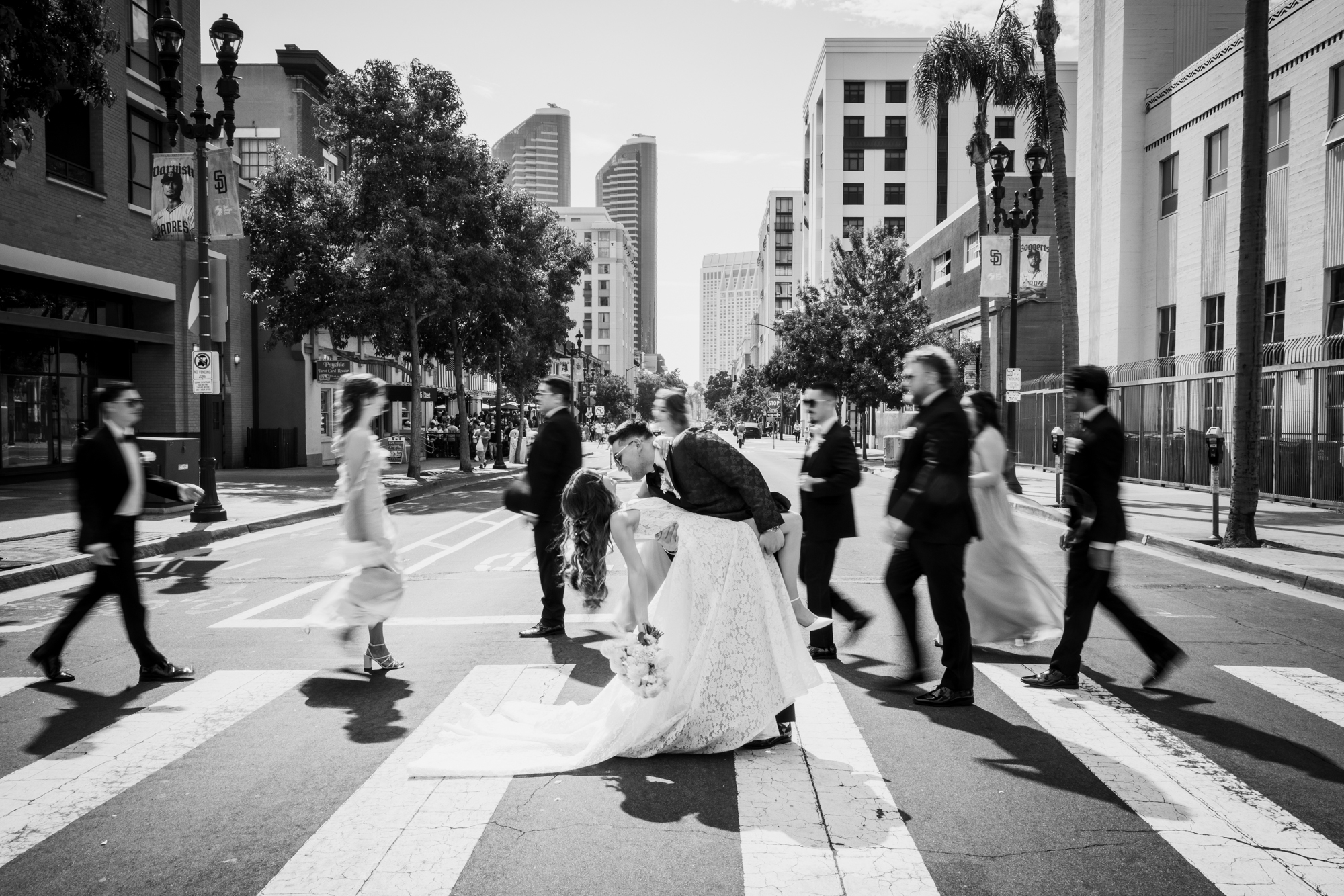
Some of the best images from a wedding gallery aren’t the sharpest ones. The dance floor that actually looks like it’s moving. The recessional where you can feel the pace. The late-night portrait that reads loose and alive rather than carefully controlled. These shots don’t work because they’re blurry. They work because the blur is saying something true about the moment. Featured Image by PMC Photography
That distinction matters more than any camera setting. Blurry wedding photos that land in a gallery feel intentional because the movement already made sense in the scene. Images that get cut are usually the ones where motion crept into a static moment and the blur has nothing to say.
Long-exposure and drag shutter work have been part of wedding photography for decades. What’s changed is the intent behind them: less of a technical effect added for variety, more of a deliberate storytelling choice that fits naturally alongside documentary coverage and editorial portraiture. When the technique matches the moment, clients feel the difference even if they can’t name what they’re looking at.
Here are ten practical ways to put that to work.
1. Use motion to reinforce the story

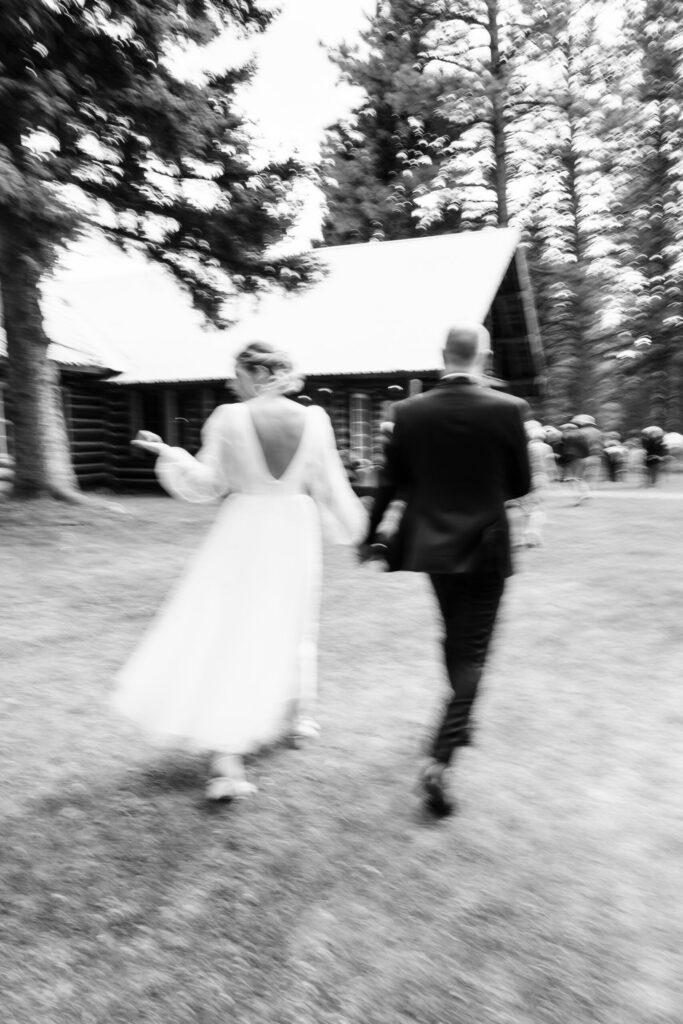
Blur works best when the movement already makes sense within the scene. Recessionals, crowded dance floors, beach walks, and late-night street portraits naturally lend themselves to motion-heavy images because the energy is already there. You’re just deciding whether to freeze it or let it breathe.
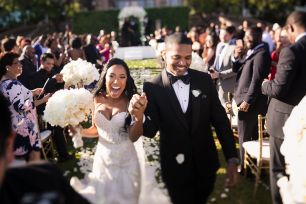
A couple walking away from the ceremony with guests streaming past feels more believable with a little movement in the frame than it does perfectly frozen. The blur preserves the pace and atmosphere of the moment rather than turning it into something that could have been shot at any point in the day.
Tip: Don’t force blur into static moments. Identify scenes that already contain movement, then decide whether to shoot them sharp or let them move. The more naturally the action fits the scene, the more intentional the blur will feel to a client seeing it for the first time.
2. Contrast a sharp subject against motion
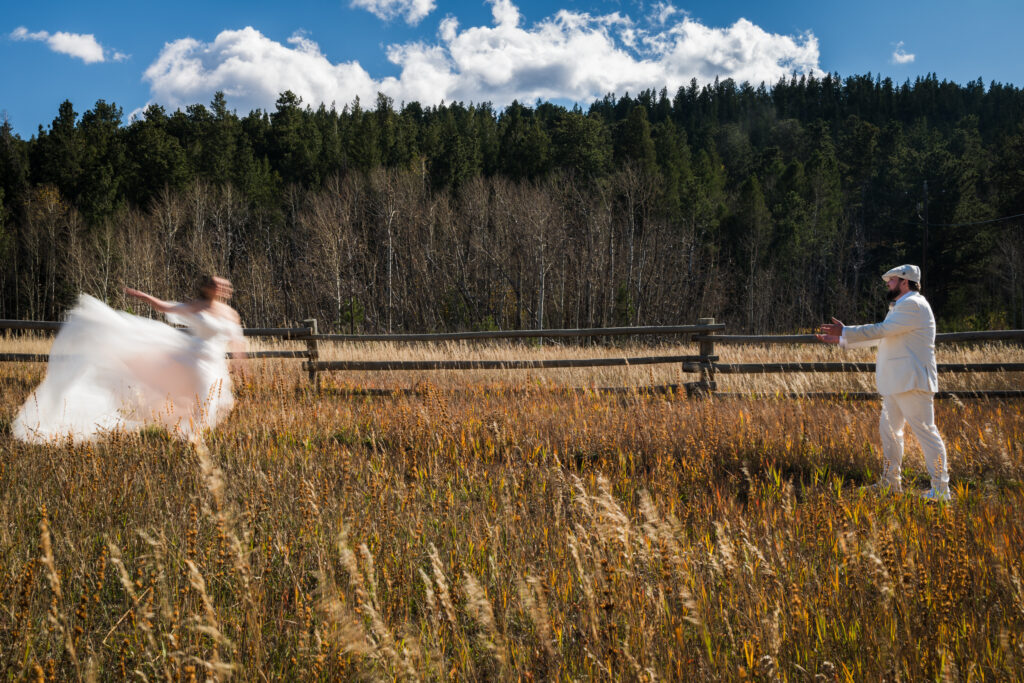
One of the most reliable ways to introduce intentional blur is by keeping one subject still while allowing movement around them. A bride standing as guests stream past, a couple frozen at the center of a moving dance floor, or traffic streaking behind groomsmen on a city street — all create immediate visual separation between subject and scene.
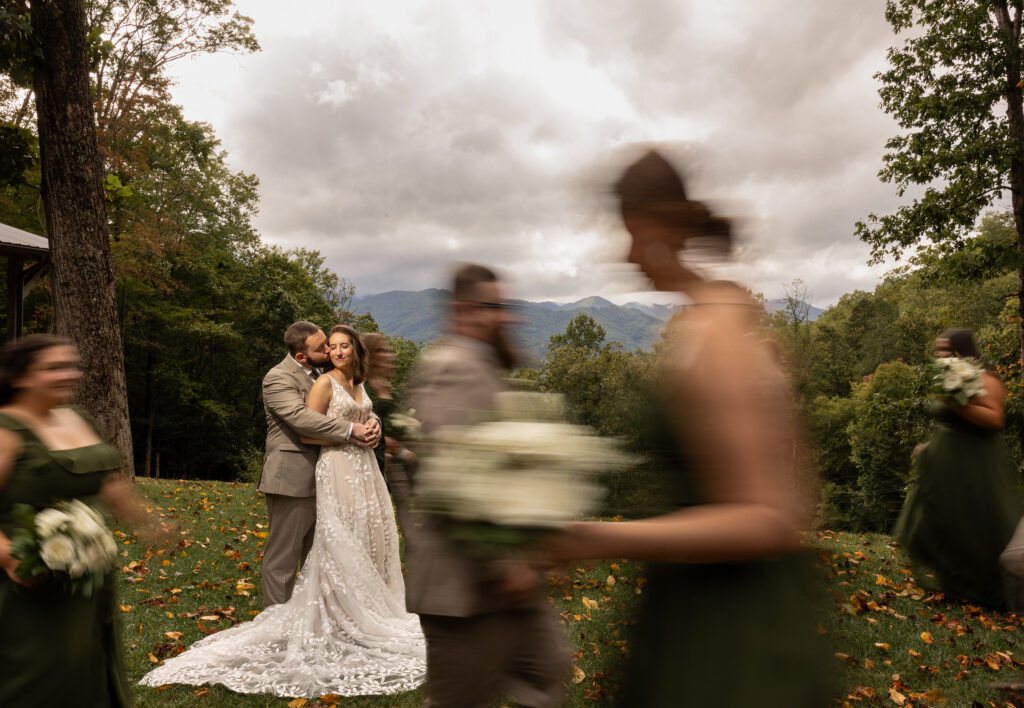
The contrast between stillness and motion gives the eye a clear focal point while still adding energy to the frame. It also creates separation in busy environments where a sharp subject might otherwise get lost against an equally sharp background.
Tip: Give your still subject a simple, grounded pose before you start the exposure. Small shifts in weight and subtle swaying read as nothing at 1/250th but become visible at 1/15th or slower. Brief them before you shoot: “Hold completely still for just a second.” That instruction alone will sharpen more frames than any camera setting.
3. Lean into reception chaos
Receptions are one of the safest places to experiment with blur because the atmosphere already supports imperfect imagery. Whip pans, camera rotation, drag shutter techniques, and movement during exposure can transform ordinary dancing photos into something much more dynamic. Blurry reception photos often feel more emotionally accurate than sharp ones because they mirror the actual pace and unpredictability of the moment.
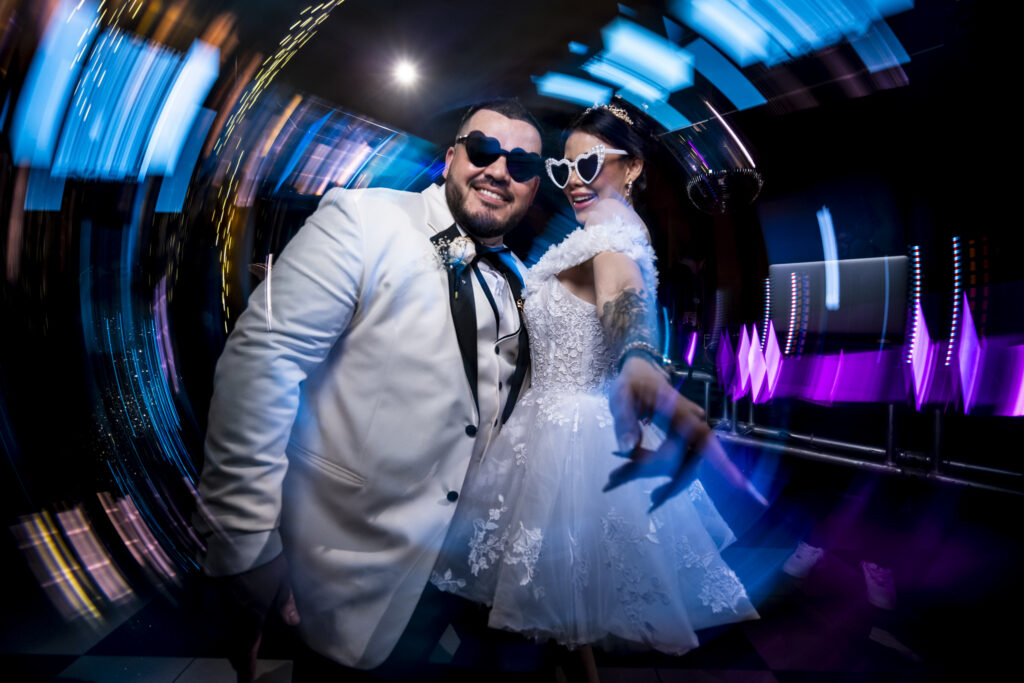
One technique worth testing during receptions is rear curtain sync, which tells your flash to fire at the end of the exposure rather than the beginning. The result is a sharp subject with motion trails that follow behind the direction of movement — which reads as far more natural and cinematic than standard front-curtain flash, where trails appear to lead into the subject. At 1/8th of a second with a dance floor strobe, you can get a sharp couple surrounded by streaking ambient light that looks nothing like a conventional flash shot.
Tip: Start experimenting during open dancing rather than the first dance or other formal moments. You have more frames to work with, clients expect a looser energy from dance floor shots, and you can dial in your timing without pressure. Once you find a shutter speed that works for the room, hold it and vary your camera movement instead of adjusting exposure.
4. Use black and white to focus on motion
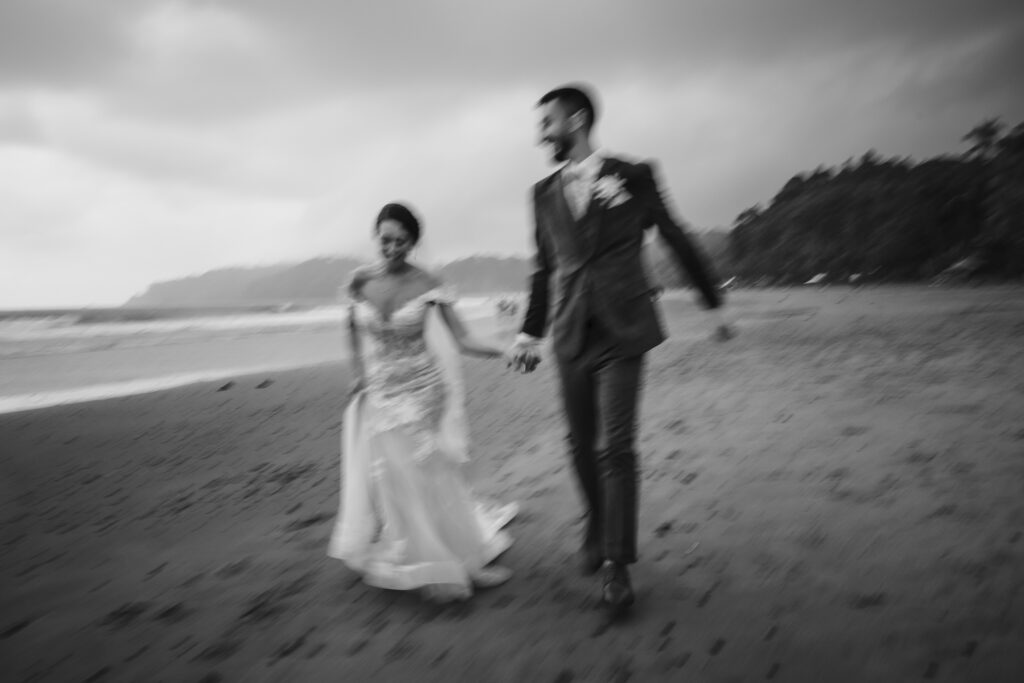
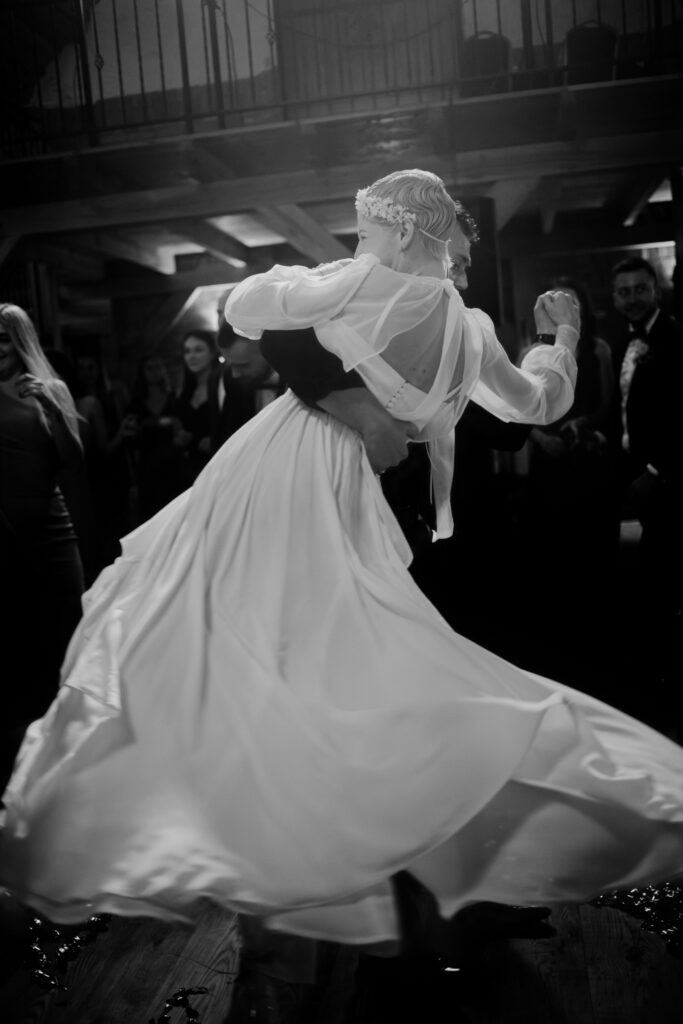
Blur often works better in black and white. Removing color eliminates the distraction of mixed DJ lighting and inconsistent color temperatures that can make motion-heavy color images look muddy rather than intentional. Camera shake, soft focus, grain, and motion blur all tend to feel more deliberate once color is stripped away — the movement becomes the image rather than competing with it.
This is especially useful at indoor receptions where the light sources are constantly shifting. An image that reads as a mess of green and magenta in color can become a clean, high-contrast motion study in black and white.
Tip: When converting blur shots to black and white, pay attention to contrast and light direction before you commit. Blur reads most clearly when subjects separate cleanly from the background. If the contrast isn’t there in the original, the motion tends to read as muddiness rather than movement.
5. Use environmental movement instead of subject movement
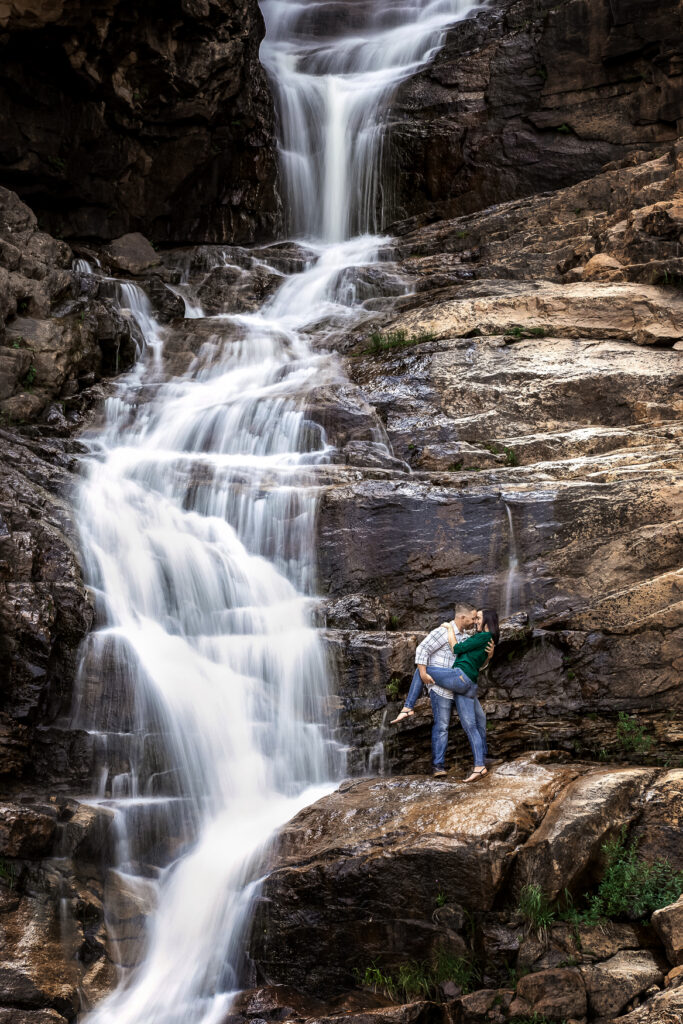
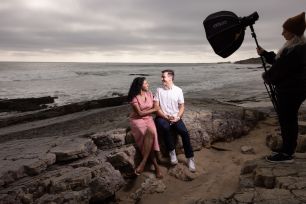
Not every blurry wedding photo needs people running through the frame. Sometimes the strongest motion comes from the environment itself. Water moving behind a still couple, leaves catching wind, guests streaming past in a corridor, traffic streaking down a street while the couple stands on the sidewalk — all of these create atmosphere without asking clients to perform actions that may feel unnatural.
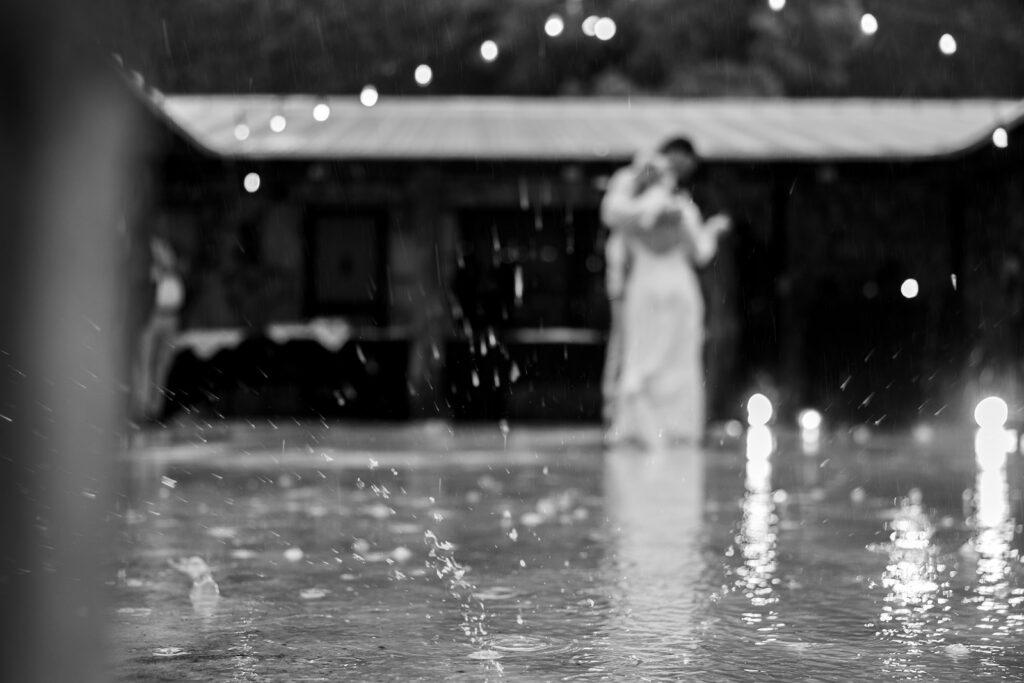
Environmental movement also tends to produce blur that reads as softer and more cinematic, because the subjects stay grounded while the world around them moves. The couple doesn’t have to do anything. The scene does the work.
Tip: For beach shoots, even a gentle wave pulling back from shore will add silk to a 1/4-second exposure. You don’t need crashing surf. A tripod is the cleaner option here — or at minimum, brace against something solid. Any camera movement will compete with the environmental movement and muddy the effect rather than add to it.
6. Crop tighter than you normally would
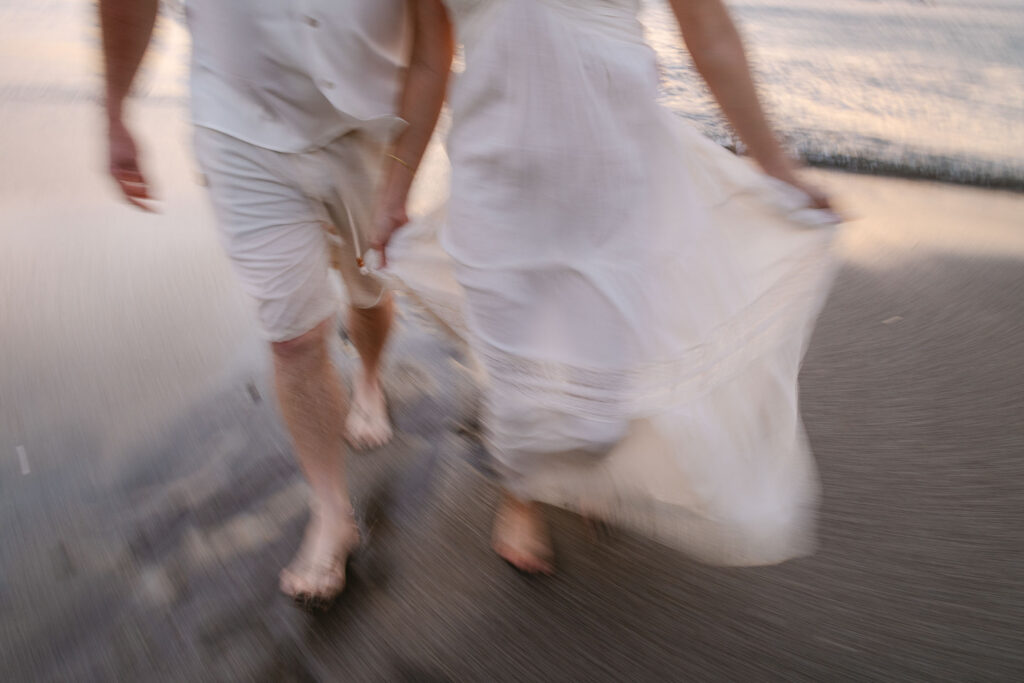
Blur often becomes more effective when the frame is tight enough to focus on movement rather than expression. Cropped shots of feet walking through water, a dress catching wind, hands pulling each other forward, or bodies crossing the edge of the frame can feel more immersive than wider portraits — because motion and texture become the primary storytelling elements rather than supporting ones.
These tighter crops also give you something to work with between a wide environment shot and a sharp close portrait in a gallery sequence, without the transition feeling forced.
Tip: Don’t treat every blurry image like a hero portrait. Some do their best work as transitions, placed between a wide shot and a close portrait to change the visual pace without jarring the viewer. Sequence them intentionally rather than dropping them wherever there’s a gap in the gallery.
7. Try controlled camera shake
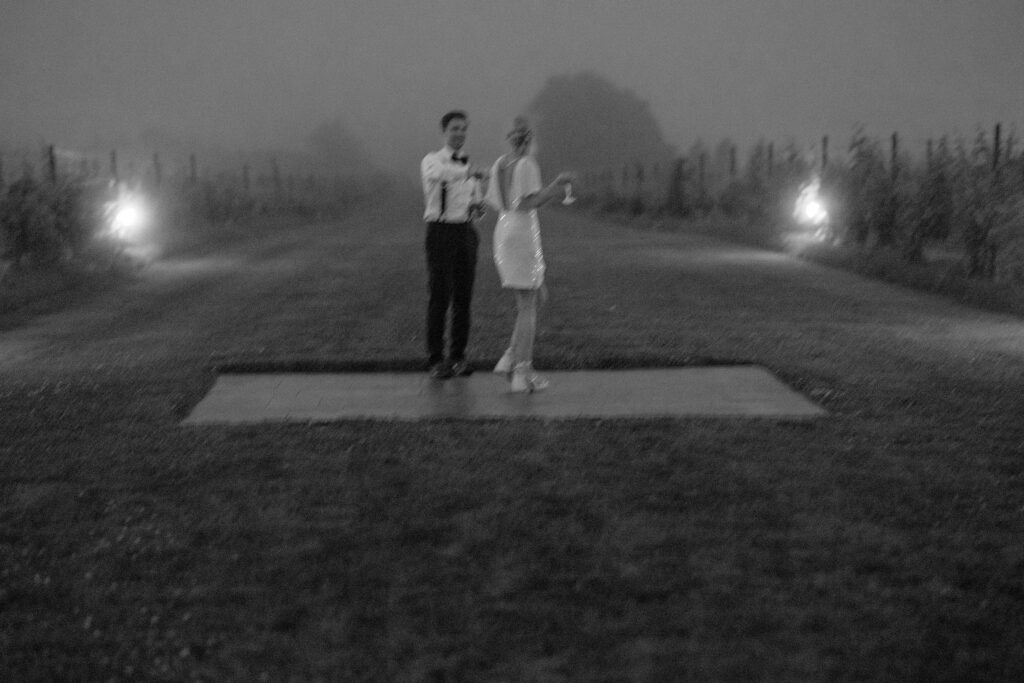
Not all blur has to come from subject movement. Intentional camera shake — a slight drag, a directional push, or a deliberate rotation during the exposure — can create a raw, documentary feel that works especially well during candid moments where technical perfection would actually weaken the image. A laughing portrait. Guests singing along on the dance floor. The couple walking hand-in-hand without posing for you.
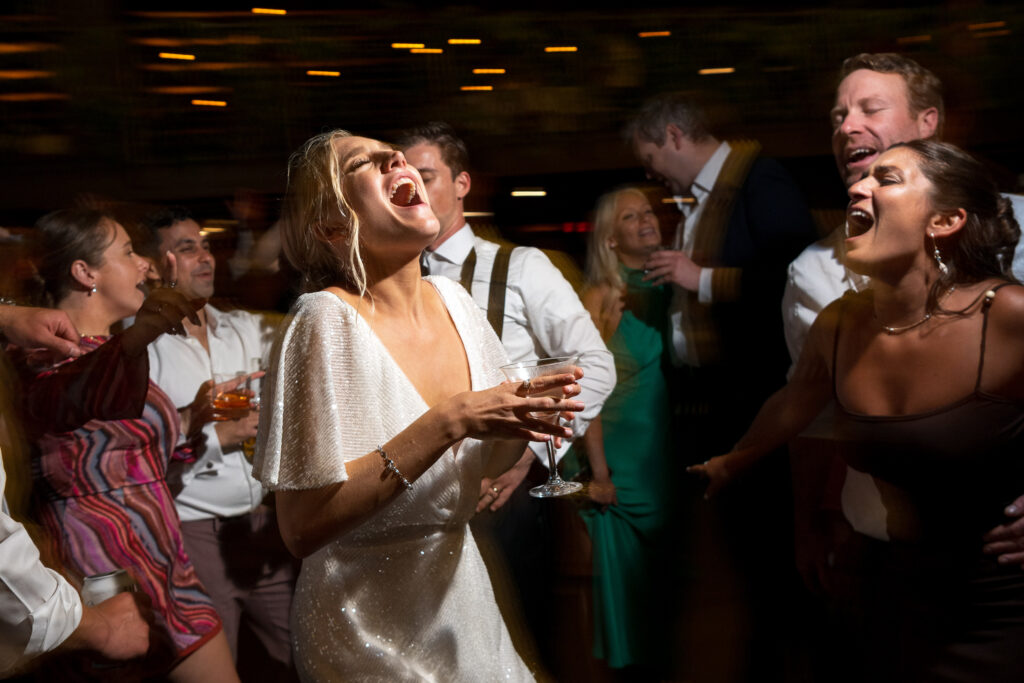
The distinction between intentional and accidental camera shake mostly comes down to consistency and direction. Random, multi-directional shake tends to look like a missed shot. A deliberate horizontal drag or a controlled rotation reads as a choice. Shoot several frames with the same movement and compare — the keepers are the ones with a consistent blur direction, not scattered motion going everywhere at once.
Tip: Subtle movement works better than aggressive movement in most cases. The goal is atmosphere, not abstraction. If you want to test the technique, start at 1/15th with a slight downward pull during the exposure. That direction tends to feel grounded rather than chaotic, and it’s easier to control consistently across multiple frames.
8. Mix blur with off-center composition
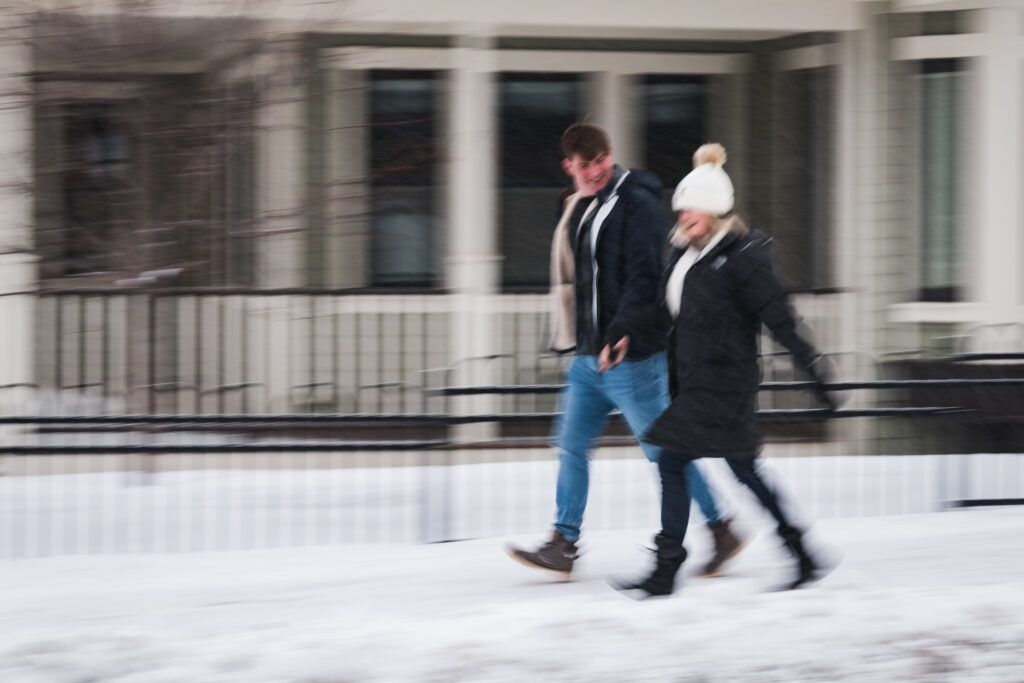
A lot of blurry wedding photography defaults to centered compositions, but movement becomes more interesting when subjects are placed off-center. Leaving negative space for motion, lights, moving guests, or weather gives the blur somewhere to travel within the frame. It creates more visual tension than a centered composition where all the movement stays compressed around the couple.
Off-center framing also helps the image read as deliberate rather than accidental. Blur that extends into open space looks like a decision. Blur that crowds against the edge of a tight frame tends to look like a mistake.
Tip: Compose wider than usual when planning a blur shot. Motion needs room to stretch naturally during longer exposures, and you can always crop tighter in post. Shooting too tight leaves you nowhere to go if the movement travels in an unexpected direction during the exposure.
9. Don’t be afraid of fully blurry wedding photos
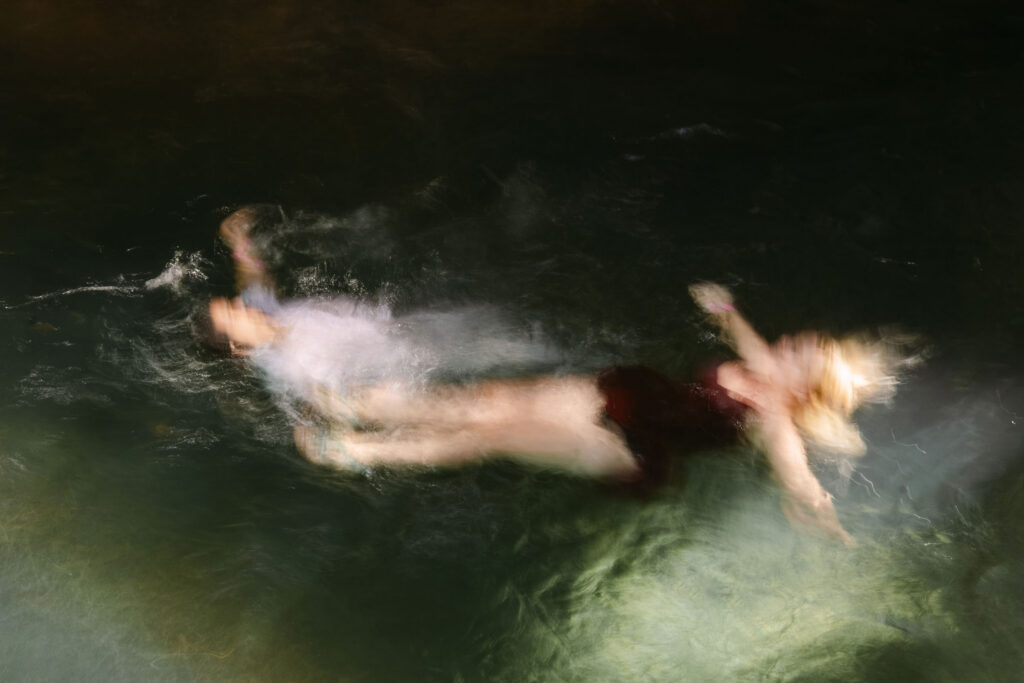
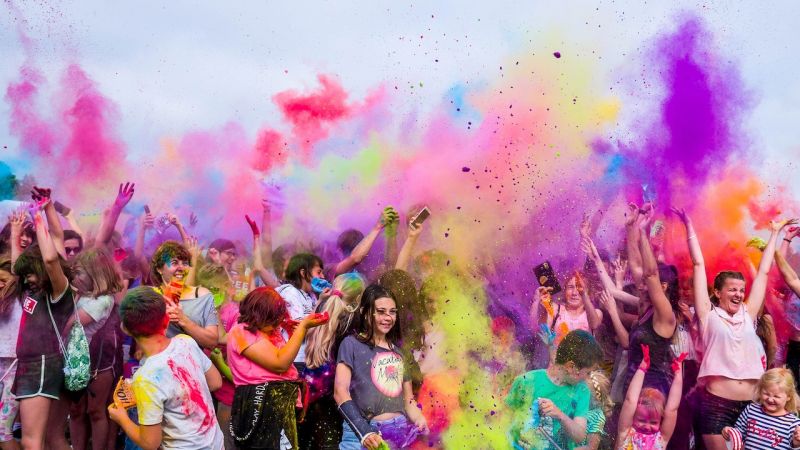
Some of the strongest blurry wedding photos have almost no sharp focal point at all. A couple moving through fog. A dancer in dramatic backlight. A first dance that exists as color and shape rather than detail. These images work because they prioritize mood over information, and sometimes that’s exactly what a gallery needs.
A zoom burst (zooming the lens during a slow exposure) can produce a similar effect with a distinctive radial energy that reads as neither motion blur nor camera shake. It’s worth a few test shots in an empty reception room before you try it on a moment that matters.
Tip: Judge fully blurred images at display size, not at 100%. This matters more than most photographers realize. Images that look like failures when zoomed in pixel-deep often read as strong, cohesive frames at the size a client actually sees them. Train yourself to evaluate blur shots at display size first — only zoom in if you’re deciding between two otherwise similar frames.
10. Use blur to break up the rhythm of a gallery
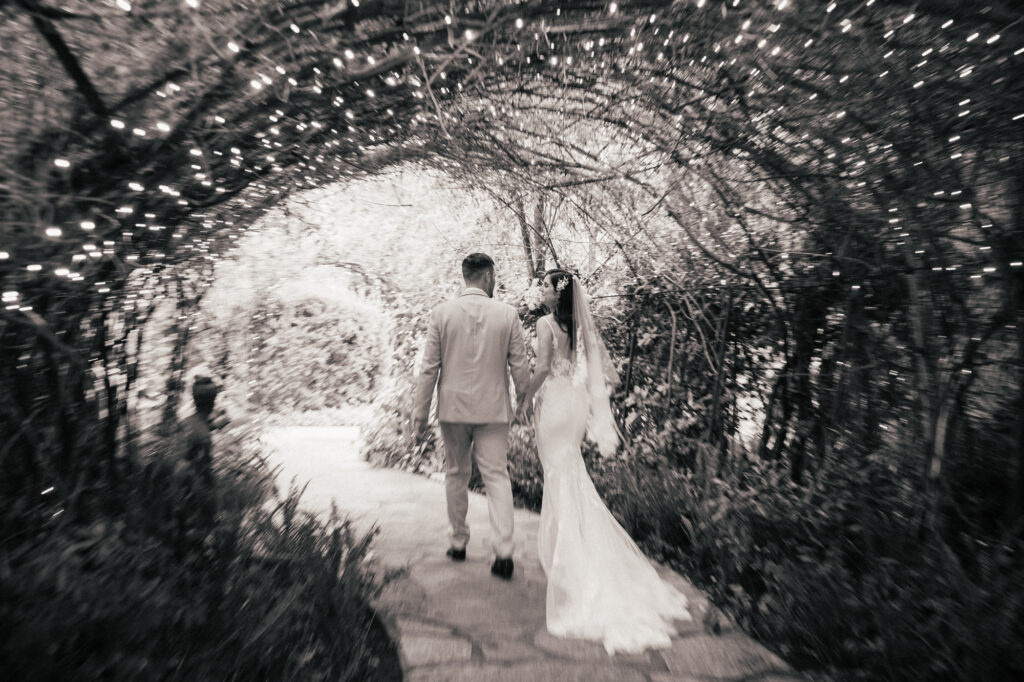
Part of what makes blurry wedding photos effective is contrast, not just within the frame but across the gallery as a whole. A gallery of perfectly sharp, evenly lit images has a visual rhythm that can start feeling repetitive by the midpoint. Introducing a few motion-heavy frames creates variation and gives the gallery more emotional range.
A blurry shot of the couple walking to the reception after a sequence of clean ceremony portraits can completely change the pacing of a wedding story. These transitional images help the gallery feel fluid rather than segmented into disconnected events.
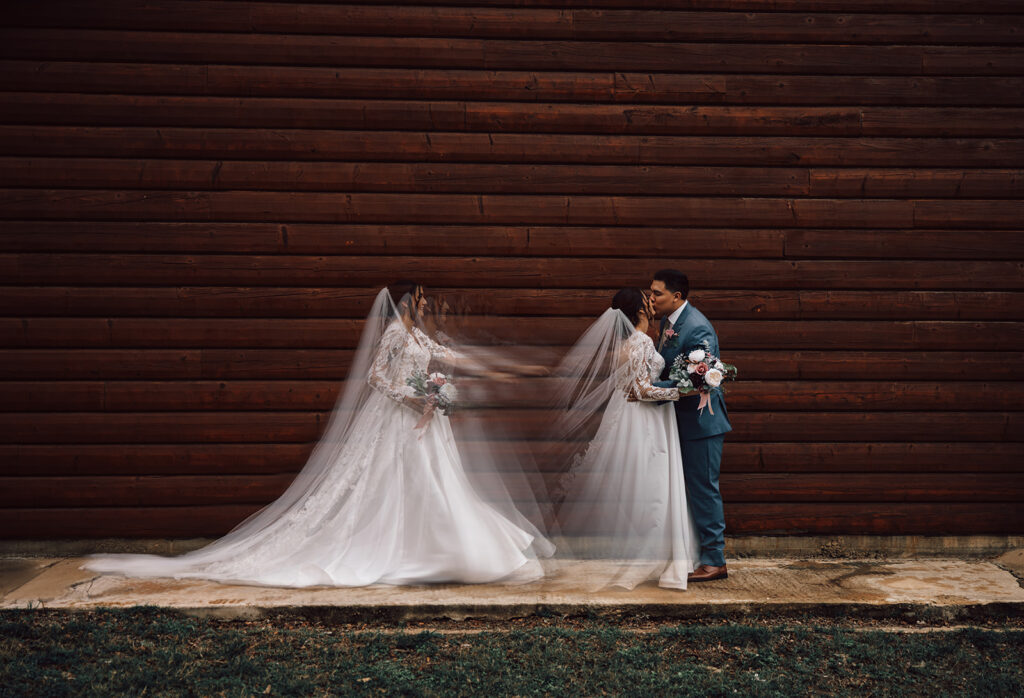
Tip: Think of blurry frames as visual commas rather than full stops. They’re most effective when surrounded by cleaner, more traditional images — used to shift the pace rather than carry it. One strong motion frame between two sharp portraits lands harder than three in a row.
Making blur work for clients
Intentional blur isn’t replacing traditional wedding photography. Sharp portraits still matter — often they’re what clients point to first. But blurry wedding photos done well offer something different: atmosphere, pacing, tension, and emotion that feels less staged and more experiential.
One thing worth building into your workflow is a single line in your delivery email that frames the motion images before clients see them. Something like: “You’ll notice a handful of intentional motion images mixed into the gallery — these are meant to capture the feeling of the moment rather than the detail.” That sentence changes how clients read blur. Without it, a handful of motion images in an otherwise sharp gallery can read as technical errors. With it, clients often pick them as favorites.
The photographers using blur well aren’t abandoning technical skill. They’re choosing moments where technical perfection matters less than emotional accuracy — and delivering that choice in a way that makes sense to clients who didn’t go to photography school.
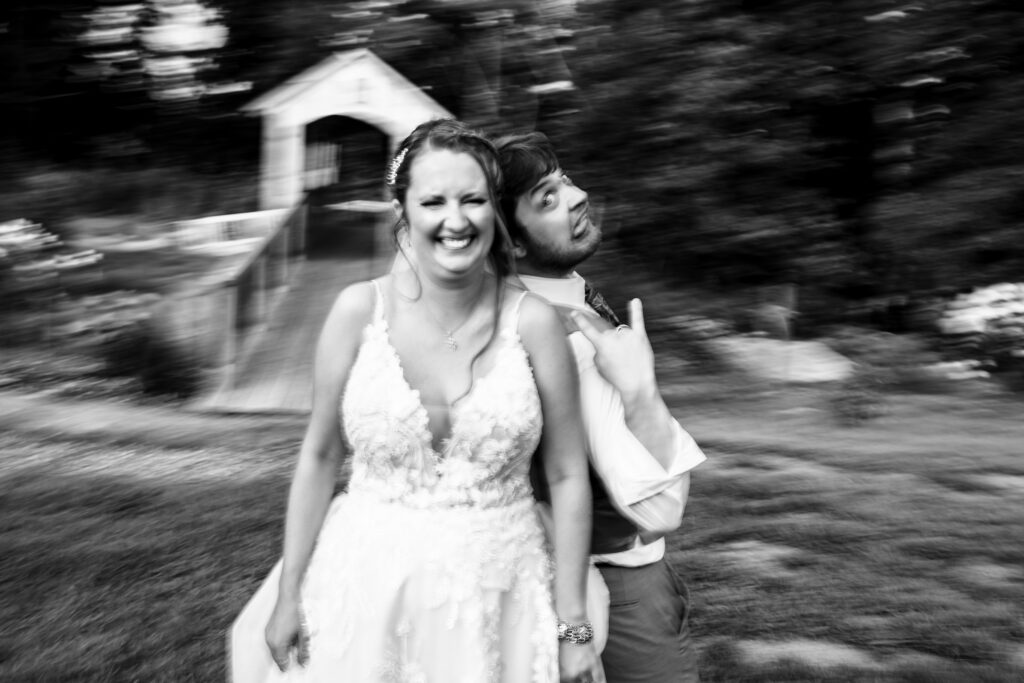
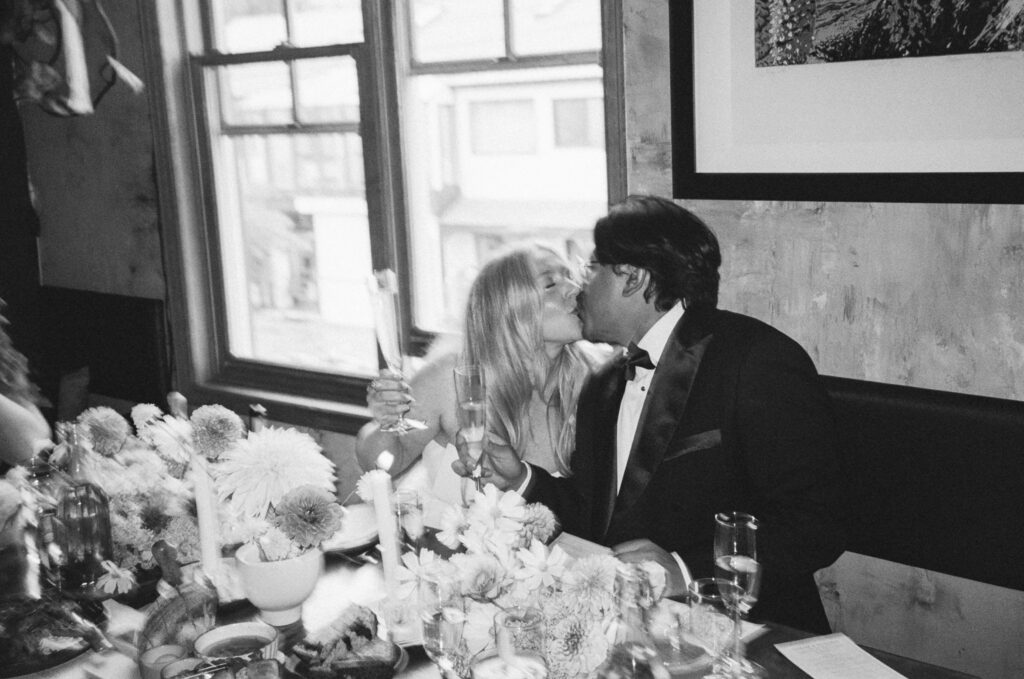
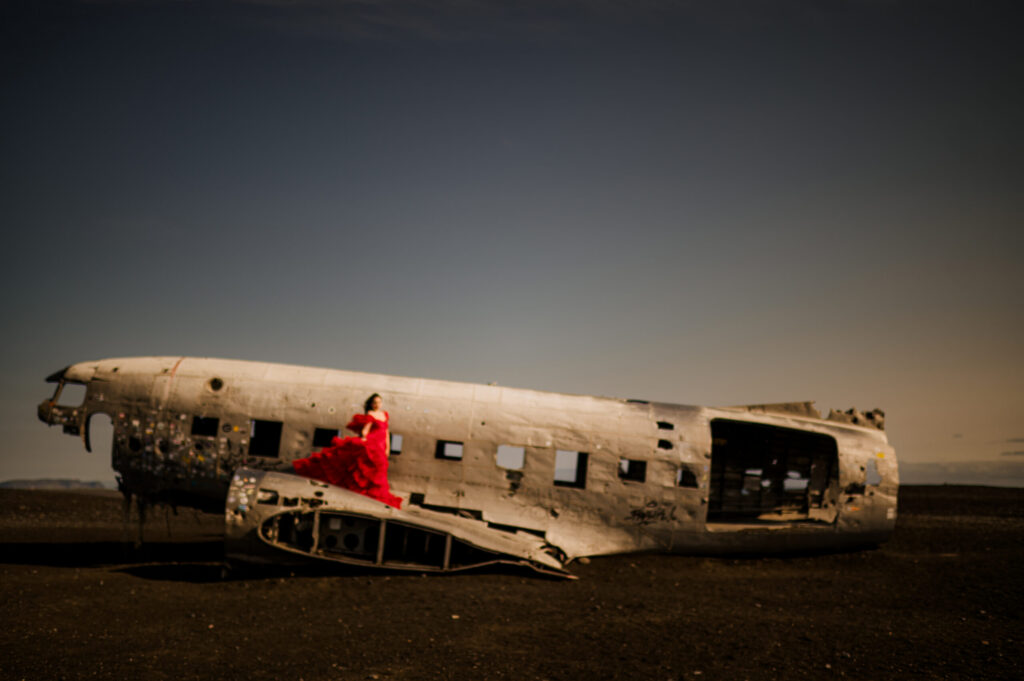
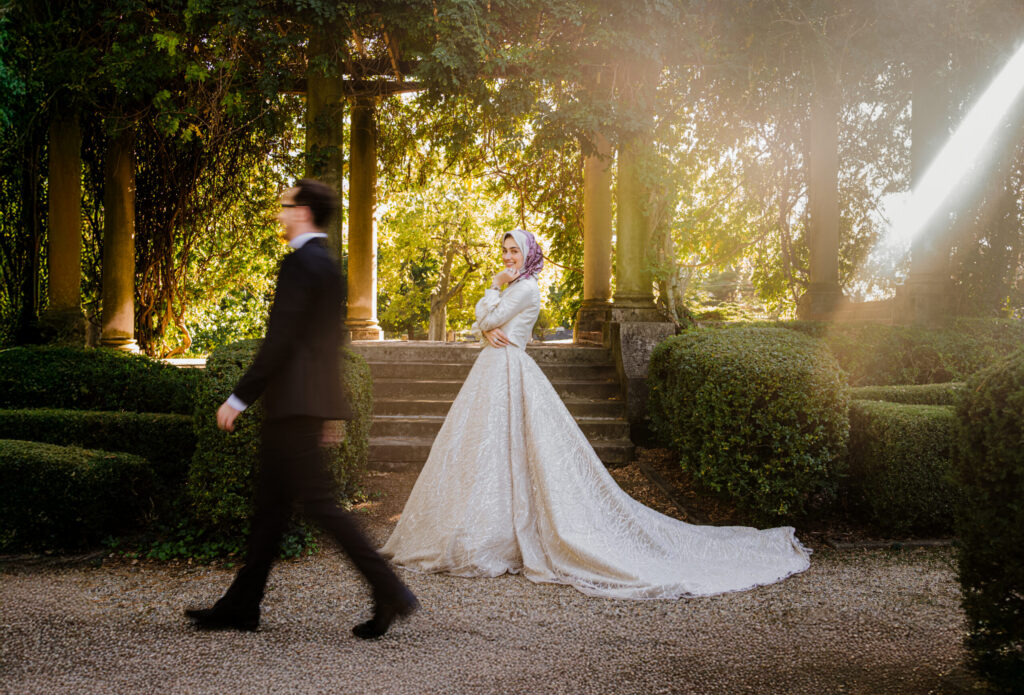
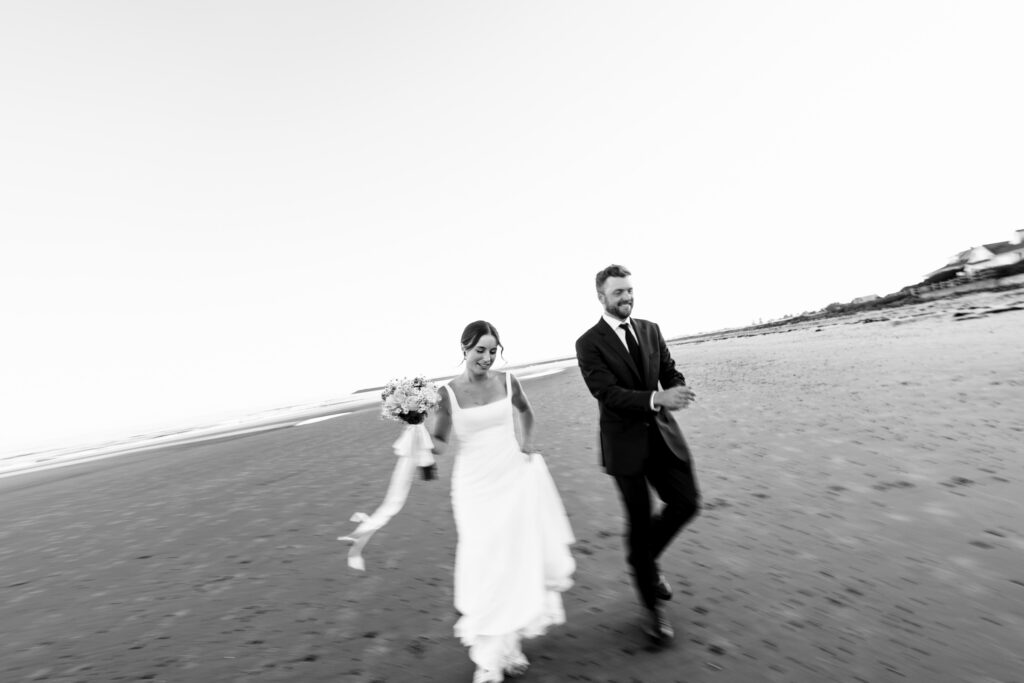
Here are some additional blurry wedding and engagement portraits for inspiration:
Frequently asked questions
What camera settings produce the best motion blur in wedding photos?
Shutter speed is the primary control. For light subject movement such as slow walking or gentle swaying, 1/15th to 1/30th of a second is usually enough. For more dramatic blur on a dance floor, 1/4th to 1/8th gives more motion while still allowing a flash to freeze some detail. In bright conditions, pair a slower shutter with a narrower aperture or use an ND filter to maintain exposure. In dark receptions, let the ambient light carry the blur and introduce a small amount of flash via rear curtain sync to sharpen the subject at the end of the exposure.
How do I get clients to accept blurry photos in their gallery?
Framing matters more than the images themselves. Clients who are briefed before delivery tend to read blur as a stylistic choice rather than a technical failure. If intentional blur is part of your style, show examples during the initial consultation. In your delivery email, describe the motion images in one sentence as intentional storytelling frames. Most couples respond well once they understand what they’re looking at and why it’s in the gallery.
What is the difference between intentional blur and a missed shot?
Intentionality shows in direction and consistency. A missed focus shot has a soft subject against a sharp background with no clear reason for the softness. Intentional motion blur has a clear direction, with trailing streaks and a sense of movement through the frame, and the sharpness or lack of it is consistent with what was happening in the scene. Context is the other tell: blur that makes sense given the action reads as deliberate. Blur during a posed portrait, or blur with no consistent direction, reads as an error.
What is rear curtain sync and why does it help with motion blur?
Rear curtain sync (also called second curtain sync) tells your flash to fire at the end of the exposure rather than the beginning. During a long exposure with movement in the scene, this produces motion trails that appear behind the subject in the direction they came from, rather than in front of them. Standard front-curtain flash creates trails that appear to lead into the subject, which looks unnatural. Rear curtain sync produces a sharp subject with streaks trailing behind, which matches how we perceive motion and reads as far more cinematic. Most cameras have this setting in the flash or shooting menu.