A technique used in art school for skill development is to have students learn to draw with a pen rather than a pencil. It forces you to be more careful, more accurate, and more disciplined. No erasing, no corrections, and no layout lines. Ultimately, this helps the artist grow and become better at their craft. Using an eraser is more of a crutch than a tool for young artists, and learning to draw with a pen was one of the most valuable lessons I learned in art school. Some of my favorite drawings are the ones I drew with only a pen.
As a portrait photographer, your lens choice is extremely important when it comes to your growth. There’s a misconception among new photographers that zoom lenses are the way to go. This is mainly due to a lack of understanding about the real differences between a prime lens and a zoom lens. Beyond the technical benefits of shooting with a fixed focal length lens, there’s an advantage that often gets overlooked: it helps make you a better photographer. In the same way that I was taught to use a pen in my college classes, I used a prime lens to force me to work harder for each shot. There are several reasons why you should consider shooting with a fixed focal length lens rather than a zoom, and why so many portrait photographers shoot exclusively with primes.
Fixed Focal Length Lenses: At a Glance
This guide covers why prime lenses (also called fixed focal length lenses) can transform your photography:
- What Is a Fixed Focal Length Lens? – Understanding prime lens basics
- Wider Aperture – Better low light performance and background blur
- Sharper Images – Why simpler optics produce better results
- Skill Development – How limitations make you more creative
- Size and Weight – The portability advantage
- Best Fixed Focal Lengths for Portraits – Which prime to choose
- Frequently Asked Questions – Common prime lens questions answered
What Is a Fixed Focal Length Lens?
A fixed focal length lens, commonly called a prime lens, is a lens that has a single, non-adjustable focal length. Unlike a zoom lens that might cover a range like 24-70mm or 70-200mm, a fixed focal length lens is set at one specific measurement, such as 35mm, 50mm, or 85mm. You cannot zoom in or out with a prime lens. Instead, you physically move closer to or farther from your subject to change your framing.
This might sound like a limitation, and in some ways it is. But as we’ll explore throughout this article, that limitation comes with significant benefits in image quality, creative development, and overall photographic results. The term “prime” simply means the lens has a fixed focal length rather than a variable one. When you hear photographers talk about their “nifty fifty” or their “85mm portrait lens,” they’re referring to fixed focal length lenses.
Wider Aperture: The Prime Lens Advantage
What is the main difference between a 50mm prime lens and a zoom lens that covers 18-55mm at the same focal length? Aperture. When you compare any zoom to a prime lens of the same focal length, the most significant difference is the lowest f-stop, or how wide the aperture can open at that specific focal length.
Most zoom lenses under $1,000 offer a maximum aperture somewhere between f/3.5 and f/5.6, depending on the focal length. Even professional zoom lenses typically max out at f/2.8. Meanwhile, fixed focal length lenses commonly offer apertures of f/1.8, f/1.4, or even f/1.2. That difference is massive when it comes to your creative options.
Better Background Blur and Subject Isolation
If you’re a fan of bokeh or a nice shallow depth of field, a zoom lens at f/3.5-5.6 simply isn’t going to cut it. If you want to truly isolate your subject from the background, the shallow depth of field that a fixed focal length lens provides makes a huge difference. That creamy, out-of-focus background that makes portraits look professional? It comes from shooting at wide apertures like f/1.8 or f/1.4, which are typically only available on prime lenses at affordable price points.
Superior Low Light Performance
Another advantage of a wider aperture is the additional light it allows into the sensor. The wider the aperture can go, the more light reaches your camera’s sensor, allowing you to shoot without a flash in low light situations. A lens that opens to f/1.8 lets in over four times more light than one that only opens to f/4. This means you can use lower ISO settings (less noise) or faster shutter speeds (less motion blur) in challenging lighting conditions.
Learning to shoot in low light using a lower f-stop takes practice. Whether you’re working in dim conditions or simply want to create a dreamy out-of-focus background in good light, you have more control over how much you want in focus and how much you don’t with the ability to open your aperture to f/1.8 or wider. Focusing with a shallow depth of field can be difficult at first and takes time to master, but like shooting a small target, once you can hit the small one, the big ones become easy.

Sharper Images from Simpler Optics
When compared to a zoom lens, a fixed focal length lens has a less complicated optical design with fewer glass elements involved. This simpler construction allows for sharper images with less distortion, chromatic aberration, and other optical imperfections. Photographers who prioritize sharpness and image quality will almost always reach for a prime lens when it matters most.
Zoom lenses require complex arrangements of multiple lens elements that must work together across a range of focal lengths. All those moving parts and extra glass introduce more opportunities for image degradation. A fixed focal length lens, by contrast, is engineered to do one thing exceptionally well. The optical designers can optimize every element for that single focal length rather than making compromises to cover a range.
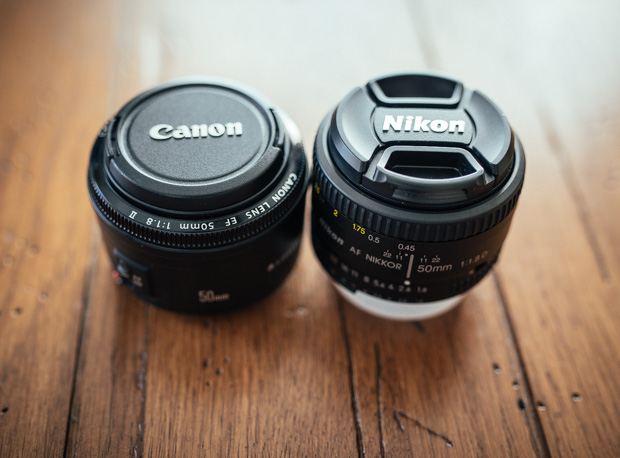
This is why even budget-friendly prime lenses like the 50mm f/1.8 (often called the “nifty fifty”) can produce sharper images than zoom lenses costing several times more. When you look at professional portrait photographers, wedding photographers, and commercial shooters, you’ll notice they overwhelmingly rely on fixed focal length lenses for their most important work.

Skill Development: How Limitations Make You Better
One reason to consider a fixed focal length lens over a zoom that often gets overlooked is simple: it can make you a better photographer. Developing your composition skills takes time, and learning to physically move your camera to get the shot you want, rather than standing still and zooming, is a game-changer for your creative development.
This may seem like a hindrance at first, but most creative photographers learn to use it to their advantage. When you have to physically move around, it changes your angles. It changes your relationship to the light. It makes you consider backgrounds more carefully. It forces you to adjust multiple variables to achieve the composition you envision. Put simply, it makes you think more.
The “Zoom With Your Feet” Philosophy
Having the ability to stay in one place and control your composition by zooming in and out may seem like the convenient approach, but convenience doesn’t always lead to growth. When you shoot with a fixed focal length, you learn to “zoom with your feet.” You become more engaged with your environment. You discover angles and perspectives you never would have found if you’d stayed planted in one spot twisting a zoom ring.
This active approach to photography builds muscle memory for composition. Over time, you start to instinctively know how a 35mm or 50mm or 85mm lens will render a scene before you even raise the camera to your eye. You develop a deeper understanding of how perspective, distance, and focal length interact to create different looks and feelings in an image.
Constraints Breed Creativity
Just like learning to draw with a pen instead of a pencil, working within the constraints of a fixed focal length forces creative problem-solving. When you can’t zoom past an obstacle, you find another angle. When you can’t get closer, you incorporate the environment into your composition. When you’re “stuck” at one focal length, you discover creative solutions you never would have considered with the easy option of zooming.
If a fence is in the way of you moving closer to your subject, shoot through it. You’ll either end up with a much more interesting image, or you’ll find another angle to get the shot. The limitation becomes a creative catalyst rather than a barrier.

Size and Weight: The Portability Advantage
Because fixed focal length lenses have simpler optical designs with fewer elements, they’re typically smaller and lighter than zoom lenses with comparable image quality. A 50mm f/1.8 prime might weigh just 6-7 ounces, while a 24-70mm f/2.8 zoom (which covers that same focal length) can weigh over two pounds.
This size and weight advantage matters more than many photographers realize. A lighter kit means less fatigue during long shoots. A smaller lens is less intimidating to portrait subjects. A compact setup is easier to carry for street photography or travel. Many photographers find they actually shoot more when their gear is less cumbersome, which means more opportunities to practice and improve.
The compact size of prime lenses also makes them more discreet. For candid photography, documentary work, or any situation where you don’t want to draw attention to yourself, a small fixed focal length lens on a mirrorless body is far less obtrusive than a large zoom lens.
Best Fixed Focal Lengths for Portrait Photography
If you’re convinced that a fixed focal length lens belongs in your bag, the next question is which one to choose. For portrait photography, certain focal lengths have proven themselves over decades of professional use.
35mm: Environmental Portraits
A 35mm fixed focal length lens is wide enough to include environment and context while still being flattering for portraits when used at appropriate distances. It’s excellent for environmental portraits, documentary work, and situations where you want to show your subject within their surroundings. On crop sensor cameras, a 24mm lens gives a similar field of view.
50mm: The Versatile Standard
The 50mm focal length is often called “normal” because it roughly approximates how the human eye sees the world. It’s incredibly versatile for portraits, producing natural-looking perspective without the distortion of wider lenses or the compression of telephotos. The 50mm f/1.8 is also the most affordable way to experience the benefits of a fixed focal length lens, with excellent options available from every major manufacturer for under $300.
85mm: The Portrait King
Many portrait photographers consider 85mm the ideal fixed focal length for headshots and traditional portraits. The slight telephoto compression is universally flattering for faces, and the working distance (how far you stand from your subject) feels comfortable for both photographer and subject. An 85mm f/1.8 or f/1.4 can produce stunning subject isolation with beautifully blurred backgrounds.
135mm: Compression and Reach
For photographers who want even more background compression and subject isolation, 135mm is a popular choice. This longer fixed focal length requires more working distance but produces incredibly flattering portraits with backgrounds that melt into smooth, creamy bokeh. It’s also useful for capturing candid moments from a distance without intruding on the scene.
Frequently Asked Questions About Fixed Focal Length Lenses
What does fixed focal length mean?
Fixed focal length means the lens has a single, set focal length that cannot be changed. Unlike a zoom lens where you can adjust the focal length (for example, from 24mm to 70mm), a fixed focal length lens stays at one measurement, such as 50mm. To change your framing with a fixed focal length lens, you physically move closer to or farther from your subject rather than turning a zoom ring.
Is a prime lens the same as a fixed focal length lens?
Yes, the terms are interchangeable. “Prime lens” and “fixed focal length lens” both refer to lenses that have a single, non-variable focal length. The term “prime” distinguishes these lenses from “zoom” lenses, which have variable focal lengths. You may also hear them called “fixed lenses,” though this can sometimes cause confusion with lenses that are permanently attached to a camera body.
Why are prime lenses sharper than zoom lenses?
Prime lenses are typically sharper because they have simpler optical designs optimized for a single focal length. Zoom lenses require complex arrangements of many lens elements that must work together across a range of focal lengths, introducing more opportunities for optical compromises. With a fixed focal length, engineers can perfect every aspect of the design for that one specific purpose, resulting in superior sharpness, less distortion, and better overall image quality.
What fixed focal length is best for beginners?
Most photographers recommend starting with a 50mm f/1.8 as your first fixed focal length lens. It’s affordable (typically under $300), versatile enough for many subjects, and available from every major camera manufacturer. The 50mm focal length is considered “normal,” meaning it roughly matches how the human eye sees, making it intuitive to use. It’s also excellent for learning to “zoom with your feet” and developing stronger composition skills.
When should I use a zoom lens instead of a prime?
Zoom lenses make sense when you need flexibility and cannot control your shooting distance, such as event photography where you can’t always move freely, wildlife photography where getting closer isn’t possible, or travel situations where carrying multiple lenses isn’t practical. Sports and action photography often benefit from zoom lenses for the same reasons. However, for controlled portrait sessions, studio work, or any situation where you can move around freely, a fixed focal length lens will typically deliver better results.
Conclusion
Simply put, fixed focal length lenses force you to think more, move more, and ultimately create better and more interesting photographs. You get sharper images, superior subject isolation, beautiful creamy bokeh, and better low light performance. The constraints of a single focal length become a catalyst for creativity rather than a limitation.
Zoom lenses are convenient and definitely have their place in photography. But if you’re looking to grow as a photographer, I don’t recommend relying on them exclusively, especially in the beginning. Get up, move around, and be more creative with your depth of field and compositions. Challenge yourself to see the world through one focal length at a time.
Don’t be afraid to use a lens that has a fixed focal length. Embrace the limitation, and watch your photography improve. Save your zoom lens for situations where you truly need it, and reach for a prime when you want to do your best work.
“`