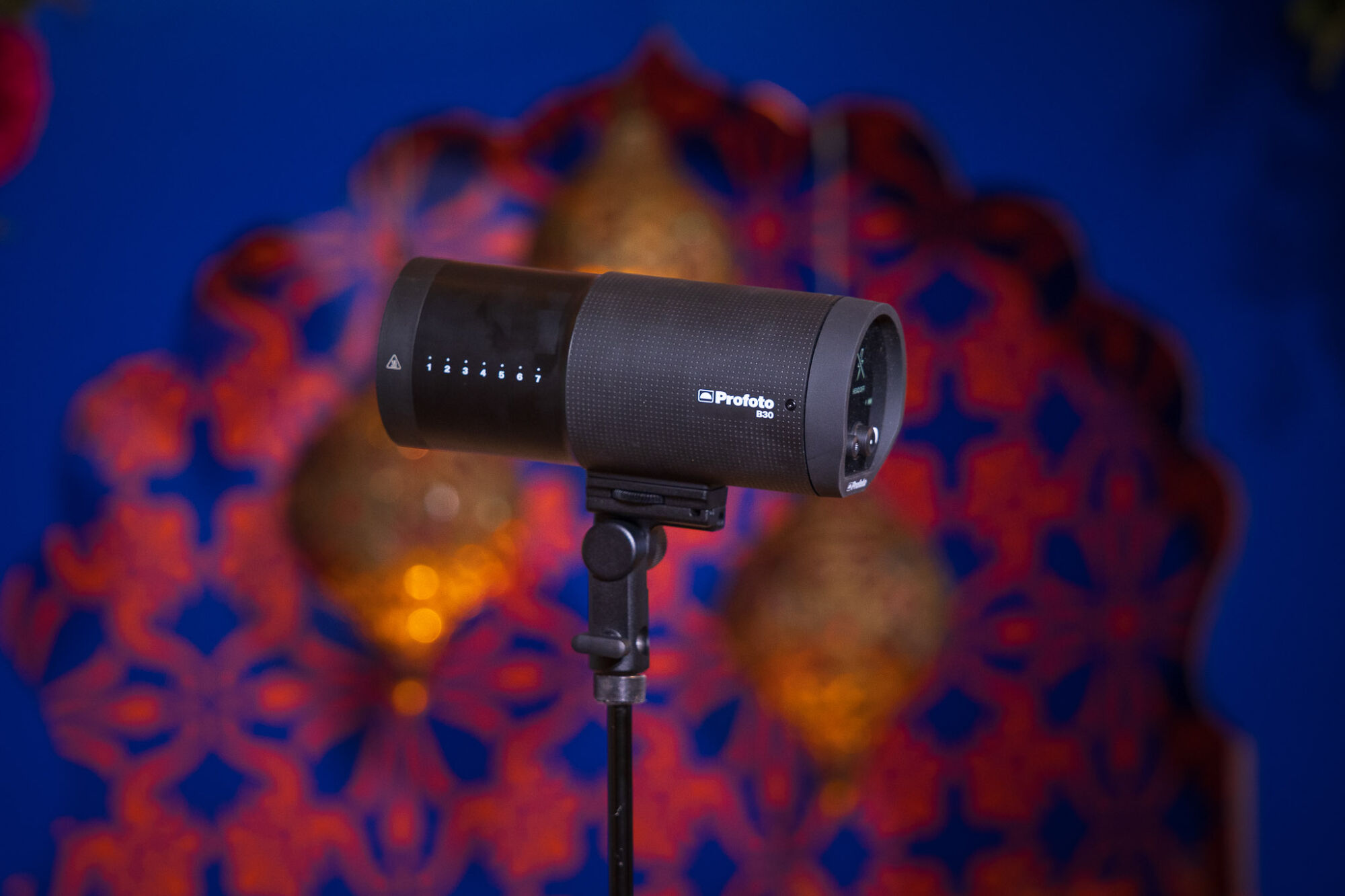
After more than 20 years of professional portrait & wedding photography, I have only one name on my mind when it comes to reliable lighting equipment: Profoto. Since the days of film, they have been the industry standard for quality, performance, and dependability. So, I’m honestly thrilled to be presenting this Profoto B20 review and Profoto B30 review today!
Over the years at our studio, we have watched many other brands rise in popularity, and then all too often they fall from grace. This is almost always due to poor quality and unreliable performance. Admittedly, some of the other, smaller brands were more nimble in their ability to offer lots of bells and whistles that were attractive at the time. However, at the end of each year, having gear break over and over is just unacceptable, period.
Profoto has always been the brand that never let us down. Their strobes didn’t always have every single cutting-edge perk available, but there’s no denying that they’re a high-end product and well worth the investment.
Today, the Profoto B20 and B30 are about as modern as a strobe can get! And yet, the simplicity and longevity are still a big part of the allure of the brand. These two portable studio strobes are both powerful and versatile, with unique features that set them apart from both competitors and predecessors.
With that in mind, let’s dive into this review of the two most cutting-edge portable studio strobes on the market today!
Profoto B20 Specifications
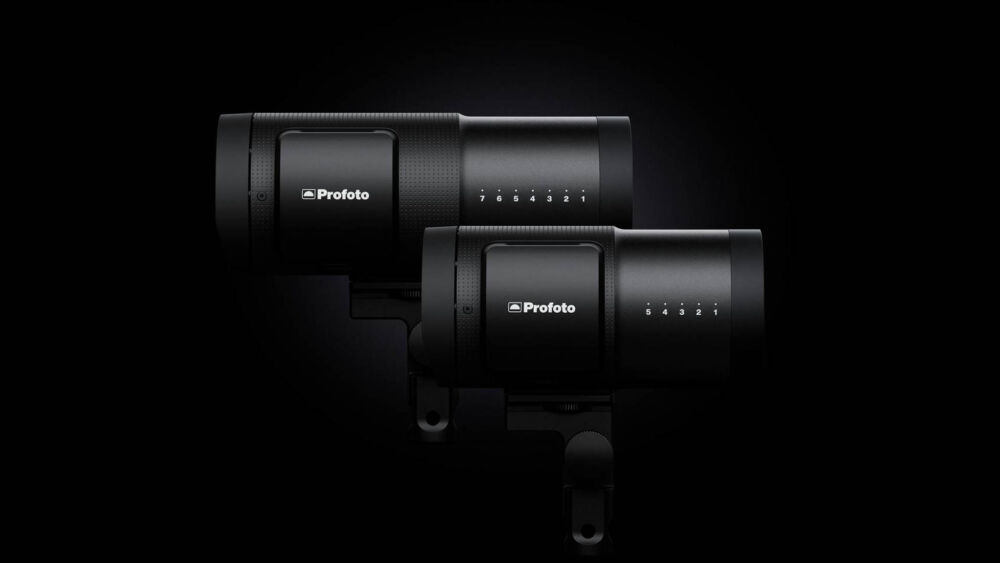
MAX OUTPUT (Flash Power): 250 Ws
RECYCLE TIME: 0.01s-1.2s (Boost/Freeze Mode), 0.01-1.1s (Eco Mode)
FLASH DURATION (T0.1):
Eco mode: 1/500 s (10) – 1/10800 s (0.1)
Boost mode: 1/500 s (10) – 1/10300 s (0.1)
Freeze mode: 1/500 s (10) – 1/11700 s (0.1)
FLASH DURATION (T0.5):
Eco mode: 1/1500 s (10) – 1/14500 s (0.1)
Boost mode: 1/1500 s (10) – 1/15200 s (0.1)
Freeze mode: 1/1500 s (10) – 1/38100 s (0.1)
COLOR TEMPERATURE:
Eco mode: 6000K +-100K
Boost mode: 6000K +-100K
Freeze mode: 6000K (10) – 9000K (0.1)
CONTINUOUS LIGHT:
40 W brightness, (5000 lm) 2800-7000K color temperature, dimming range 100% to 1%
PRICE: $1995
Profoto B30 Specifications
MAX OUTPUT (Flash Power): 500 Ws
RECYCLE TIME: 0.01s-2.1s (Boost/Freeze Mode), 0.01-1.8s (Eco Mode)
FLASH DURATION (T0.1):
Eco mode: 1/300 s (10) – 1/5000 s (0.1)
Boost mode: 1/300 s (10) – 1/6200 s (0.1)
Freeze mode: 1/300 s (10) – 1/9800 s (0.1)
FLASH DURATION (T0.5):
Eco mode: 1/900 s (10) – 1/10700 s (0.1)
Boost mode: 1/900 s (10) – 1/13800 s (0.1)
Freeze mode: 1/900 s (10) – 1/21100 s (0.1)
STROBE COLOR TEMPERATURE:
Eco mode: 6000K +-100K
Boost mode: 6000K +-100K
Freeze mode: 6000K (10) – 9000K (0.1)
CONTINUOUS LIGHT:
40 W brightness, (5000 lm) 2800-7000K color temperature, dimming range 100% to 1%
PRICE: $2,395
Profoto B20 & Profoto B30 Review | Who Are They For?
Whenever I begin a new camera gear review, I always ask myself this pair of questions: Who is the target market, and should THEY buy this product? Because, quite honestly, that’s the best use of both my time and yours. (I would not be genuine if I tried to convince each and every reader that they need to own literally all the items I review, of course!)
With that in mind, let’s talk about the Profoto B20 and B30. Priced at $1995 and $2395, respectively, these are professional studio strobes. They’re big enough that you’re still going to need a dedicated carrying case for them, of course. Actually, if you purchase two flash heads as one of Profoto’s Duo Kits, they include the Profoto Core Backpack.
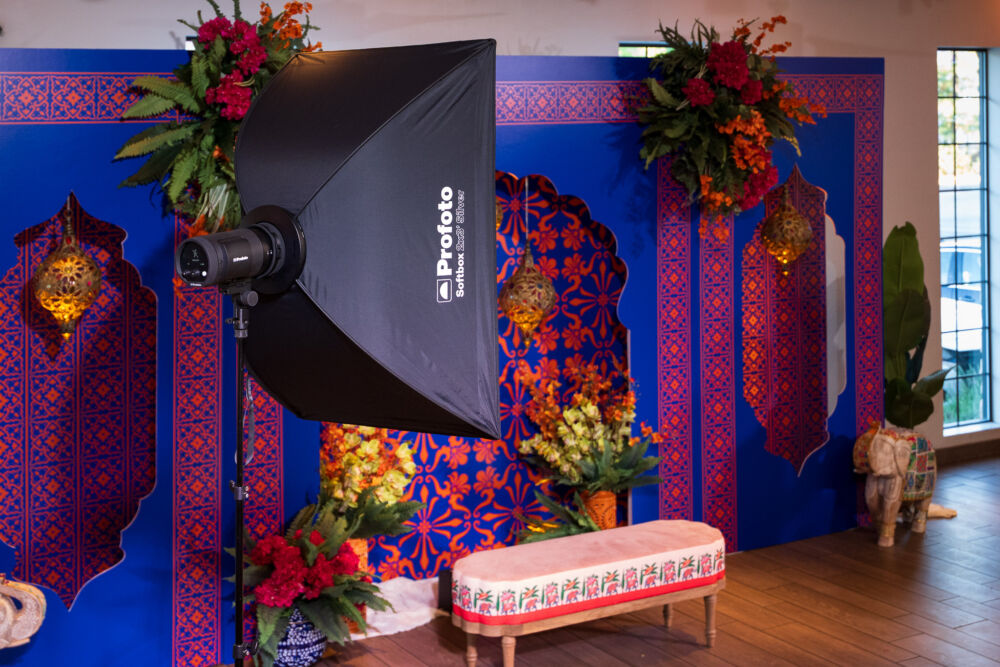
On the other hand, the B20 in particular is a little more compact than the B30. I dare say it’s enough that you can take it almost anywhere, and fit it into a relatively modest carrying case or an existing camera bag. With a simple softbox like the quick-setup Profoto Softbox 2×3′ Rectangle Softbox, you have a rapid-fire on-location lighting kit.
For the ultimate go-anywhere full studio setup, the B20 or B30 can be your main key light, and one or two more compact options like the Profoto A2 can be your second and/or third light.
Profoto B20 & Profoto B30 Review | Pros & Cons
Overall, the key points here are very clear: Both the B20 and B30 are professional tools, requiring a serious investment. With that in mind, I’m going to list the main pros and cons, and then we’ll dive deeper into the nuances of what they mean.
Pros:
- Highest-quality light (I mean, the quality of the light output itself; its color, evenness, etc)
- Industry-leading performance reliability
- Industry-leading rugged durability & longevity
- Vast array of professional light modifiers available (The industry standard!)
- Uniquely versatile performance customizations
- 13% faster recycle time compared to B10 series
- 50% brighter LED compared to B10 series
All in all, the advantages are more than enough for me to flat-out recommend either of these strobes for professional work. If you do editorial, fashion, or any type of commercial photography work, the B30 is your new on-location gold standard. But, we’ll discuss the overall advantages more, after I list the drawbacks, such as they are…
Cons:
- Serious investment (It’s expensive, but worth it)
- Bigger and heavier than “hotshoe” style strobe flashes (But, far more power output!)
- Some minor quirks when using the AirX / Air Connect triggering system
Okay, so, we do have a few things to discuss here. Firstly, the flashes themselves are excellent; they’re a professional gold standard in terms of portable studio lighting. The drawbacks, actually, are not actually “cons”, but simply par for the course when it comes to investing in the best professional tools.
Here’s what I mean: if you think a Profoto B30 is “too big”, just remember that to match its output, (maximum brightness) …you’d need FIVE or more of the brightest hotshoe flashes to match it! Or, if you think either of these flashes is too expensive… well, allow me to refer you back to my previous statement: You’re getting 3-5 hotshoe-sized flashes, in one strobe. (Just three Canon EL-1’s add up to ~$3600!)
Having said that, I did run into a couple of quirks related to how you might wirelessly trigger your Profoto strobes in general. We’ll talk about that in the following section about real-world use.
Profoto B20 & B30 Review | Real-World Use
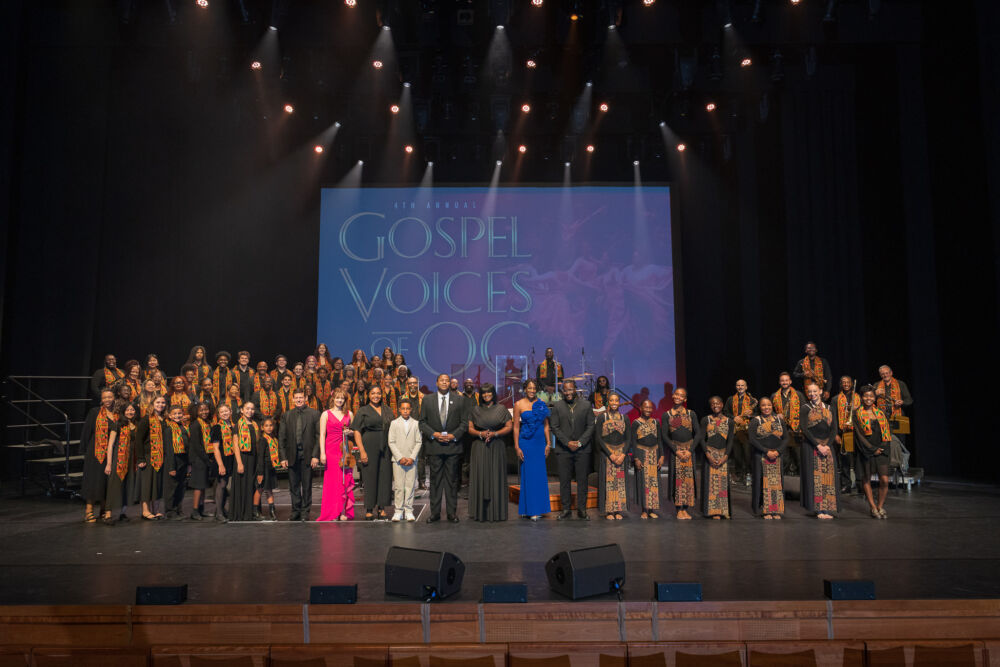
We could discuss the best portable studio strobes all day long, but what about taking the Profoto B30 and B20 out into the real world and putting them to the test? I’ve been doing just that over the past few weeks! I put both the B20 and the B30 on-duty in some extremely demanding conditions: I illuminated an entire, massive stage for a musical performance. I did a lot of on-location portrait lighting in the breathtaking yet challenging conditions of Big Sur, California. (I even took the B20 on a ~2 mile hike!) And, of course, I used both the B20 and the B30 at a big Hindu wedding, for posed portraits as well as event lighting.
Simply put, the B20 and B30 performed exceptionally well. I loved having so much flash power available to me, especially when working at extreme distances where no ordinary flash could have possibly “thrown” light that far.
The highlight of these two strobes is their versatility. I loved being able to leave them in “Eco” mode most of the time; the power and recycle time in this default state are impressive indeed. However, when I need to do some high-speed, high-FPS action photography, or when I just need a little extra light, the Freeze and Boost modes are there.
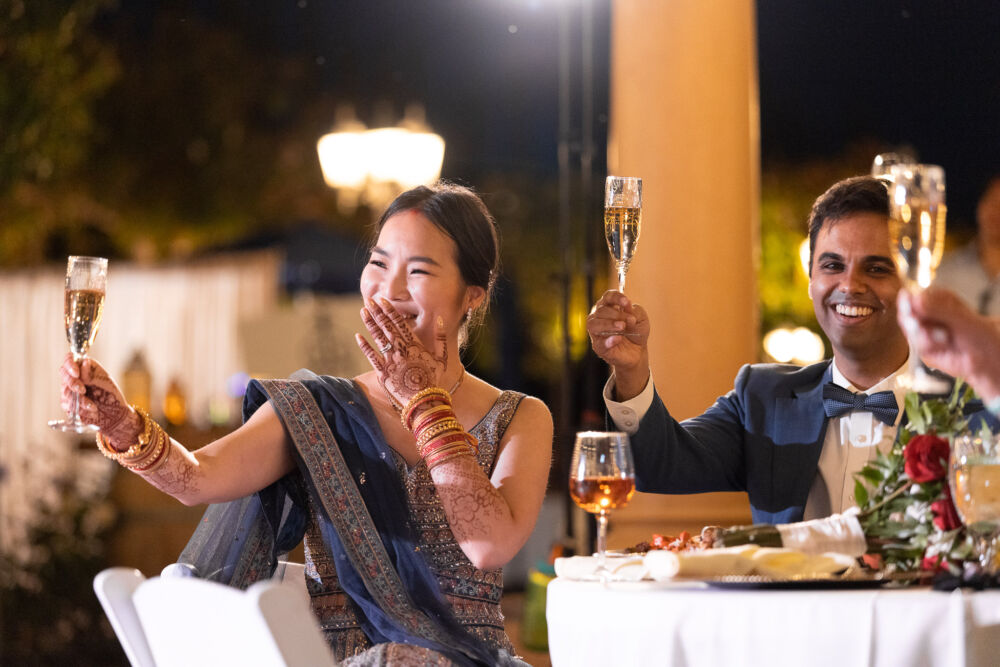
The LED lights are perfect for low-light “natural light” work, as well. If I’m working around a video team, and I have a fast aperture lens, I appreciate the improved brightness and excellent color of the constant LED light. (You can adjust both the brightness and color of the B30’s LED separately from its strobe output power. The B20’s LED brightness is tied to its strobe brightness, as far as I can tell.)
After all that heavy use in demanding professional conditions, I did notice a couple minor quirks that are worth mentioning. These aren’t directly related to the B20 or B30, but you will encounter them while using the Profoto “Air” system: For example, in order to manually adjust the strobe output wirelessly with the Profoto Connect, you’ll need to use your phone, and sometimes if your phone screen is off for a while, that connection takes a few seconds to be re-established.
Another little quirk I noticed is this: even when leaving the B20 or the B30 powered on, if you turn off the Profoto Connect device and then turn it back on, the strobes will “jump back” to full output. (I’m used to the advanced triggers that remember output settings when you turn them off.) This is something that is possible/likely to be improved with a firmware update, of course.
I have one more note regarding the real-world demanding conditions I put these flashes in: Like all wireless triggering systems, you’ll lose a little bit of consistency when you’re working at great distances (100+ ft away) especially with large crowds surrounding you. If this is your common work environment, then the Connect Pro is one of the most reliable triggers on the market, with a rated range of 100 meters or 330 ft.
Lastly, I was testing using a Canon EOS R5 II, and although I did not need TTL, I noticed it does not seem to work for me. So, updating the firmware for the camera, and the triggers and strobes, might be necessary for you to have TTL work.
The HSS, (High Speed Sync) on the other hand, does automatically kick in flawlessly, which I really appreciated!
Profoto AirX & Profoto Connect System
For those who aren’t familiar, there are three main types of triggers in the Profoto “Air” Connect family. The Profoto Connect, the Profoto Connect Pro, and the “Air Remote”. The first two are brand-specific, while the Air Remote is universal.
The Profoto Connect Pro triggers are fantastic; allowing you to control the power of multiple strobes across different groupings with ease, without having to use the mobile app. (That’s the standard Profoto Connect.) Again, just keep in mind that these are all brand-specific. If you want universal transmit & receive functionality, what you’re looking for is the standard Profoto Air Remote.
NOTE: The Profoto Connect triggers are available for $199, and the Profoto Connect Pro and Air Remote triggers are available for $399.
All in all, I have no real complaints directly related to the Profoto B20 and B30. They operate beautifully, and they’re an incredible tool that any professional would welcome into their gear bag. The usage of the “Air” system does take some understanding, and you’ll want to consider what I’ve noted in order to make the best decision about which trigger you use.
If you’re in a studio setting, and never straying far from your strobe, and/or you have an assistant who can dial the strobe power up & down for you, then the simple Connect trigger is great. However, if you work in more dynamic, outdoor, active environments, the Profoto Connect Pro or Air Remote triggers become necessary for smooth operation.
Profoto B20 & Profoto B30 Review | Compared To The Alternatives
Although the numbers in the names might suggest that the older B10 is half the power of the B20, and ⅓ the power of the B30, the Watt-seconds noted the spec sheets clear things up: the Profoto B10 and B10X are 250 Ws, (same as the B20) and the Profoto B10X Plus offers 500 Ws of power. (Same as the B30)
With that in mind, the differences compared to the 10-series is about much more than output. The B20 and B30 both offer a host of significant improvements; the recycle times are improved, and the constant LED light is brighter. (Oh and on the B30, you can vary both the color temperature and the brightness of the constant light, independently from the brightness of the strobe!) Lastly, the three power modes, (Eco, Boost, & Freeze) add versatility to the new duo. Simply put, they’re absolutely worth the upgrade.
Other brands, quite honestly, just don’t come close to the durable reliability of Profoto. There is a good reason why the ~400 Ws competitors are more affordable: in our personal experience, they’re cheaply made, period.
The last thing to keep in mind about most generic brands of lighting products is that if they break, you’re likely going to just replace the entire unit. Especially for a working pro, this hidden cost can quickly outweigh the investment in a more durable, quality product that also has an entire warranty, maintenance & repair department dedicated to serving you.
Conclusion | Three Flashes In One
If you’re looking to take a full studio lighting setup out and about for some on-location work, these are the lights for you. They’re about as portable as you can get for 250-500 Ws lights, and they are by far the most versatile lights in their class.
Even if you’re not constantly out-and-about, but instead you are just an in-studio photographer who dislikes having cables dangling around, the Profoto B20 and B30 are also highly capable for in-house work. Personally, I detest cables of all kinds; I remember the days of having to carefully manage power cords and sync cables so that I didn’t knock over a C-stand, and I am more than happy to be fully cable-free even in a home studio setting.
All in all, the Profoto B20 and Profoto B30 have delivered a worthy performance. If you’re making your first investment in a studio lighting kit, a pair of these (or one of each) is a no-brainer. Furthermore, if you’re considering upgrading from a Profoto B10 series strobe, I strongly recommend that as well!
For more information, check out the B20 and B30 on the Profoto website.