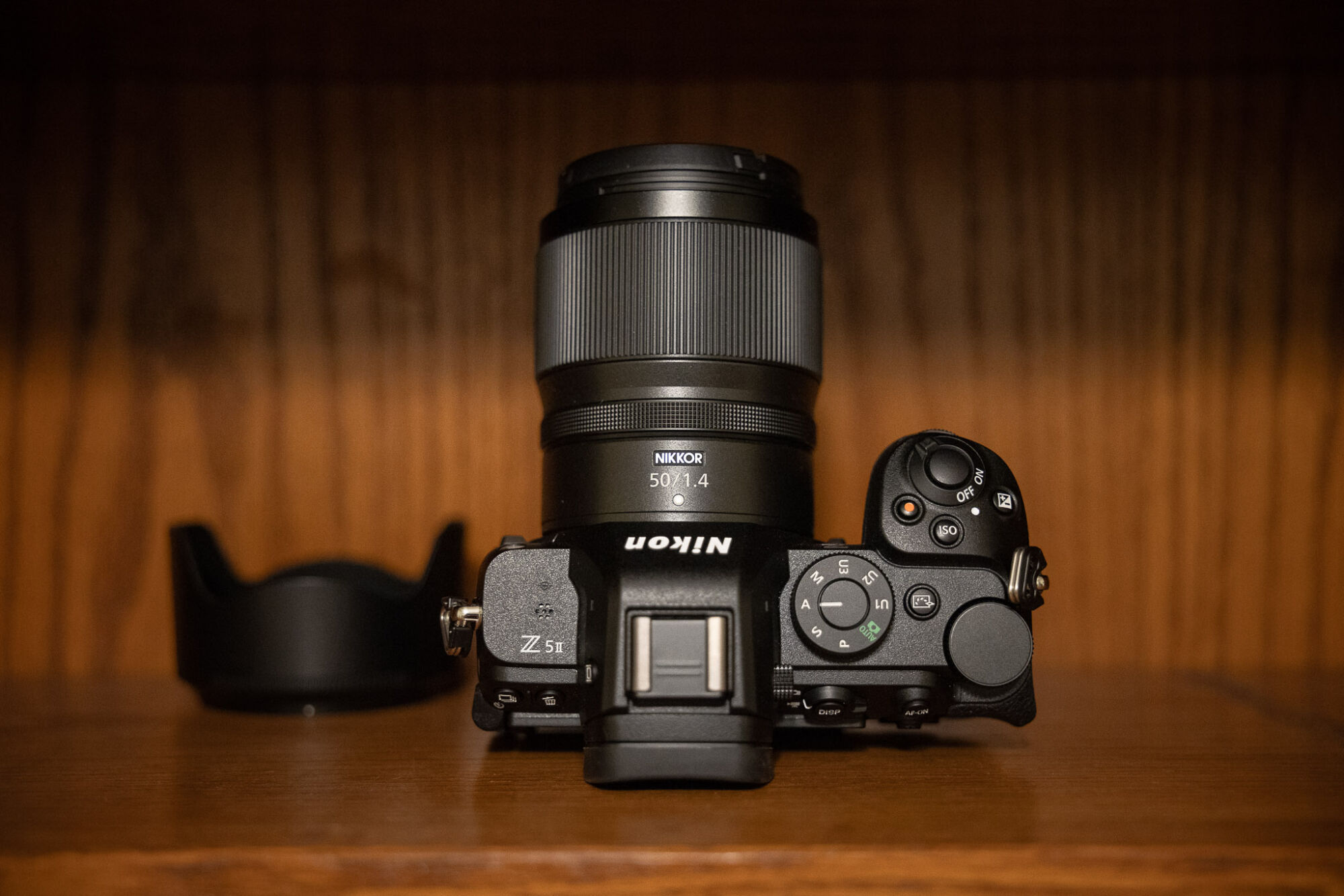
For over five years now, Nikon’s 5-series Z-mount mirrorless cameras have been the champion of value and performance. The Nikon Z5 II is a considerable improvement on what was already the best entry-level full-frame camera on the market. Offering more professional features than any other beginner-oriented FF camera, this camera is probably the right one for you! And, it sits at a highly competitive price, too…
It should be no surprise, then, as you read this Nikon Z5 II review, to hear me repeatedly mention just how much I like the camera, as well as its ecosystem of affordable lenses. In short, I love to spoil the entire review within the first few paragraphs, and just trust that you’ll keep scrolling to see some pretty photos.
In keeping with that tradition, here are all the spoilers: The Nikon Z5 II is the best choice for any beginner photographer who has serious or even professional aspirations. It’s also perfect for any hobbyist who simply wants a highly capable camera they can “grow into”. Last but not least, I strongly recommend the Nikon Z5 II for professionals who want a portable, affordable “everyday” camera to complement (or even be on backup duty for) their significantly larger, heavier bodies like the Nikon Z9 or Nikon Z8.
If you are any of those types of photographers, I’ll be honest: just order this camera, take it for a spin, and thank me later. Of course, if you’re a “hybrid shooter” or a content creator who is on the fence because of things like video recording or high-speed action tracking with the autofocus system, then yeah, you’re going to need to dive deep with me into this Nikon Z5 II Review. Ready? Let’s get into it…
Nikon Z5 II Specifications
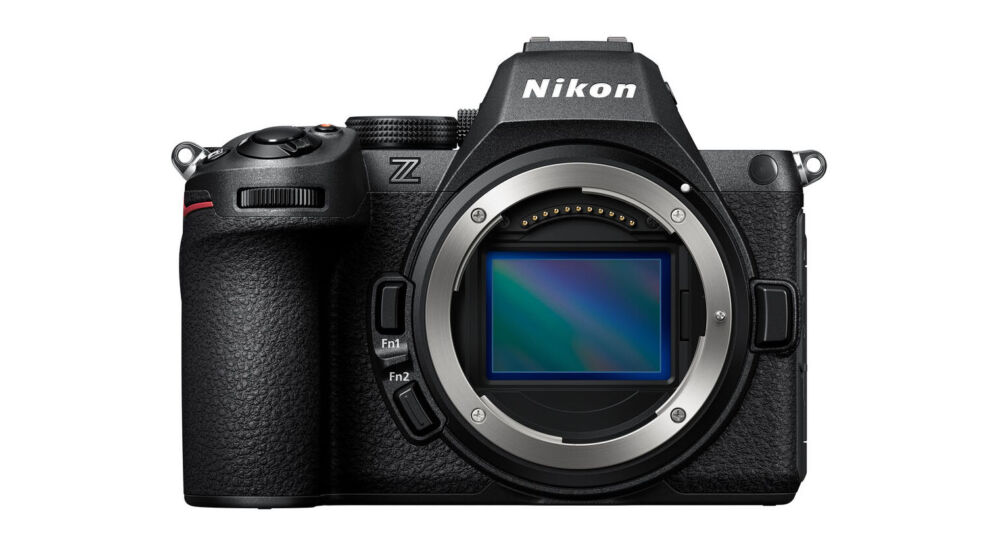
- SENSOR: 24 megapixel CMOS sensor, EXPEED 7 Image Processor
- LENS MOUNT: Nikon Z (FX full-frame) mirrorless
- STILL IMAGES: 6048 x 4032 effective resolution
- VIDEO: 4K 30p (full sensor width) 4K60p (1.5x crop)
- ISO: 100-64000 native, ISO 50-204800 expanded
- AUTOFOCUS: 273-point hybrid AF, 3D Tracking, People/eyes, animals, birds, vehicles
- SHOOTING SPEED (FPS): 11 FPS raw, 30 FPS JPG
- SHUTTER SPEEDS: 30 sec to 1/8000 sec mechanical / electronic shutter
- STABILIZATION: Yes, 7.5 stops
- VIEWFINDER: 3.69M dot OLED viewfinder 0.8x magnification
- LCD: 3.2” Fully-Articulating Touchscreen LCD
- CONNECTIVITY: Wifi, Bluetooth, USB (PD, direct power & charging), micro-HDMI, microphone, headphone/remote control
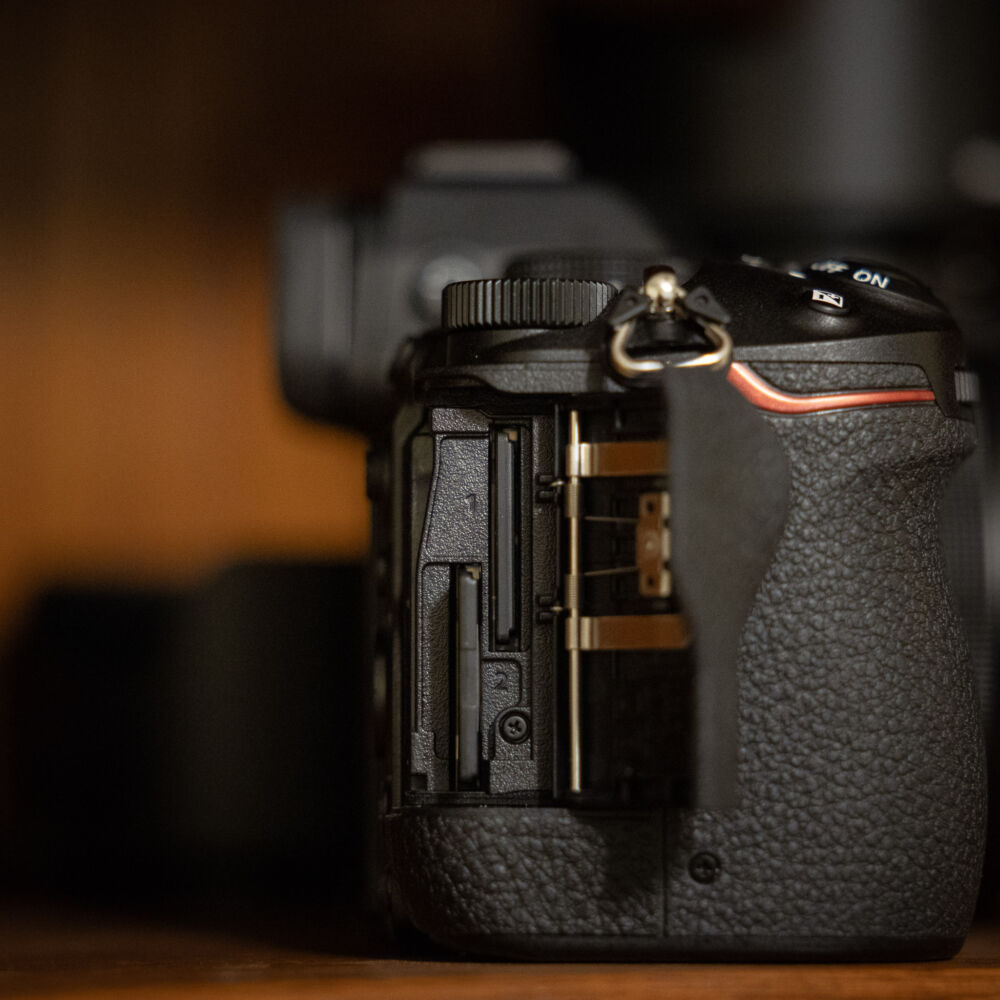
- STORAGE: SDXC (dual slot) UHS-II
- BATTERY: Nikon EN-EL15c (2280 mAh)
- BODY CONSTRUCTION: Metal, plastic, weather-sealed
- SIZE: 5.3x4x2.8” (134×100.5x72mm)
- WEIGHT: 1.5 lb (700g)
- PRICE: $1,696
Nikon Z5 II Review | Who Should Buy It?

Wedding & Portrait Photography / Video

The Nikon Z5 II is a perfect choice for an aspiring professional wedding photographer or portrait photographer. For just about the lowest budget on the market, you can equip yourself with a camera body that offers critical features you need, like dual card slots and in-body stabilization.
Also, just as importantly, you can choose from a diverse range of lenses that are perfect for portraits (such as any of the 35-85mm primes) or weddings (such as their trio of affordable f/2.8 zooms).
Additionally, and especially for weddings where you are photographing highly critical moments for your clients at eight, ten, or twelve-plus hour jobs, …you need a backup camera. And nothing is more perfect for wedding photographers these days than starting off with a Z5 II, and then adding a Nikon Z6 III once the business is bringing in money. The two cameras go together so well, and after more than two decades of wedding photography under my belt, I cannot stress enough how important it is to have a backup camera that feels just as familiar as your main camera.
Candid & Street Photography

Honestly? As much as I am happy to strongly recommend the Z5 II to aspiring professional photographers, I realize that many of you are likely just looking for an everyday camera that you can use all the time to document your personal lives. In that regard, again I’ll be flat-out honest: the price tag of a Nikon Z6 III might not be worth it, let alone that of a Z7-series or Z8.
For casual photography of any type, the Z5 II is even more perfect. You get the professional sense of security with the (rare for this price point) dual card slots, and general rugged durability. However, the body is incredibly lightweight & compact. If I’m just going out to hang with friends or family, I don’t hesitate to sling the Z5 II over my shoulder or stuff it in my everyday out-and-about backpack.
Landscape & Nightscape Photography

Although 24 megapixels is relatively modest these days for anyone whose goal is to capture every detail in beautiful scenic landscapes, I can still give the Z5 II a nod for its capability as a general adventure-ready camera. The reality is, these days, most landscape photographers are more likely to just run a slideshow of their favorite images on their 4K TV, than to get more than one or two “enormous” prints made.
Even then, 24 megapixels is plenty good for large prints such as 36” or 40”. For me, it’s more about the dynamic range, (excellent) and the overall color rendition (also excellent) from the sensor.

When it gets dark and you’re cranking your ISO up to 3200 oe 6400 to capture a landscape by starlight or moonlight, this is where I actually appreciate the relatively low noise levels coming from the Z5 II sensor. Once again, if you’re making a 4K time-lapse of the Milky Way or the night sky in general, the Z5 II presents a great opportunity to “humble brag” about how you captured such jaw-dropping imagery with a relatively affordable kit.
Action Sports & Wildlife Photography

I promised you honesty, and here it is: this is where I’d recommend saving up for a Nikon Z6 III. The sheer jump up on speed & responsiveness alone is worth it. Also, the AF system from the much faster Z6 III sensor is going to make a noticeable difference, for the elite few who are attempting challenging subjects such as birds in flight, or any erratic animal or human sporting event.
Honestly, at around ~$2400 at present, I’d consider the Z6 III to be almost a “bare minimum” camera; ideally I’d go one step further and recommend saving up for the Nikon Z8, although that’s a much bigger jump up of course. Having said all that… If you’re a photographer who does “a little of everything” and wildlife, nature, or action sports is just one of the things you like to photograph, then YES, the Z5 II does a fantastic job in general!
Content Creator (Photo & Video)

Let’s finally talk about video. I see the Nikon Z5 II as being more photo-centric than a true “hybrid” camera, but it does make a perfect content creator camera. For vlogging, I would rather have a Z5 II (or a Z50 II) than any of the dedicated vlogging cameras on the market, due to their lack of a viewfinder If you do any still photography at all, I think you’ll agree.
With its mechanical sensor-based stabilization, (thus minimizing your need for electronic sensor stabilization which induces a significant crop factor) …I think the Z5 II makes a great all-around video camera.
Filmmaker (Cinematic Video)
Having said that, it’s not a cinematic movie-making camera, to be sure. If you’re primarily interested in making highly polished video content, and your decision is based on things like 4K framerates and crop factors, bit-rates, or even RAW video, …then of course you’re better off with something else.
Nikon Z5 II Review | Pros & Cons
It’s going to be very easy to list the things I like (almost everything) about the Z5 II, and the things I don’t like (almost nothing). Simply put, it’s hard to complain about a camera that offers so much pro-level performance at such an entry-level price.
Image Quality (Stills)

Nikon has been delivering excellent 24-megapixel images for something like 13+ years now. Both FX and DX sensors that touted 24-MP sensors delivered gorgeous images with incredible dynamic range and excellent high ISO results.
It is therefore no surprise that the Z5 II’s 24-MP sensor delivers excellent results. Some folks were initially skeptical of how it might “stack” up (no pun intended) against other high-end sensors with ultra-fast readout circuitry and other bells & whistles, but I had a hunch that Nikon wouldn’t let me down.
Indeed, the original Z5’s image quality was impressive, and so is the Z5 II’s. You would have to really nit-pick and pixel-peep to see any difference between its images and those from other 24-MP sensors that absolutely break the bank, such as the Canon R1 or Sony A9 III. Is there a difference? Of course, but most photographers will never come even close to seeing it.
Video Quality
Here’s where the image quality takes a substantial leap forward: Video results are very impressive. On paper, the specs and numbers might not mean very much to anyone who isn’t an avid videographer; 4K60p, 4K30p, full-width VS crop, etc…
All you need to know is this: the Z5 II is respectable, but doesn’t lead the pack in its price range, on paper. In real-world results, the video clips that I recorded were beautifully sharp, detailed, and dynamic. Rolling shutter effect was pretty minimal, too.
Build Quality / Durability

One of my biggest complaints about beginner-oriented cameras is not simply that they aren’t “durable enough” to survive the elements; actually, I’ve taken some of the most plastic, cheap-feeling cameras out in rain, freezing snow, dust storms, etc. …and they have almost all been just fine.
No, my main complaint is that almost all of the most affordable options just don’t feel like they would stand the test of time, long-term. Honestly, I’m less afraid of a light drizzle of rain damaging my camera, and more worried about the general abuse or wear-and-tear of using a camera all the time, the sheer hours of “not being gentle” with a camera and generally taking its durability for granted.
In this regard, Nikon has always come out on top with its most entry-level options. Even down to the DX (APSC) Nikon Z50 II, costing a mere ~$1000, (or less if you catch it at the right time of year!) …the cameras just feel rugged, strong, and dependable.
Autofocus Performance

Nikon has made its biggest leap forward in autofocus technology within the past ~4 years, as it added 3D-Tracking to its lineup, (The Nikon Z9 is almost 4 years old as of this writing; it debuted in late Oct 2021.)
Z5 (original) users might have felt a little held back by the overall autofocus performance; it predated the 3D-Tracking system, but also, it came from the era where Nikon’s overall user interface for focus point control was a bit cumbersome. Many users reported feeling like the method of activating and de-activating the continuous AF tracking option was not as effortless and intuitive as it could be.
I’m happy to report that with this 2nd-gen camera, the autofocus performance goes far beyond the on-paper addition of things like various other subject detection options, or the technical definition of 3D Tracking. Simply put, the Z5 II does an amazing job of nailing focus precisely and consistently. Even when I was reviewing the amazing new Nikkor 35mm f/1.2, with its razor-thin focus, I found the Z5 II did an excellent job.
Of course, as we all are rapidly learning with regard to AI and the hilarious (or disturbing) mistakes it can make, trusting any camera to automatically detect, focus on, and track a subject isn’t perfect. I had plenty of instances where the Z5 II’s AF system claimed to be focusing on my cat’s eyes, when in reality it was the nose or ears that were tack-sharp. Honestly, though, I think this can be overcome with a commitment to mastering the different methods by which you allow the AF points to “roam around the viewfinder”. In other words, just learn how and when to lock the Z5 II’s AF point to a specific position in your frame, and when to let the camera freely choose where to focus. Do this, and the results will be consistently impressive.
Overall Performance
One of the very few things I complained about with the original Nikon Z5 was indeed its slow-ish sensor. It affected the overall performance in a few ways, besides the sub-par video results when it comes to things like rolling shutter.
Indeed, the sheer FPS (Frames Per Second) of the Z5 was rather slow, and the overall responsiveness was a bit sluggish. Not just the AF system and subject tracking, but subtle things like the viewfinder blackout, …all added up. The camera did its job, but it was the opposite of a speed demon. This likely inclined a lot of photographers to step up to a Nikon Z6 II or Nikon Z6 III, which is a pretty expensive camera for a beginner to invest in.
The Nikon Z5 II is still not a total speed demon compared to its closest sibling, the Nikon Z6 III, however I now feel like it’s more than fast enough for almost any type of work.
Features & Customizations
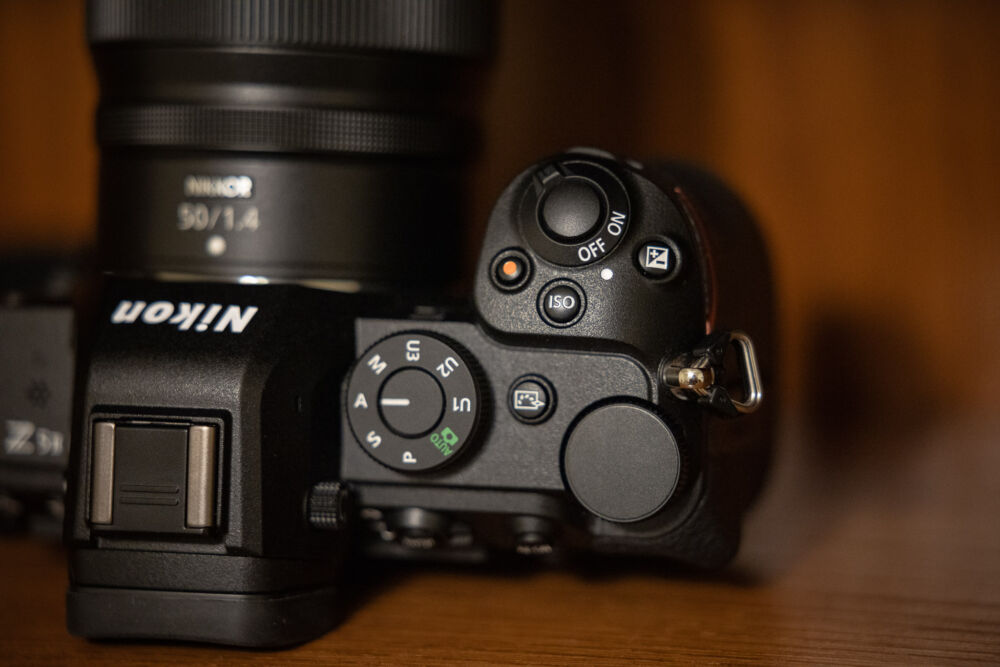
The Nikon Z5 II strikes a great balance of professional features & advanced customization, and overall simplicity & user-friendliness. Right out of the box, all the buttons and dials are useful , even labeled with their default purpose. This might sound like an odd thing to say, but contrast it with many Sony cameras which have a whole host of “C1, C2, C3” etc buttons, often some of which have zero function assigned to them by default!
What I cannot stress enough about the Z5 II is this: it’s a perfect balance. A total beginner could pick it up and get right to being creative, or a veteran pro photographer could pick it up and feel total familiarity & reliability, too.
Ergonomics, Comfort, & Portability
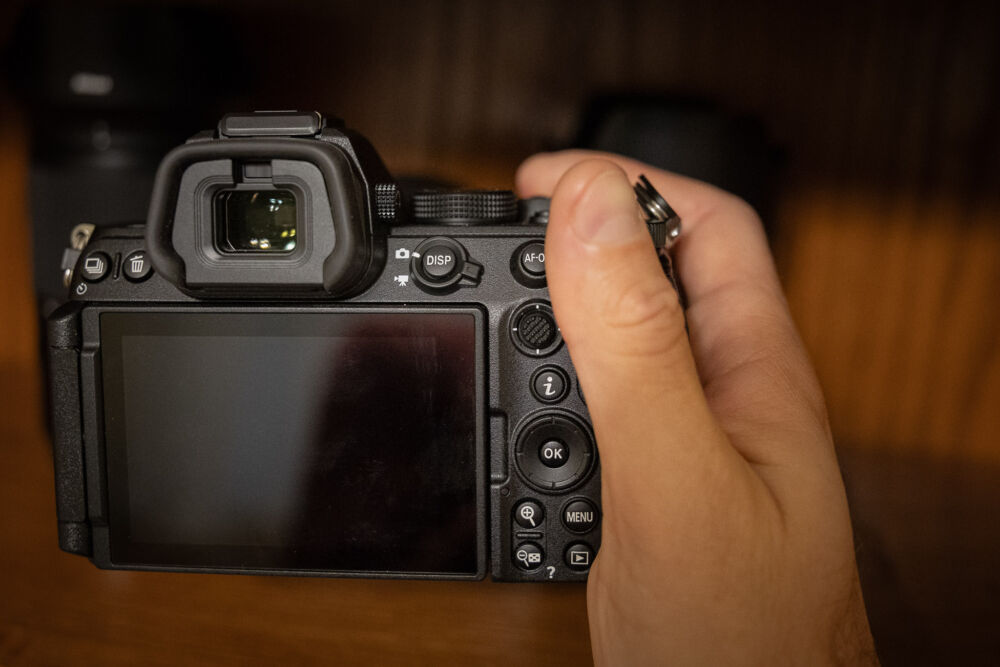
This is where I really get to drive home one of my favorite selling points of the Nikon lineup in general: The cameras just feel great in the hand. They feel like “real cameras”, they are intuitive to operate, and as many reviewers have said for many years, Nikon cameras just seem to “get out of the way and let you focus on being creative”.
It’s hard to fully explain this without strongly urging you to just go pick up a Nikon Z5 II for yourself, handling it, and seeing how it feels. Unlike most entry-level options from other brands, the Z5 II feels almost as rugged and professional as the most expensive options in the lineup. (Aside from the incredible weight savings, of course!)
To dive deeper into why this is: the Z5 II doesn’t just feel sturdy, solid, etc. It also has its buttons and dials arranged nearly identically to the higher-end models. This is a huge advantage to anyone who is either booking to one day step up to something more professional, or even for someone who might be upgrading to the Z5 II from, say, a Nikon Z50 II!
After 25 years of handling all different kinds of cameras, I can’t stress this enough: modern shopping habits (that is, buying something online sight unseen) cannot do justice to the process of handling all the different camera choices, and making your final buying decision based on which option just FEELS right for you.
Value
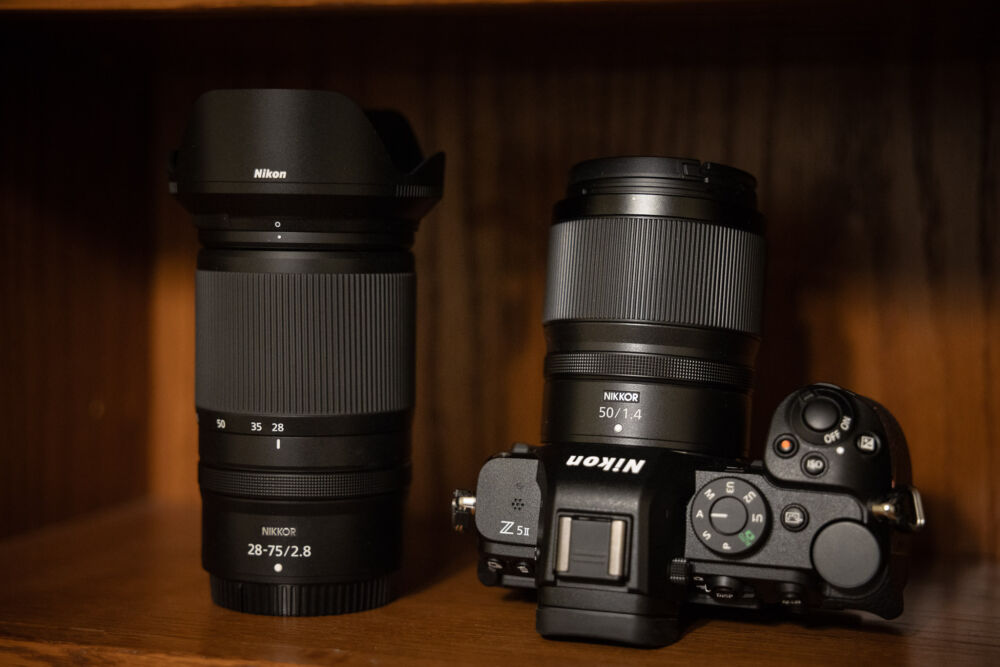
Despite prices gradually climbing higher over the years, but especially in 2025, I still consider the Nikon Z5 II’s price tag of about $1700 to be a “screaming deal”. Yeah, there’s a $150 coupon applied right now, and that might go away sometime around or after the holidays now in 2025. Not to mention the fact that Nikon had put the Z5 (original) on sale for quite a while, and I’ve seen it priced (brand new) for a mere $999. Those days may be behind us now, of course, but the Z5 II’s value remains. It’s the absolute best “bang for your buck.
Nikkor Lenses | “No Gaps In The Lineup”
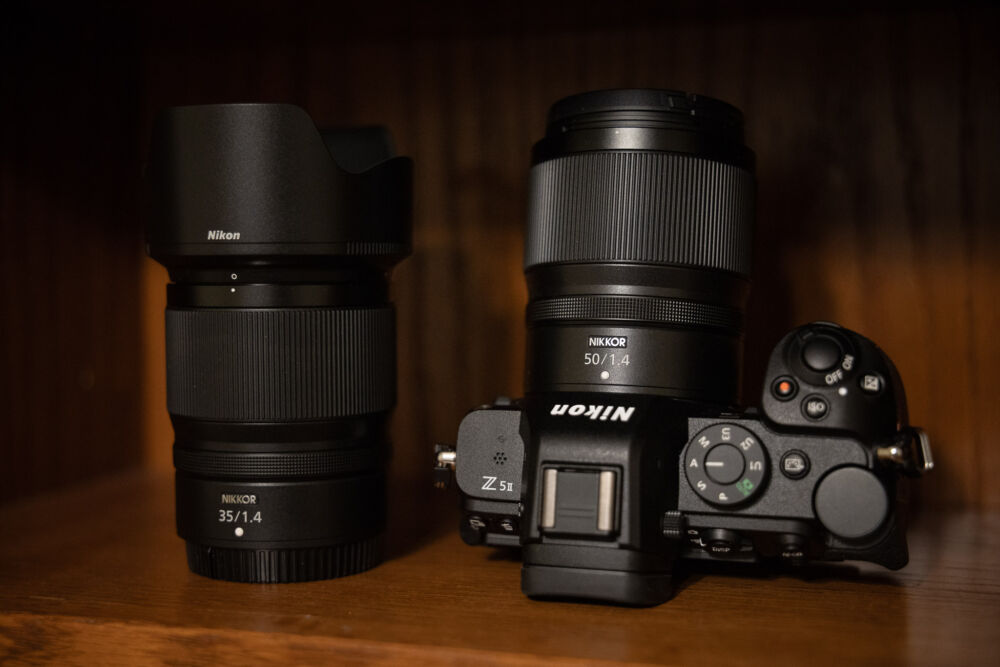
One thing I want to mention as a huge “pro” in this Nikon Z5 II review is, the vast array of lenses that you can mount on it. Simply put, no other brand offers such a lineup of well-spaced-out lenses across the price range from budget-friendly options to exotic “luxury” flagship glass.
The list of examples is pretty long, so I’ll keep it as short as I can: My personal favorites are ideas like this: For a casual walk-around camera to just snap moments of everyday life, you have options in the ~$250 range, (28mm f/2.8, 40mm f/2) …or if you can afford a bit more, there are more fantastic choices such as the 35mm f/1.4 and the 50mm f/1.4.
The same thing goes for someone more interested in versatility, say, a travel content creator or landscape & adventure photographer: the 24-50m is under $500, then there’s the 24-70mm f/4, 24-120mm f/4, and 24-200mm. All are excellent choices, all are relatively budget-friendly, all balance quite well on the Z5 II.
All in all, especially when it comes to that popular focal length zone of normal/wide lenses, Nikon simply has the widest range of options. Considering just the 35mm and 50mm (and nearby) focal lengths, I can count about a dozen choices that span from under $250 to nearly $3000. Each option almost perfectly suits its intended market. (More Nikkor lens reviews coming soon!)
Nikon Z5 II Review | Compared To The Competition

Simply put, the Z5 II stands well above its competitors for a couple key reasons. First and foremost, truly serious photographers shouldn’t even consider Canon’s most affordable full-frame camera, the R8, despite its slightly lower price. The Canon R8 is very much a “total beginner” camera; missing key features like IBIS and dual card slots. Also, I dislike how Canon feels compelled to significantly re-design their entry-level cameras; handling of the R8 definitely feels like a “Rebel” Canon beginner camera when compared to, say, an R6 II.
Sony puts up a bit more of a fight against the Nikon Z5 II, but I still like the Nikon for very similar reasons. In Sony’s case, it’s the A7C II or even the original A7C that is most directly competitive against the Z5 II. Both Sony bodies do offer the very useful feature of IBIS, and the A7C II does offer respectable performance overall as the latest-generation camera. The biggest difference is still a small one, though: Sony’s autofocus is generally the best of all mirrorless cameras. If you rely heavily on not just AF tracking but also on automatic subject recognition, I have to give a nod to Sony, even though I’d still opt for the Nikon.
NOTE: honestly, one of the closer look-alikes to the Nikon Z5 II is the now-ancient Sony A7 III, from 2018. I simply can’t recommend such an outdated camera; it forfeits all of the modern advantages Sony offers, from autofocus performance to sheer comfort of ergonomics…
Sony’s C-series bodies also suffer from the same restriction that Canon’s entry-level cameras have: a major overhaul of the ergonomics, thus making it much more difficult to casually flip between a Sony C-series and other A7, A9, or A1 series bodies. In this regard, Nikon always takes the cake.
Panasonic does offer something uniquely competitive, by the way, in the form of the S5 II. This should come as no surprise, however, because the sensor is (allegedly) the same. You might be tempted by the Panasonic ecosystem overall if you’re heavily into video work, but honestly, I would absolutely prefer the Nikon as a serious photographer and a more casual video maker.
Honestly? The best alternative to the Nikon Z5 II is, in fact, its predecessor the Nikon Z5. And that mainly comes down to this: Do you wish your Z5 was faster overall, and also had more reliable autofocus? If yes, upgrade right away! Otherwise, the Z5 is still a great camera.
Nikon Z5 II Review | Conclusion

I told you at the beginning, you’re probably going to just buy this camera and go take pictures. The Nikon Z5 II is a near-perfect balance of rugged quality and portability. It’s got loads of professional controls and features, with the performance and results to back up any claims that include the word “professional”.
All in all, it’s hard to find fault in a camera that includes more features than competitors yet offers a lower price. It’s true that serious pros will notice a difference in the AF system, if they’re coming from a Z9 or Z8. It’s also true that the budget-friendly sensor isn’t exactly cutting-edge when it comes to video. However, the Z5 II is no slouch in any respect, with honestly quite impressive overall autofocus performance and video image quality.
Nikon’s whole ecosystem is my favorite, too, when it comes to the smooth upgrade path. You can jump up from a Z5 II to a Z6 III if you ever become a full-time professional wedding photographer, for example, and it will feel almost effortless. The Z5 II can stay in your camera bag as a 2nd/backup, then, especially for wedding photography. Beyond the bodies, though, I love the vast array of lenses that Nikon offers. Again, an aspiring professional portrait photographer can start off with a Z5 II and an affordable Nikon Z 50mm f/1.4 or Nikon Z 28-75mm f/2.8, and save a ton of cash while still delivering pro results.
Personally, as a portrait & wedding photographer, I’d pair the Nikon Z5 II with both the Nikon Z 28-75mm f/2.8 and 70-180mm f/2.8, plus whichever affordable prime is my favorite focal length; in this case I’d go with the Nikon Z 35mm f/1.4. Either way, you can’t go wrong!
Check Pricing & Availability
The Nikon Z5 II is currently available for $1,696, and that includes a $150 savings. That’s without a lens; there are also a few kits available, my favorite being the one with the Nikon 24-200mm for $2,496.t