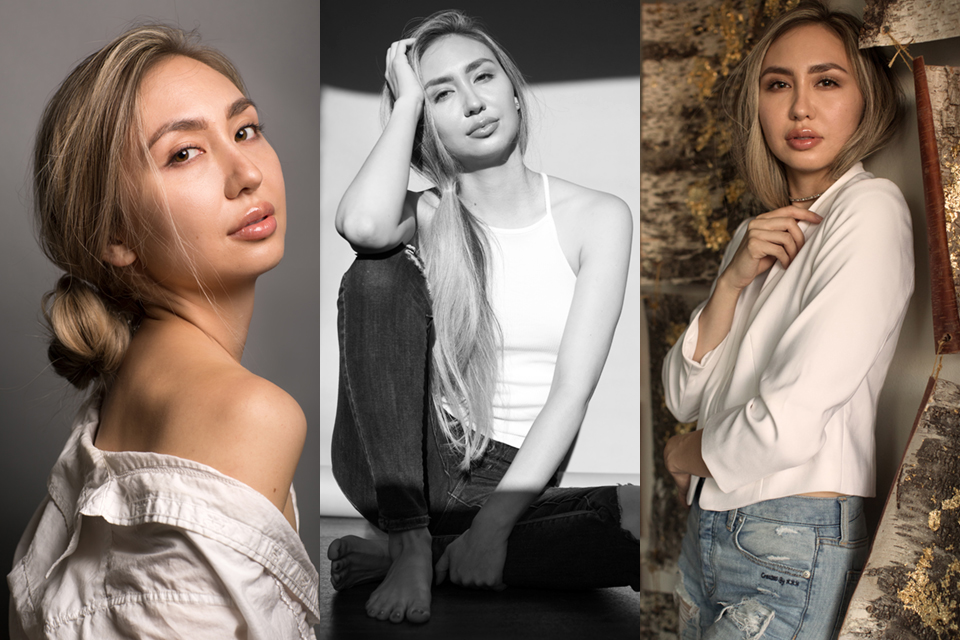
A model test shoot has one job: show range. Not fashion-week range — just enough variety that a casting director or agency rep can see the model works in more than one context. The challenge for photographers who style their own shoots is that “variety” doesn’t mean five wardrobe changes and a mood board. Three strong looks, chosen deliberately, will do more for a new model’s portfolio than ten looks thrown together without intention.
This guide covers three go-to styling frameworks that photograph consistently well, require no stylist on set, and give you distinct looks without starting from scratch between each setup. The same logic applies to portrait sessions — not just model work.
Start with the model’s existing wardrobe
Before pulling pieces, talk to the model. Ask what she already owns that fits well and what she feels confident in. Confidence reads on camera — a model who’s slightly uncomfortable in an outfit will show it, and no amount of direction fixes that. For a first or early portfolio shoot, working from her own wardrobe also eliminates the logistical friction of sourcing.
The brief for what to bring: neutral colors, classic cuts, nothing with large logos or busy prints. White is the default starting point because it works against almost any backdrop, reads cleanly in both color and black and white, and keeps the focus on the model’s face and movement rather than the clothing.
Ask her to arrive with minimal makeup — fresh-faced, not bare — and hair that works both up and down. That single prep note doubles your look options before you change a single piece of clothing.
Look 1: fitted denim and a simple top
A well-fitting pair of jeans paired with a fitted tank or a simple bra top has been a portfolio staple for decades. That’s not an accident. The combination works at full length, three-quarter crop, and tight portrait framing, which means one wardrobe choice gives you usable images across multiple formats.
The denim wash matters more than most photographers realize. A medium blue wash with minimal distressing reads as versatile and contemporary. Heavy distressing or very light washes tend to date the images faster and can clash with certain backdrops. When in doubt, go darker — it photographs more cleanly.
For hair, shoot at least two variations: down and loose, then pulled back. That’s not two separate looks, but it reads as two in the final selects. The change takes 90 seconds on set and adds real range to the portfolio delivery.
Look 2: oversized white button-down shirt
A men’s white Oxford shirt is one of the most useful pieces you can keep in a shoot kit. On a model, it hits mid-thigh, which is long enough for body shots but short enough to read as intentional. The oversized drape creates a different silhouette than the fitted tank — moodier, more editorial, with more negative space in the frame to work with.
This look rewards a slightly different directing approach. Fitted clothes tend to work with clean, confident posing. The oversized shirt works better with a rawer, more loose energy — hair slightly undone, shirt gently off one shoulder, expressions that lean vulnerable or introspective rather than assertive. Give the model specific verbal cues: “soften your eyes,” “let your shoulders drop,” “you just woke up.” Vague directions produce vague results.
Shoot this one in black and white as a matter of habit. The tonal contrast between the white shirt and skin reads particularly well without color competing for attention.
Look 3: a jacket or blazer
A fitted blazer or an oversized structured jacket is the fastest way to add a third distinct look without a full wardrobe change. The silhouette shifts dramatically, the mood shifts with it, and you’ve extended the shoot without adding complexity.
One technique worth using: loosely tuck the model’s hair into the collar of the jacket to create a faux bob. It takes 30 seconds, it changes the frame entirely, and it reads as intentional styling even though it isn’t. Combined with a few accessories — a simple chain, a hat, or a scarf — you can pull two or three distinct variations out of the same jacket.
Keep the jacket relatively neutral. Black, camel, white, and charcoal all work. Avoid loud patterns or strong colors unless the backdrop and lighting are deliberately designed around them, which is a different type of shoot entirely.
What to avoid when styling your own shoots
A few decisions that tend to create problems on set rather than solve them:
- Busy patterns and large logos. They compete with the model’s face and date the images faster than almost anything else.
- Clothes that don’t fit. Styling can’t fix poor fit. A $15 white tank that fits correctly photographs better than an expensive piece that doesn’t.
- Too many looks. Five half-developed looks produce weaker portfolio images than three fully developed ones. Depth beats volume.
- Skipping the makeup brief. Heavy or highly stylized makeup limits how the images can be used. Fresh-faced is the default for test shoots for a reason — it leaves the most doors open.
Building the skill over time
Styling your own shoots is a practical skill that compounds. The first few times, you’ll second-guess choices on set. After a dozen shoots, you’ll have a mental library of what works and what creates problems, and you’ll be faster at making decisions before the model arrives. That fluency also makes it easier to collaborate with an actual stylist when the budget exists — you’ll know enough to contribute to the conversation rather than defer entirely.
For deeper work on directing models and building portrait sessions that produce consistent results, the Portrait & Posing Guide covers posing frameworks, expression direction, and how to structure a session from brief to delivery.
Frequently asked questions about model test shoot styling
What should a model wear to a test shoot?
Neutral, well-fitting basics are the safest starting point: fitted denim, a simple tank or white shirt, and one structured outer layer like a blazer. These give the photographer range across multiple crops and moods without requiring a full wardrobe budget or stylist on set.
Do you need a stylist for a model test shoot?
Not for a basic portfolio shoot. A stylist adds real value for editorial or concept-driven work, but for building a model’s foundational portfolio, three well-chosen basics styled intentionally will produce strong results without one.
How many looks should a model test shoot include?
Three is a practical target. It’s enough to show range in the final portfolio delivery without fragmenting your shooting time across too many changes. Each look should be distinct enough that the images read as clearly different — not just the same outfit with a different accessory.
What colors work best for model test shoot clothing?
White, black, and medium-wash denim are the most reliable. They work across backdrops, read cleanly in both color and black and white, and don’t date the images the way trend-driven colors tend to. Avoid large patterns, heavy distressing, and anything with prominent logos.
Can these styling tips apply to standard portrait sessions?
Yes. The same logic applies to any portrait work where you’re advising a subject on what to wear. Neutral colors, good fit, and minimal makeup give you the most flexibility in post and keep the focus where it belongs: on the person in the frame.