LDS temple weddings are unlike any other ceremony you’ll photograph. The sealing — the actual marriage ceremony — happens inside the temple, completely off-limits to cameras and to any guest who isn’t a practicing, temple-worthy member of the church. For photographers new to this tradition, that restriction can feel like a limitation. In practice, it just means the job looks different, and knowing what to expect makes all the difference.
This guide covers the full arc of an LDS wedding day: what you can and can’t photograph, how to handle the temple exit, family formals on temple grounds, formal sessions, ring ceremonies, and receptions. Tips throughout come from Jessie and Dallin, Utah-based wedding photographers and SLR Lounge ambassadors who have photographed hundreds of Latter-day Saint weddings.
Part of the Wedding Photography Guide
This article is part of our complete Wedding Photography Guide, a structured series covering every phase of the wedding day from prep through reception.
What to expect: the LDS wedding day timeline
Understanding the structure of an LDS wedding day before you arrive is essential. The sequence typically runs:
- Temple sealing (no photography permitted inside; shoot temple grounds and waiting guests)
- Temple exit with waiting family and friends
- Family and wedding party portraits on temple grounds
- Couples session on temple property
- Luncheon at a separate location (optional, varies by couple)
- Ring ceremony (structure similar to a non-denominational Christian ceremony)
- Reception
The sealing ceremony itself can last anywhere from 20 minutes to over an hour depending on the temple and officiant. During that time, your job is to document the temple grounds, the waiting guests, and any candid moments among family members who weren’t able to attend the sealing. These images provide important context for the album and give you something meaningful to show for the wait.
The temple exit

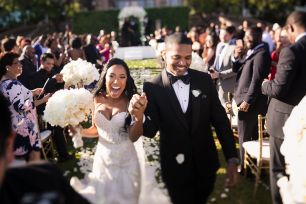
The temple exit is the emotional centerpiece of LDS wedding photography. The couple emerges as a married pair for the first time, often after an intensely spiritual experience, into a crowd of family and friends who’ve been waiting outside. The expressions in those first few seconds are raw and genuine in a way that’s difficult to replicate anywhere else in the day.
That said, the exit requires active management to photograph well. Popular temples on a Saturday can have dozens of weddings happening simultaneously, which means crowds, competing families, and limited space near the doors. Don’t assume it will organize itself.
Jessie and Dallin’s advice: position yourself at the door well before the exit is announced, and take charge of the crowd. Get immediate family to the front and make sure there’s a clear path for the couple to walk through. A dispersed crowd of guests looking at their phones when the doors open is one of the most avoidable problems in LDS wedding photography — and entirely preventable if you’re managing the moment rather than waiting for it.

Also watch for family members who weren’t permitted inside the sealing. A parent, sibling, or close friend who couldn’t attend the ceremony may have their first emotional moment with the couple right here. Position yourself to capture those reunions — they’re often the most affecting images of the entire day.
Family and group portraits on temple grounds

Family formals at temple weddings run larger than almost any other wedding type. Extended family groups of 50 or more people are common, and the combination of size, temple foot traffic, and shared spaces with other wedding parties makes organization essential.
Send a questionnaire to the couple several weeks before the wedding and use their responses to build a complete family photo list — every combination, with full names. Bring that list to the temple. Having a coordinator or family member call names while you position people cuts the time per grouping dramatically and keeps energy up through what can otherwise become an exhausting sequence.
Scout the temple grounds before the wedding day if possible. Identify the spots that work for large groups — staircases are popular and tend to book up fast — and have backup locations ready. At busy temples, patience is part of the job. Build buffer time into your schedule rather than assuming a prime spot will be available the moment you need it.

Utilize the temple architecture

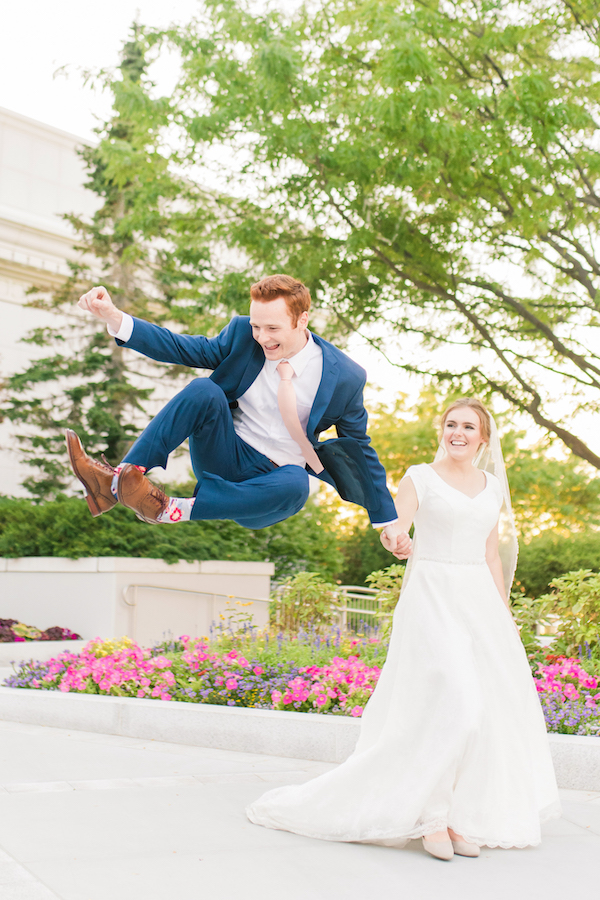
LDS temples are architecturally striking and almost always set on well-maintained grounds. Use them. The spires, clean geometric lines, manicured gardens, and reflecting pools that surround most temples provide backdrop options that most venues simply can’t match.
For couples portraits specifically, look for leading lines in the architecture that draw the eye toward the couple, and use the scale of the building deliberately — a wide shot that shows the couple small against the full temple facade tells a different story than a tight portrait with the temple softly blurred behind them. Both have a place in the album. Neither requires moving far from where you’re already standing.

Formal sessions: the pre-wedding portrait option

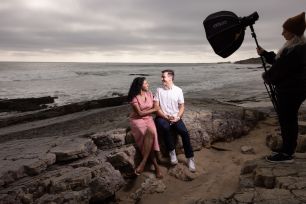
Formal sessions are a portrait session in full wedding attire, typically scheduled a few weeks before the wedding day. They’re common in LDS wedding culture for three practical reasons, and understanding them helps you position the service correctly to couples who may not have considered it.
First, lighting. Temple sealings often happen in the morning — before or around noon — which means wedding day portrait time falls in harsh midday light. A formal session scheduled for golden hour a few weeks earlier gives you dramatically better light with no schedule pressure. Second, location flexibility. Couples who want portraits at a specific scenic location — a mountain overlook, a canyon, a national park — can do that at the formal session without it competing with the wedding day timeline. Third, the first look. Because couples enter the temple together for the sealing without a traditional first look beforehand, a formal session gives them that experience separately, weeks before the wedding.

Ring ceremony
Many LDS couples hold a ring ceremony following the temple sealing, typically at a separate venue before the reception. The ring ceremony gives the couple — and guests who couldn’t attend the sealing — an experience closer to a traditional wedding ceremony: vows, ring exchange, and a more inclusive celebration moment.
Photographically, ring ceremonies follow a structure similar to a non-denominational Christian ceremony. Cover the processional, the ring exchange, and the kiss. The emotional dynamic is sometimes heightened by the fact that non-member family and friends are experiencing this as their first opportunity to witness the couple’s commitment together — watch for those reactions in the crowd as much as the couple at the altar.
Reception coverage
LDS receptions follow a structure familiar from most western wedding receptions — details, introductions, toasts, first dance, cake cutting, open dancing. One notable difference: many LDS receptions are dry, with no alcohol served. The energy and timeline can feel different from receptions where an open bar is running, so calibrate your expectations for the crowd dynamic accordingly.
Cover reception details before guests arrive using the same wide, medium, tight approach you’d use at any reception. For a full breakdown of reception detail photography, see our guide to must-have wedding reception detail shots. For more background on LDS wedding traditions and what couples experience on their wedding day, see this overview of LDS temple weddings on Wedding Maps.
For a complete system covering every phase of wedding day coverage, explore our Wedding Photography Training System in SLR Lounge Premium.
Frequently asked questions about LDS wedding photography
Can photographers go inside an LDS temple?
No. LDS temple interiors are restricted to practicing, temple-worthy members of the church. Photography and video inside the temple are not permitted under any circumstances. Your coverage begins outside — on the temple grounds before the sealing, and at the exit when the couple emerges.
What do I photograph while the sealing is happening?
Use the waiting period to document the temple grounds and the guests outside. Candid moments among waiting family members — especially those who weren’t permitted inside — can be among the most emotionally resonant images of the day. Also shoot architectural details of the temple, establishing wide shots of the grounds, and any decorative elements the couple has arranged near the exit area.
How do I manage the crowd at the temple exit?
Take charge well before the doors open. Identify when the sealing is likely to end, position yourself at the exit door early, and actively organize the waiting guests: immediate family in front, a clear path for the couple to walk through, everyone’s attention on the door. At busy temples with multiple weddings happening simultaneously, a dispersed or distracted crowd at the moment of exit is a common problem — and a preventable one if you’re managing it rather than waiting for it to organize itself.
What is a formal session in LDS wedding photography?
A formal session is a full portrait session in wedding attire scheduled a few weeks before the wedding day. It’s common in LDS culture because temple sealings often happen in harsh midday light, leaving limited time for quality portraits on the wedding day itself. A formal session gives couples a dedicated portrait experience at a time and location of their choosing, often with better light and no schedule pressure. It also provides the opportunity for a first look, which isn’t possible on the wedding day itself since the couple enters the temple together.